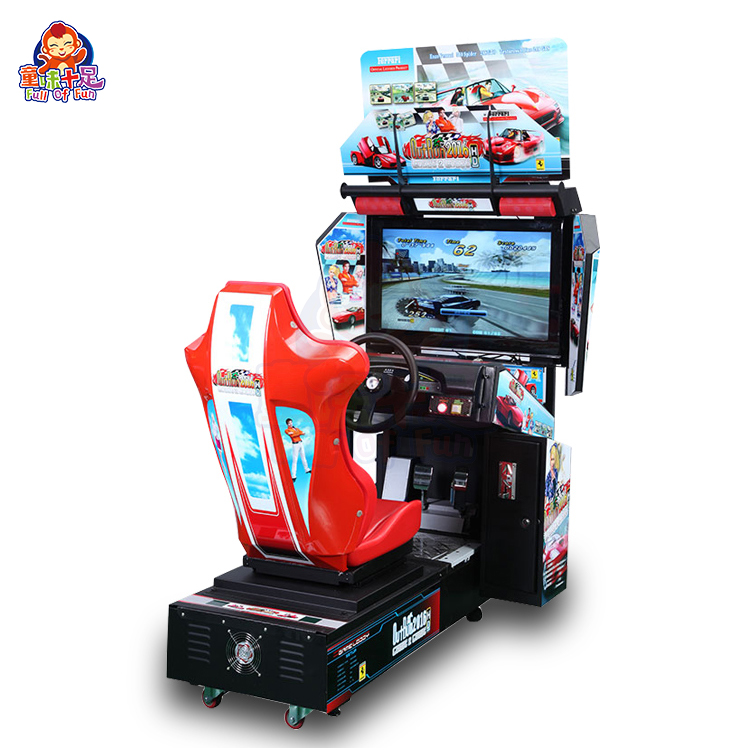
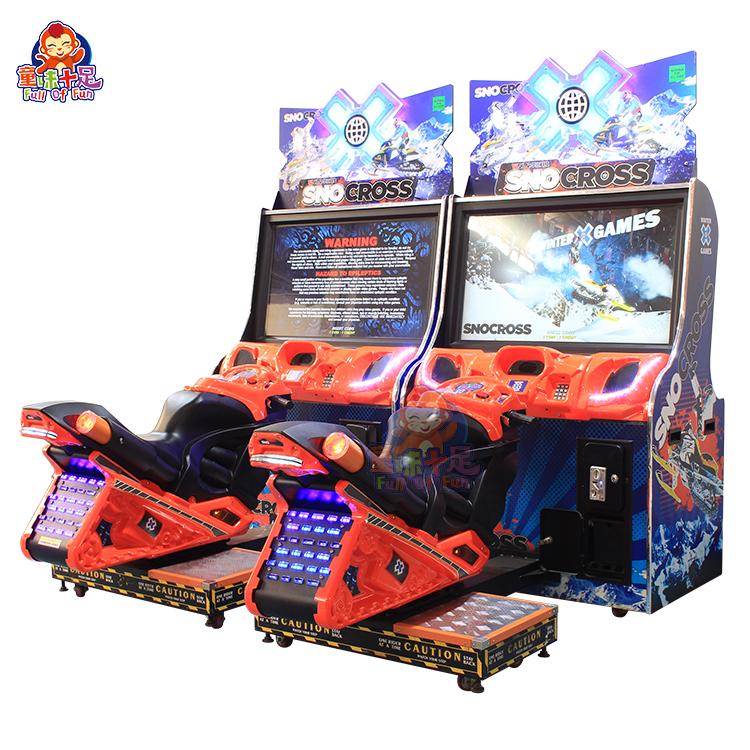

Are arcade racing games profitable?
The answer is yes. In the 2026 Family Entertainment Center (FEC) market, racing simulators remain one of the core revenue drivers. The typical payback period per machine ranges from 5 to 14 months.
With the rise of VR racing and 4D motion technology, operators can achieve strong pricing power and immersive experiences, enabling rapid profitability in shopping malls, hotels, and esports venues.
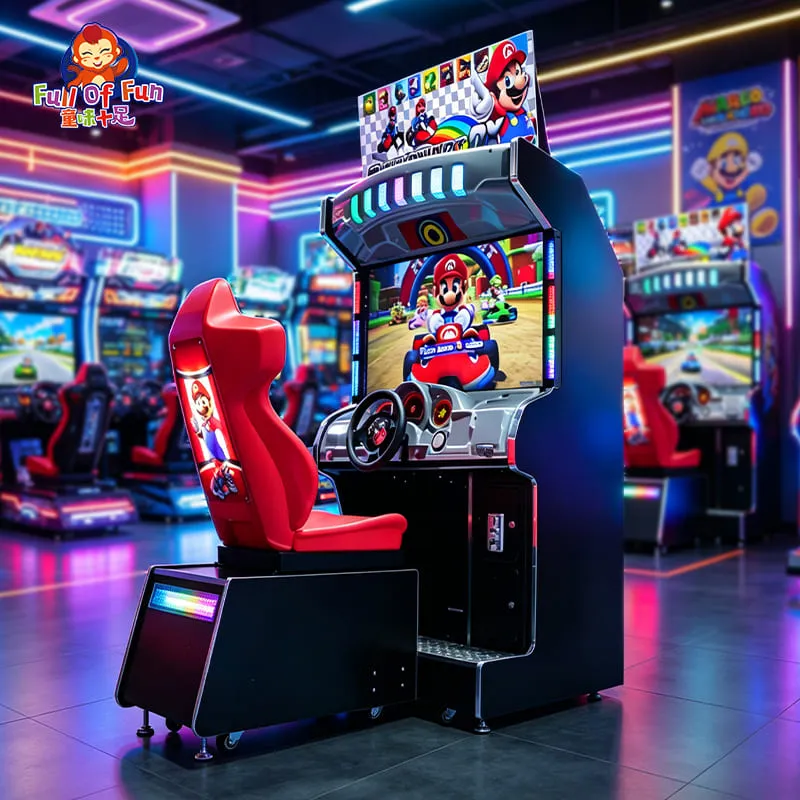
Key Highlights
- High ROI: Most machines recover their investment within 5–14 months, with VR models often paying back faster due to premium pricing.
- Flexible Options: From basic static units to 4D motion and fully immersive 360° VR racing simulators.
- Low Operational Complexity: Compared to large amusement rides, racing simulators are durable and require minimal maintenance.
- Technology Premium: VR and motion systems can increase price per play to $5–$10+.
Revenue Potential: Why Racing Machines Are Essential
- High Throughput: Each session lasts 3–5 minutes, allowing 10–15 plays per hour per machine during peak times.
- Multiplayer Competition: Linked racing enhances social interaction and encourages repeat play through leaderboard competition.
- VR Differentiation: VR racing offers a 360° immersive experience unmatched by traditional screens, making it a powerful attraction for younger audiences.
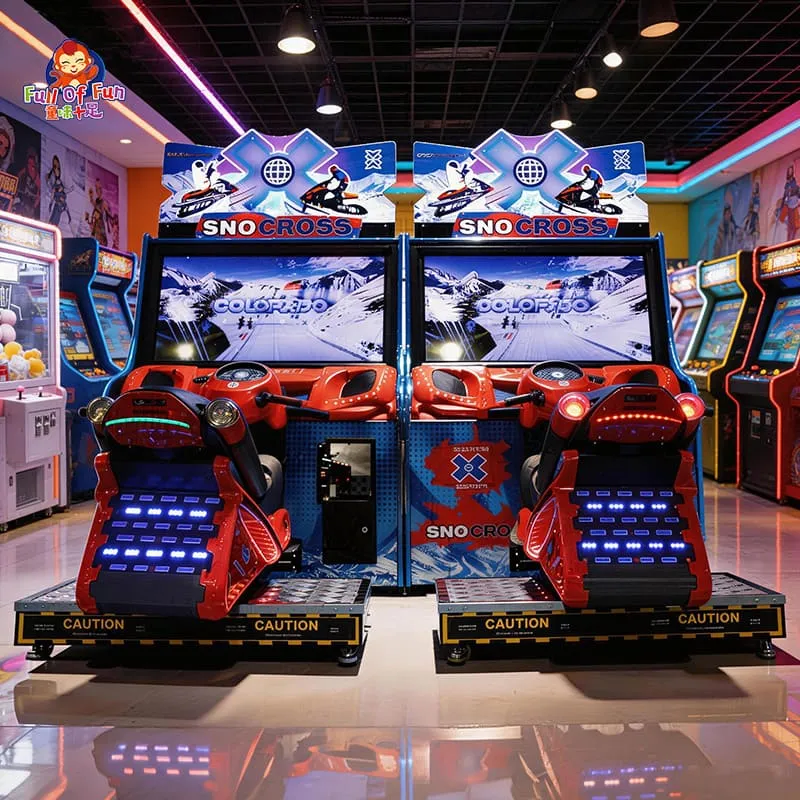
Cost & Profit Analysis (ROI Overview)
ROI Comparison by Machine Type
| Category | Basic Static Racing | 4D Motion Racing | VR Motion Racing Simulator |
|---|---|---|---|
| Initial Investment (Per Unit) | $2,500 – $4,500 | $8,000 – $15,000 | $12,000 – $22,000 |
| Price Per Play | $2.00 – $3.00 | $4.00 – $5.00 | $6.00 – $12.00 |
| Daily Revenue (Low Season) | $20 – $45 (10–15 plays) | $60 – $100 (12–20 plays) | $90 – $180 (15–20 plays) |
| Daily Revenue (Peak Season) | $80 – $150 (40–50 plays) | $200 – $400 (40–80 plays) | $400 – $800 (40–80 plays) |
| Estimated Monthly Revenue | $600 – $1,300 | $1,800 – $4,500 | $2,500 – $6,500 |
| Payback Period | 8 – 12 months | 5 – 8 months | 5 – 9 months |
👉 Want to know pricing in detail? Read: How Much Is an Arcade Racing Machine?
Real Factory Insight: How to Avoid Profitability Pitfalls
A senior engineer with 15 years of experience shares:
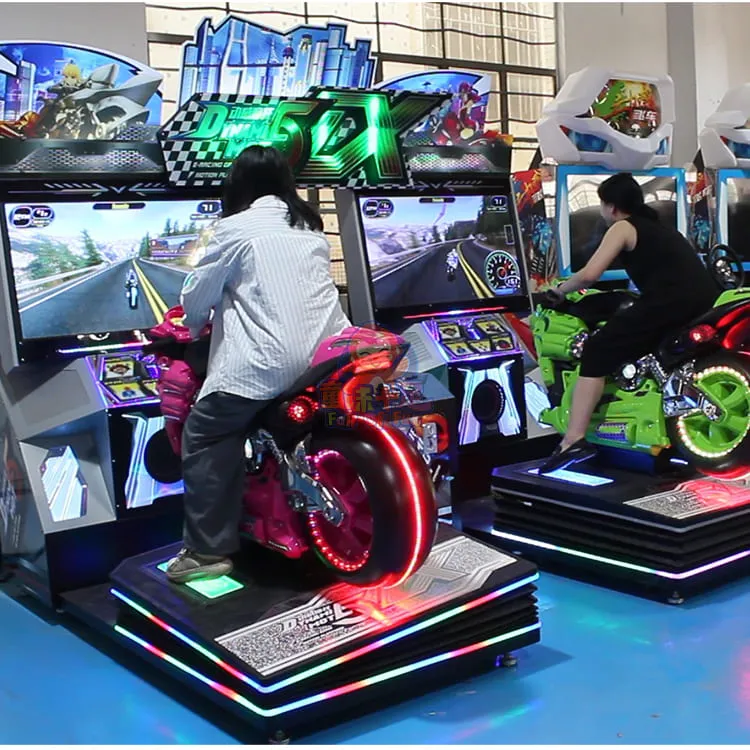
“In 2024, we advised a client in the Middle East who initially preferred low-cost static machines. Based on market research, we strongly recommended adding VR racing units as flagship attractions.
The result? Although VR had the highest upfront cost, its revenue per unit was over 5 times higher than static machines.
In premium locations, customers are not just paying to play—they are paying for a complete escape from reality. VR delivers that experience.
Choosing cheaper machines often leads to weaker attraction and a longer payback cycle.”
Technical Specifications to Consider
When selecting equipment, focus on these key factors:
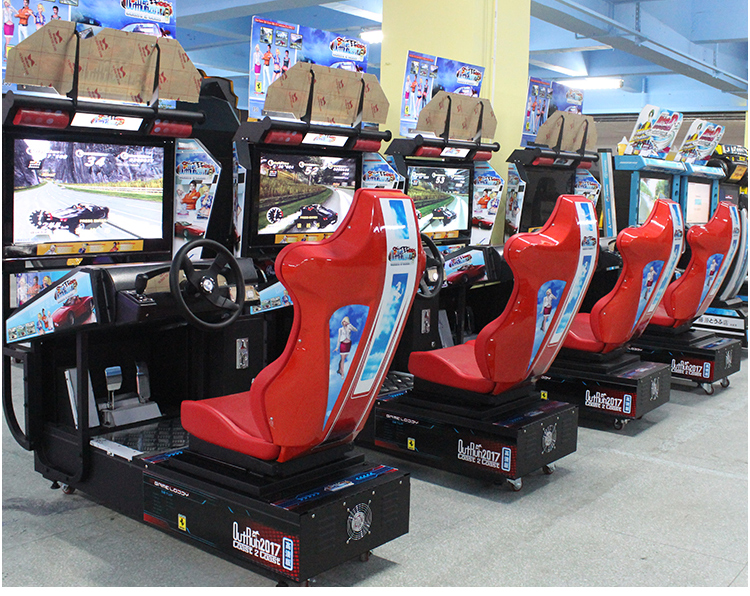
- Motion Platform (DOF): At least 3-DOF for commercial use; 6-DOF is ideal for VR to simulate real acceleration and inertia.
- VR Headset Compatibility: Support for 4K/8K headsets to minimize motion sickness and improve replay value.
- Force Feedback System: Industrial-grade servo motors ensure durability under 10+ hours of daily operation.
- Certifications: Must include CE, RoHS, or FCC to meet mall and insurance requirements.
Frequently Asked Questions (FAQ)
Q1: How long does it take to achieve ROI?
A: Typically 5–14 months, depending on location and machine type. VR units usually recover faster in high-traffic areas.
Q2: How much can a racing machine earn daily/monthly?
A:
- Static machines: $20–$150/day, $600–$1,300/month
- VR machines: $90–$800/day, up to $6,500/month
Q3: Should I buy cheaper or high-end machines?
A: A mixed strategy is recommended. High-end VR machines attract traffic and offer premium pricing, while basic units handle peak demand efficiently.
Q4: What is the lifespan of the machines?
A: Designed for 5+ years with industrial components and regular maintenance.
Q5: Where is the best location to install them?
A: High-traffic areas such as shopping malls, cinema lobbies, esports hotels, and FEC centers.
VR units require only ~1.5㎡, making them ideal for premium spaces.
Q6: Is VR maintenance complicated?
A: Not at all. Maintenance mainly involves lens cleaning and semi-annual lubrication, with remote software updates available.
Q7: Which configuration has the fastest ROI?
A: VR racing machines, thanks to higher pricing ($10+ per play) and strong demand.
Q8: Do your machines meet international standards?
A: Yes, all units comply with CE, RoHS, and FCC certifications.
Q9: Do you support customization?
A: Yes. We offer full OEM/ODM services, including branding, language systems, and custom racing software.
How to Start Your Investment
- Request a Quote: Get a customized layout based on your venue size.
- Factory Audit: Visit in person or via video to verify production and quality control.
- Confirm Lead Time: Standard production takes 15–30 days—plan ahead for your opening.
This article has been reviewed by a senior project manager.
We have delivered profitable solutions to 1,000+ entertainment venues worldwide.
👉 Contact us today to get your customized 2026 ROI report.