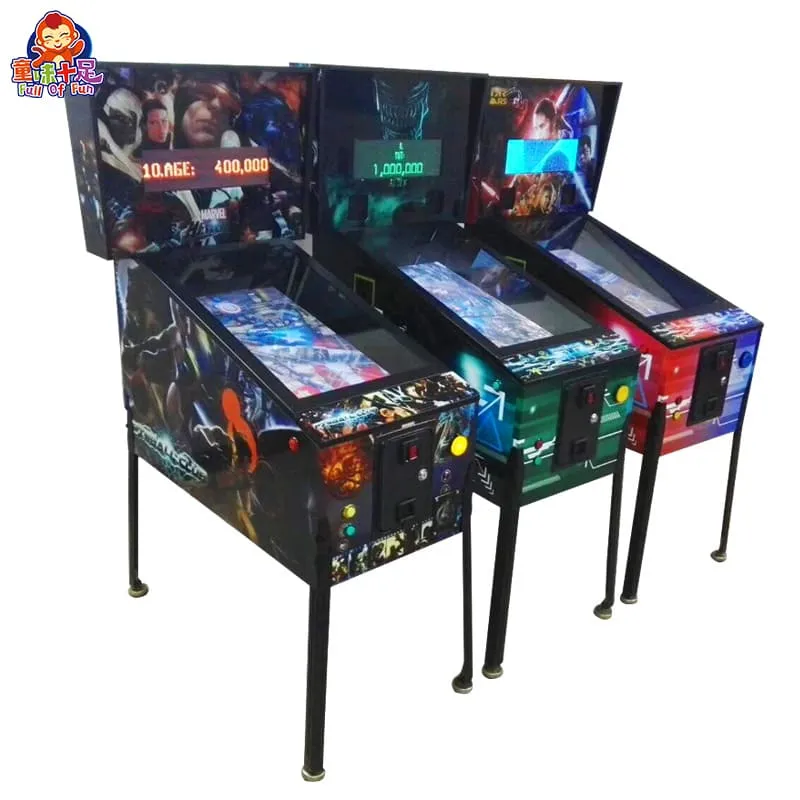

Coin pushers remain one of the most stable and profitable machines in the arcade entertainment industry in 2026. They are widely used in shopping malls, arcades, and family entertainment centers.
Before purchasing, most operators ask: How much does a coin pusher cost? Is it profitable? How should it be set up to maximize profit?
This guide explains everything—from pricing and costs to operation logic and common purchasing pitfalls.
What Is the Average Price of a Coin Pusher?
The price of a coin pusher depends on its type, player capacity, features, and whether it is commercial-grade.
By Type:
- Basic Home Version: Simple structure, suitable for home entertainment or small setups
- Entry-Level Commercial: Ideal for small arcades or trial operations
- High-End Commercial: Equipped with lighting, electronic systems, and multiplayer interaction for long-term profitability
Our Factory Reference Prices:
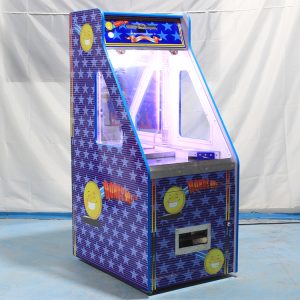
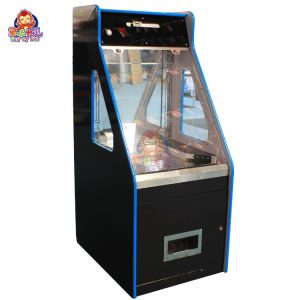
- Single-player coin pusher: $650
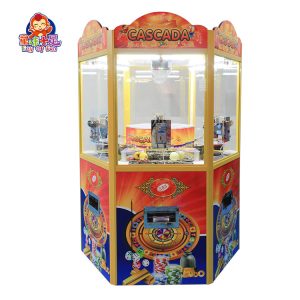
- 6-player interactive coin pusher: $900
- 4-player commercial coin pusher: $3,100
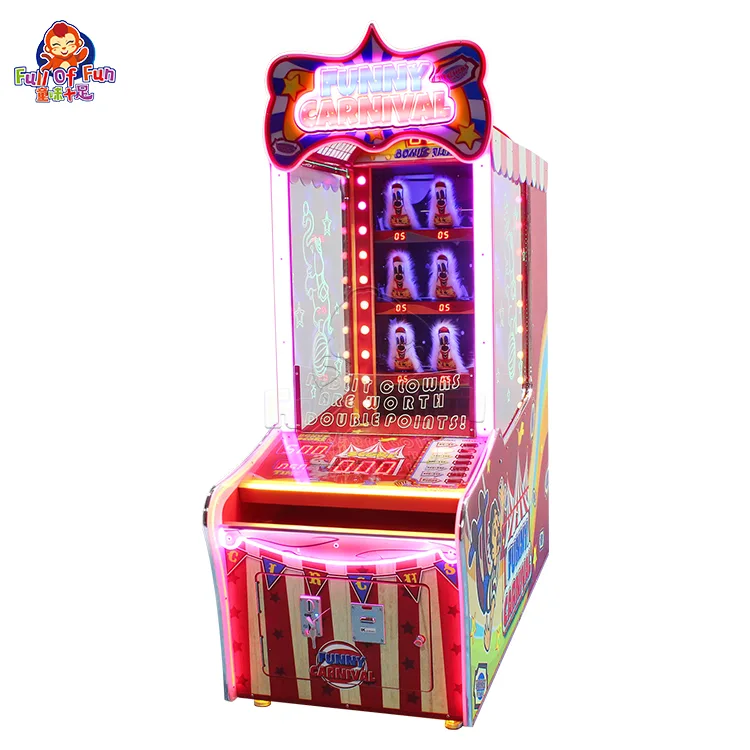
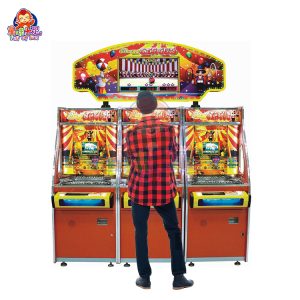
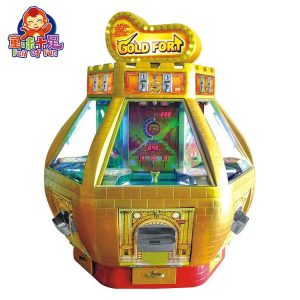
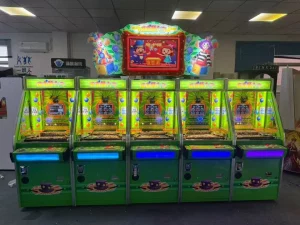
- Carnival-style multi-player coin pusher (upgraded 3-player version): $9,000
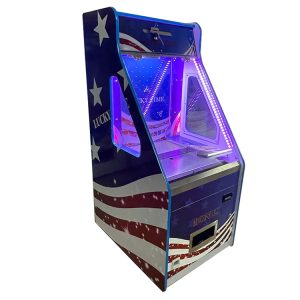
This carnival-style machine features a linked jackpot system with a large top screen and bonus draw mechanism, creating strong visual impact and a “jackpot attraction” that significantly boosts revenue.
Recommended Model:
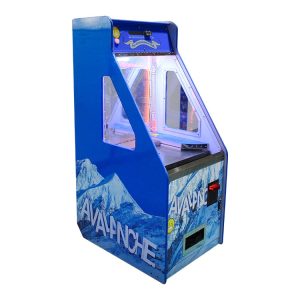
$650 single-player coin pusher — our best-selling model
- Stable structure
- Easy maintenance
- Customizable
- Ideal for beginners testing the market
Operating Costs and Revenue Structure
The profit model of a coin pusher is simple: coin input + probability control.
(1) Main Operating Costs:
- Machine purchase cost
- Venue rent or revenue sharing (mall/arcade)
- Electricity (relatively low)
- Prize replenishment (tickets, gifts)
- Maintenance (low mechanical wear)
(2) Revenue Sources:
- Player coin insertion (core revenue):
The primary income source, depending on foot traffic and player frequency - Prize redemption system (profit adjustment):
Balance player experience and profitability by controlling prize drop rates and costs - High-traffic locations (continuous cash flow):
In malls or tourist areas, machines can generate stable and ongoing income
In general, a well-operated coin pusher can achieve a payback period of 1–3 months, depending on location, traffic quality, machine settings, prize strategy, and daily operations.
How to Set Up a Coin Pusher for Target Profit
Profitability depends not only on the machine, but also on parameter settings and operation strategy.
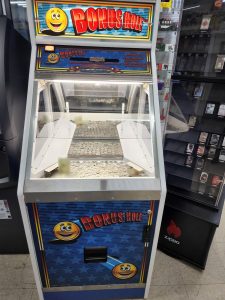
(1) Stainless Steel Coin Tray (Core Control Feature)
This is one of the most important profit-control components.
Features:
- 5-speed adjustable settings
- Flexible control over pushing frequency and difficulty
- Durable and suitable for long-term commercial use
Operating Logic:
- Higher pushing frequency → easier coin drops → higher win rate → attracts players but lowers profit
- Lower pushing frequency → harder to win → fewer payouts → higher profit margin
(2) Side Prize Hole Design (Key Profit Mechanism)
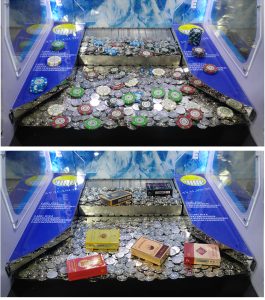
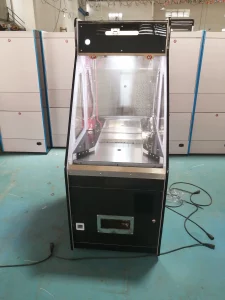
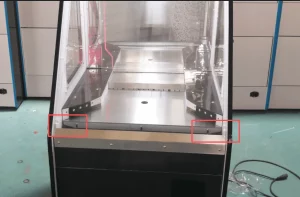
Coin pushers are designed with side collection holes. Some coins or prizes fall into these holes instead of reaching the player and are recovered by the operator.
Impact:
- Larger holes → more coins/prizes recovered → higher profit
- Smaller holes → more rewards to players → better experience but lower profit
This structure directly determines the machine’s earning capability. Operators must balance player satisfaction and profitability.
(3) Operation Optimization Tips
- New location:
Use lower difficulty settings to increase win rates and attract initial traffic - Stable phase:
Gradually increase difficulty to improve profit without harming user experience - High-traffic areas:
Use multiple machines or linked setups to enhance atmosphere and increase engagement
Read more: Are Coin Pusher Machines Profitable?
Common Pitfalls When Buying a Coin Pusher
Many beginners make costly mistakes when purchasing machines.
Common Issues:
❌ Buying refurbished or used machines with worn internal parts
❌ Low price but no after-sales support
❌ Missing key components (lighting, control systems, core structure)
❌ Hidden fees (shipping, packaging added later)
❌ Voltage and plug incompatibility (very common)
What to Confirm Before Purchasing:
- Is it factory direct supply?
- Is the quotation complete and transparent?
- Does it support local voltage (110V/220V)?
- Is technical support and spare parts available?
About Us – Coin Pusher Supplier
We are a professional arcade machine manufacturer from China with years of experience in coin pusher production.
Our Business:
- R&D and manufacturing of arcade machines (coin pushers, shooting games, racing machines, boxing machines, etc.)
- Multiplayer arcade system design and turnkey solutions
- OEM / ODM customization (appearance, function, branding)
- Export to global markets (Europe, Middle East, Southeast Asia, etc.)
Our Advantages:
- Factory-direct pricing (no middlemen)
- Durable and stable structure for long-term operation
- Deep customization support
- Operation and profit strategy guidance
We are not just a supplier—we are your profit-oriented partner.
Read more:Coin Pusher for Sale – A Complete Guide to Profitable Arcade Machines for Your Business
FAQ
Q1: Are coin pushers really profitable?
Yes, but profitability depends on location, operation, and settings—not just the machine.
With proper placement, optimized settings, and simple promotions (free coins, bonus plays), operators can significantly increase player retention and revenue.
Q2: Where should coin pushers be placed?
Ideal locations include shopping malls, arcades, family entertainment centers, tourist attractions, and small retail spaces.
Q3: Do machines require maintenance?
Maintenance is minimal. Regular tasks include cleaning coin paths, preventing jams, checking motors, and replenishing coins or prizes.
Q4: Can the machine be customized?
Yes. We support customization of appearance, logo, lighting effects, and gameplay features, including multiplayer systems.
Conclusion
In 2026, coin pushers remain a profitable investment, but competition has shifted from equipment alone to operational capability.
Success depends on location, settings, and user experience.
For beginners, it is recommended to start with entry-level machines, test the market, and gradually scale—this reduces risk and ensures more stable returns.