Product Categories
Latest News
Get A Free Quote Now !

Max
We are a professional arcade game machine manufacturer from China with over 10 years of industry experience.
Our factory ensures reliable quality and performance, delivering profitable and durable solutions for global arcade and entertainment businesses.
In the children’s amusement equipment industry, Kiddie Rides are a very typical yet consistently stable product. Whether at shopping mall entrances, supermarket doorways, or community commercial areas, these machines are almost always present and continue to generate revenue.
For B2B buyers, it is not just a machine—it is a business model that can be quickly validated, started with low cost, and easily replicated. Understanding this is more important than simply comparing prices.
1. What is a Kiddie Ride? Why It Generates Long-Term Profit
A Kiddie Ride is essentially a coin-operated or QR-code-activated children’s amusement machine. After payment, the machine runs for 1–3 minutes, completing one experience.
While it appears simple structurally, from a business perspective it has three critical characteristics:
- High-frequency consumption: Children tend to repeat the experience, and a single user may pay multiple times in a row
- Automated payment: No need for staff, reducing operating costs
- Wide scenario adaptability: Any location with child foot traffic is suitable
These three factors make Kiddie Rides a typical “light-asset cash flow machine.” Compared to large amusement equipment, they do not rely on complex operations or high investment, which is why they have long existed in the global market.
Note: According to the IMARC Group Children’s Entertainment Center Market Report, the global children’s entertainment center market is growing steadily at a CAGR of approximately 6.5%, expected to increase from about $13.7 billion in 2025 to $24.3 billion by 2034. Arcade-based entertainment zones account for the largest share (about 31.8%). At the same time, driven by rising demand for family experiences and shopping mall traffic generation, children’s arcade equipment is evolving from traditional coin-operated entertainment toward interactive, competitive, and AR/VR immersive experiences, becoming a key driver of future growth.
Read more:Complete Guide to Kiddie Rides: The Ideal Choice for Children’s Entertainment and Business Profit
2. Choosing Kiddie Ride Types: Different Styles Directly Affect ROI Speed
In actual procurement, many buyers focus on price first, but the more critical question is: The type you choose determines your revenue structure. Generally, Kiddie Rides can be divided into several types, each corresponding to different business stages:
Basic Models
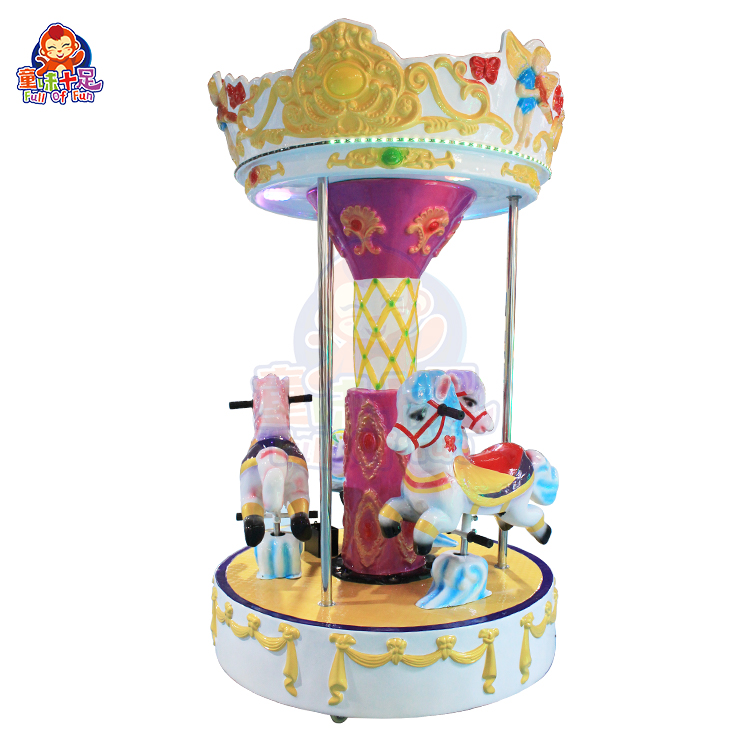
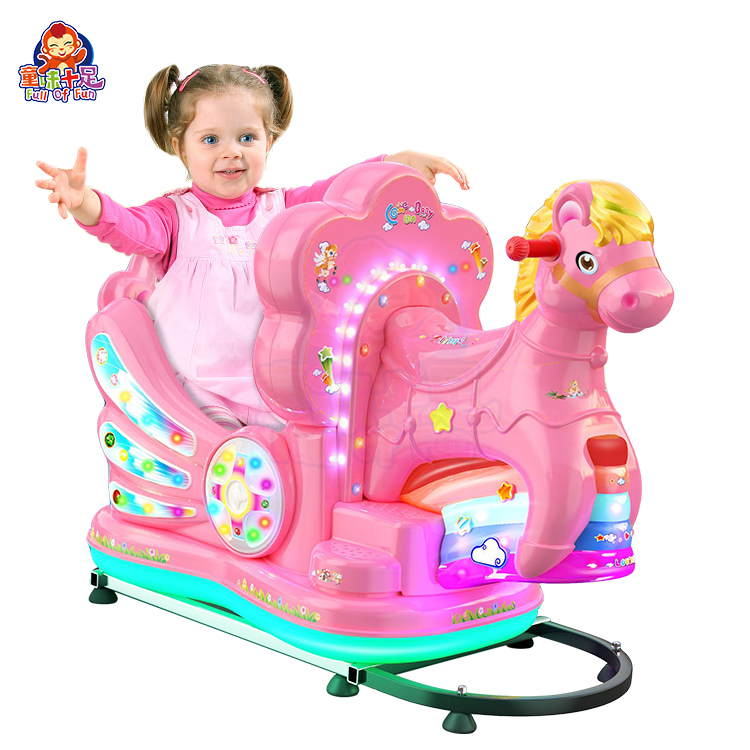
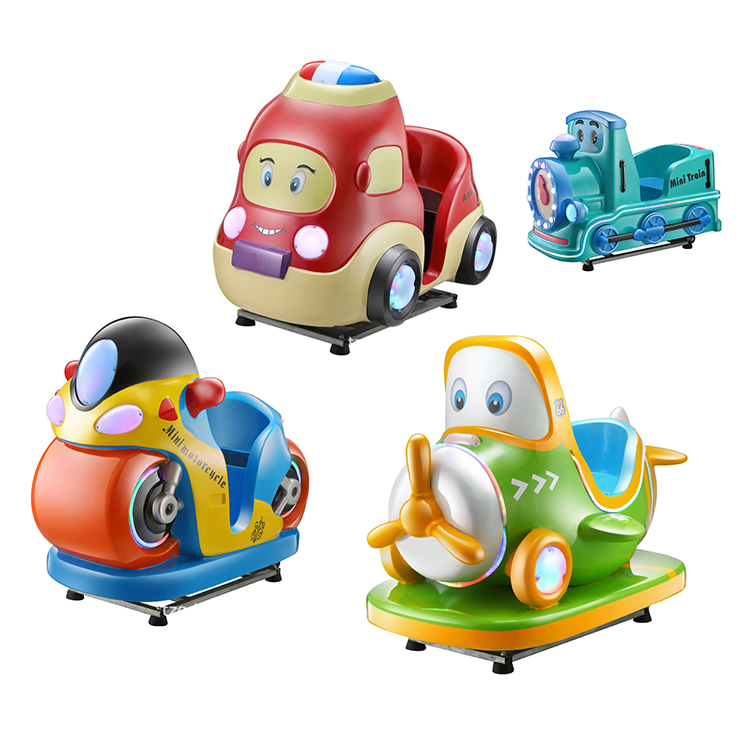
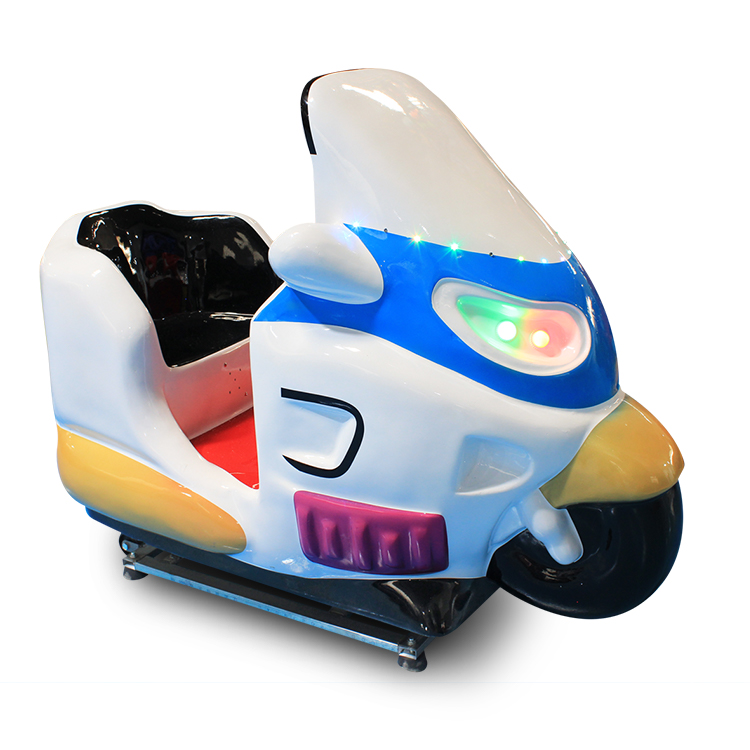
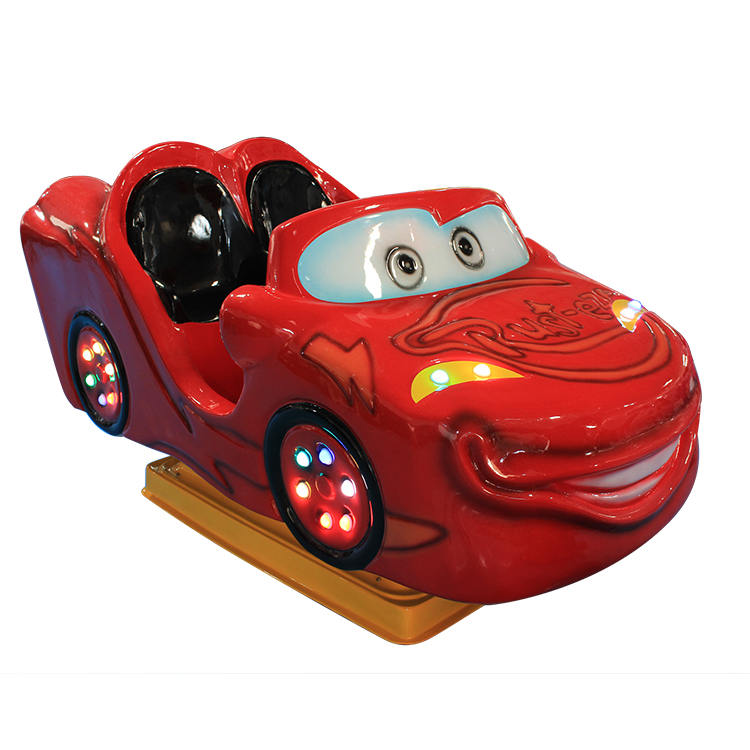
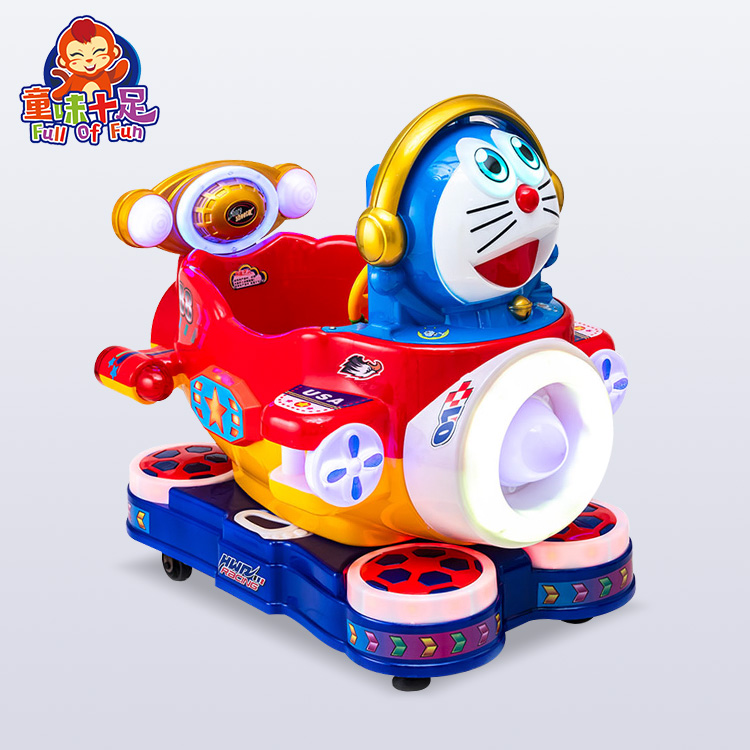
These are usually simple car or cartoon-shaped rides with stable structures and lower prices.
- Advantage: Low risk and easy maintenance
- Suitable for: Beginners testing the market
- Note: Highly dependent on location—low foot traffic means limited revenue
Interactive Models
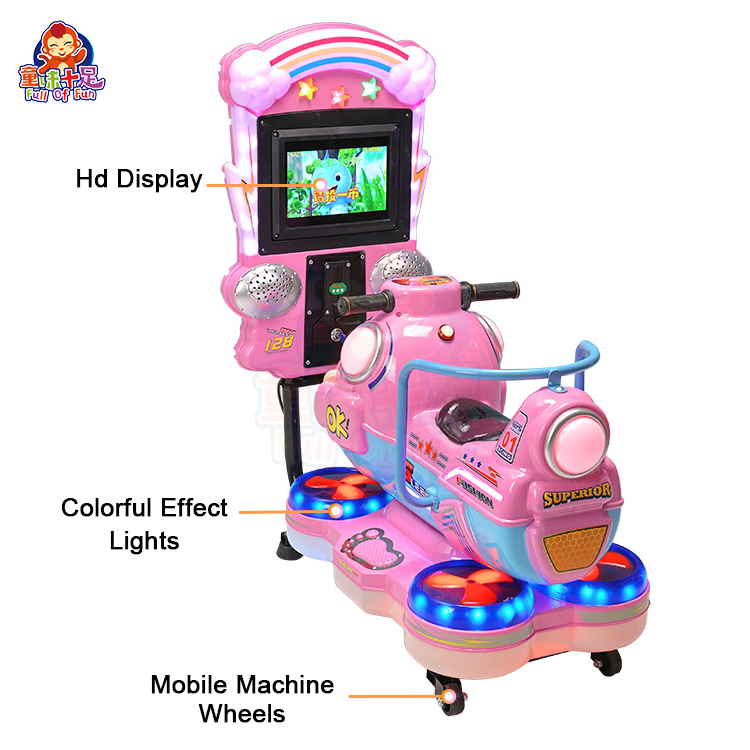
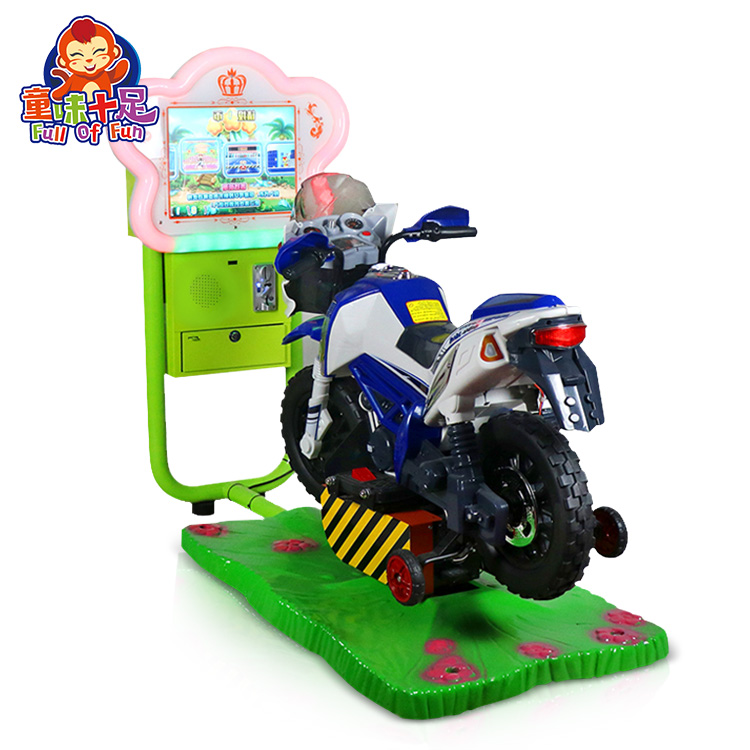
These include steering wheels, mini-games, and interactive features.
- Core value: Enhance user experience
- Result: Longer playtime and higher repeat rates
- In the same location, these typically generate higher revenue per unit
Themed / Eye-Catching
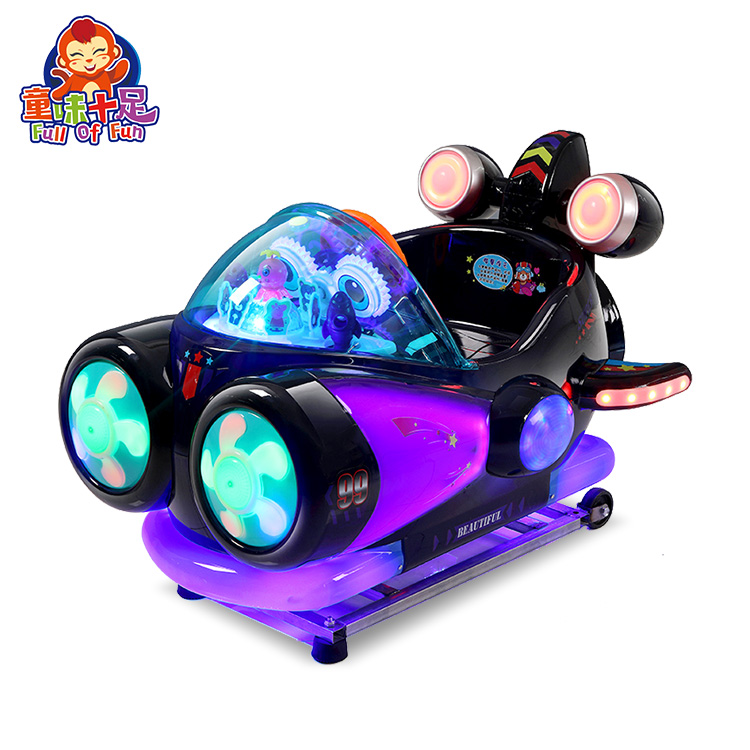
Examples include spaceship, dinosaur, or highly distinctive designs.
- Core function: Attract attention
- Purpose: Traffic generation rather than direct profit
- Often used as anchor machines in a location
💡 Pro Strategy for Operators
For operators who have validated their business model, a combination strategy is more effective:
- One high-visual-impact machine for attracting users
- One to two stable machines for consistent revenue
This combination is more scalable than operating a single machine.
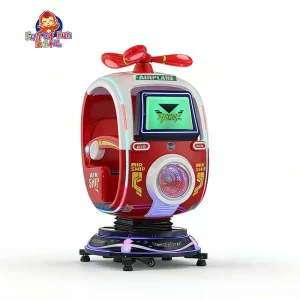
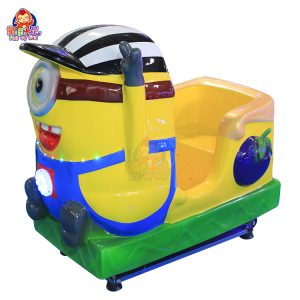
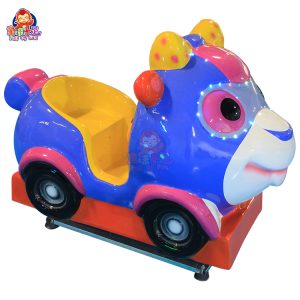
3. Price Range: How to Choose Between $200–$2000
Kiddie Ride prices typically range from $200 to $2000. The difference comes from configuration and business positioning, not simply quality.
From a procurement perspective:
- $200–$500: Basic models for market testing
- $500–$1200: Interactive models for higher efficiency
- Above $1200: Large or customized units for traffic attraction or branding
Key pricing factors include:
- Functional configuration (interactive features, screens)
- Materials (plastic vs. fiberglass)
- Size (single-seat vs. multi-seat)
- Payment systems (coin vs. QR code)
For most B2B buyers, a phased investment strategy is more reasonable than purchasing high-end equipment upfront. Because in this business, success depends not on the machine itself, but on whether you’ve found the right profit model.
4. Profit Model Analysis (Based on $1 Per Play)
In real-world operations, revenue can be estimated using a standardized model. Here, we assume: Price per play = $1. Under this assumption, revenue depends mainly on daily usage frequency, which is influenced by location, foot traffic, and machine attractiveness.
📊 Typical Operating Benchmarks:
- Price per play: $1
- Daily usage: 20–80 plays (depending on location)
- Daily revenue: $20–$80
- Monthly revenue: $600–$2400
With a machine cost of $300–$800, most normal locations can achieve payback within 1–2 months, followed by stable profit.
📌 Key Principle:
The machine determines the revenue ceiling, but the location determines actual income.
The same machine may perform very differently across locations. High-traffic areas like mall entrances or supermarket entrances typically have higher conversion rates, while low-traffic areas significantly reduce utilization. Therefore, revenue estimation should always prioritize location over equipment alone.
5. How to Start a Kiddie Ride Business from Zero
For beginners, the most effective approach is not large investment, but small-scale testing to build a working model. Recommended steps:
Step 1: Choose the Right Location
Focus on areas with high child traffic: Mall entrances, Supermarket entrances, Community commercial zones. This is the most critical factor.
Step 2: Start Small
Deploy 1–2 machines instead of scaling immediately. At this stage, the goal is not profit but data validation: Daily usage frequency, Price acceptance, Payback period.
Step 3: Optimize Based on Data
Increase machines that perform well, adjust product mix, and improve location layout.
Step 4: Scale After Validation
Once a single location proves profitable, replicate the model. This is where real profit begins.
6. How to Choose a Supplier: The Key to Long-Term Stability
In B2B procurement, supplier selection is often more important than price, as it directly affects machine reliability and long-term costs. Key factors to evaluate:
- Whether the supplier is a real factory (not just a trading company)
- Quality of core components (motor, structure, shell)
- Export experience (understanding different market needs)
- After-sales support (spare parts, remote assistance)
A reliable supplier reduces failure rates and ensures smoother scaling.
7. FAQ: Key Questions Before Purchasing
Q1: Which markets are suitable for Kiddie Rides?
A: Almost all markets with children’s consumption scenarios, including malls, supermarkets, restaurants, amusement parks, and community spaces. The simple gameplay makes it highly adaptable globally, with stable demand in Europe, the Middle East, Southeast Asia, and beyond.
A: Almost all markets with children’s consumption scenarios, including malls, supermarkets, restaurants, amusement parks, and community spaces. The simple gameplay makes it highly adaptable globally, with stable demand in Europe, the Middle East, Southeast Asia, and beyond.
Q2: Does it require staff to operate?
A: No. It is a low-maintenance machine requiring only periodic checks, cleaning, and cash collection.
A: No. It is a low-maintenance machine requiring only periodic checks, cleaning, and cash collection.
Q3: What payment methods are supported?
A: Standard coin operation, with upgrades available for QR code payments, IC/RFID cards, and local e-wallets.
A: Standard coin operation, with upgrades available for QR code payments, IC/RFID cards, and local e-wallets.
Q4: Can it be customized?
A: Yes. Most manufacturers offer OEM/ODM services, including design, branding, lighting, and language customization.
A: Yes. Most manufacturers offer OEM/ODM services, including design, branding, lighting, and language customization.
Q5: How much can one machine earn per day?
A: Depends on traffic and pricing. At $1 per play, 20–50 daily uses is common in high-traffic areas.
A: Depends on traffic and pricing. At $1 per play, 20–50 daily uses is common in high-traffic areas.
Q6: What is the lifespan?
A: Typically 3–5 years, with only minor consumable parts needing replacement.
A: Typically 3–5 years, with only minor consumable parts needing replacement.
Q7: Is shipping and installation complicated?
A: No. Machines are shipped assembled or semi-assembled and only require power connection. Installation guidance is usually provided.
A: No. Machines are shipped assembled or semi-assembled and only require power connection. Installation guidance is usually provided.
Q8: How is after-sales support handled?
A: Standard manufacturers provide a 1-year warranty and lifetime technical support.
A: Standard manufacturers provide a 1-year warranty and lifetime technical support.
Q9: Is it suitable for beginners?
A: Yes. Low investment, simple operation, and fast ROI make it ideal for entry-level investors.
A: Yes. Low investment, simple operation, and fast ROI make it ideal for entry-level investors.
Q10: Can it be scaled into a small project?
A: Yes. Combining 3–10 machines can form a small children’s entertainment zone with more stable income.
A: Yes. Combining 3–10 machines can form a small children’s entertainment zone with more stable income.
8. Conclusion: Kiddie Ride Is a Replicable Profit Model
On the surface, a Kiddie Ride is just a children’s amusement device. But from a business perspective, it is a standardized profit tool.
Its real value lies not in how much one machine earns, but in:
- Whether it can achieve fast ROI
- Whether it can be replicated across locations
- Whether it can generate continuous cash flow
For B2B buyers, this is a classic low-risk trial project.
Instead of overanalyzing, start with 1–2 machines and validate with real data.
Because in this industry, results are not determined by plans—but by execution and data.
Welcome To Share This Page: