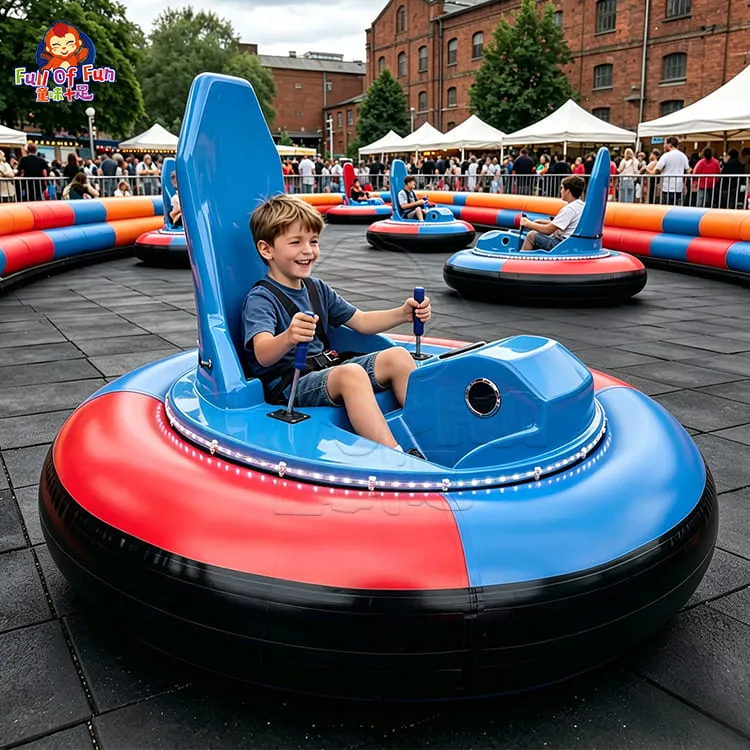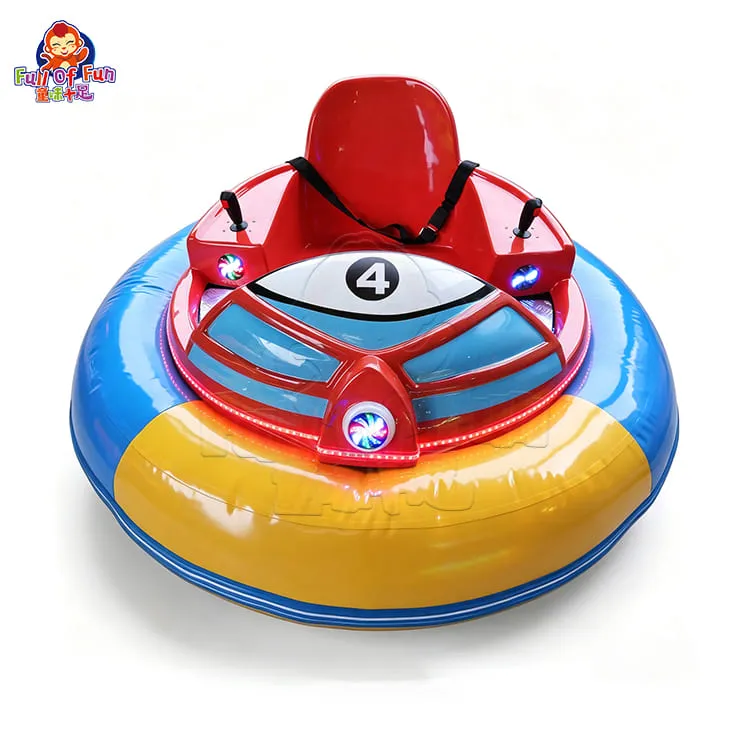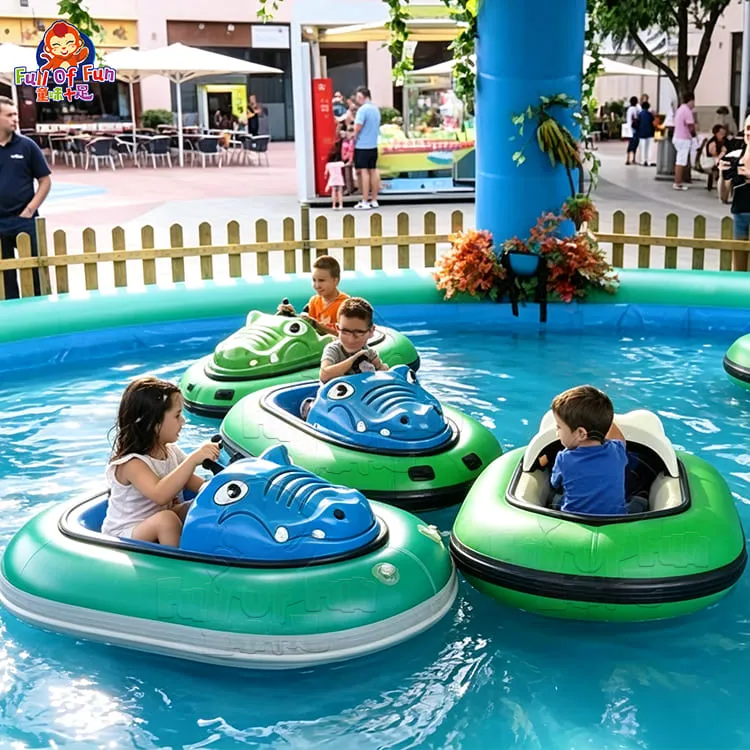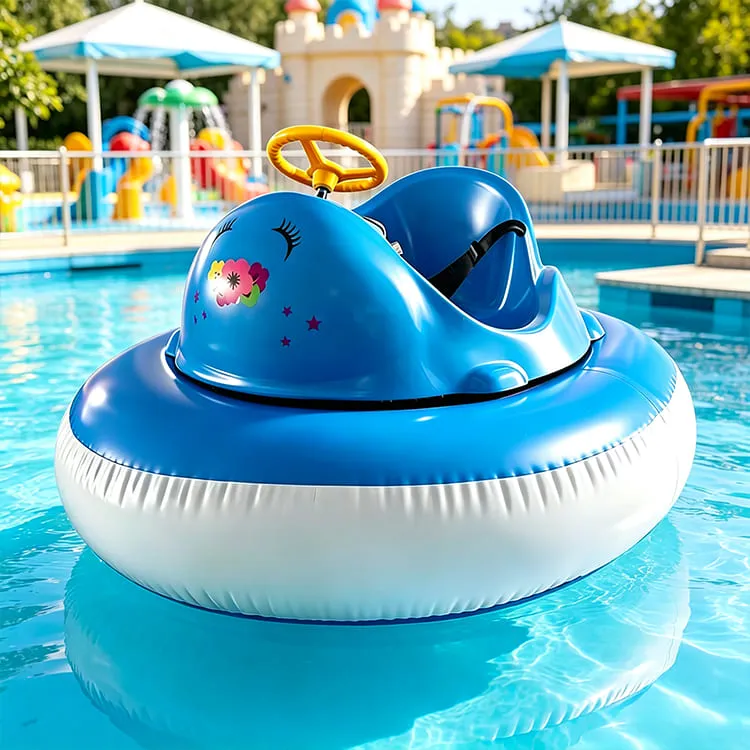

Here’s the short answer: buying commercial bumper boats well comes down to three questions, not one. Will the boats fit your pool and your operating plan? Can one season realistically recover the installed cost? And can the fleet actually arrive, launch, and stay serviceable after the deposit clears? Nail those three, and the unit price stops being the scary part.
These are the questions we walk buyers through every week when they start comparing commercial bumper boats for sale. Based on Full of Fun’s roughly 15 years exporting coin-operated amusement equipment to operators in 100+ countries, the projects that go smoothly are almost never the ones that chased the lowest quote. They’re the ones that scoped the water, the season, and the shipment before they compared suppliers.
The most common misread in this category? Treating the boat as the thing that makes the money. In our experience it’s usually the site that decides the outcome — your usable water area, your ride cycle, and your operating season shape the take far more than the hull does. This guide gives you three tools to get each right: (1) the Water-to-Wheel Fleet Fit for sizing, (2) the Splash-Season Break-Even Ladder for ROI, and (3) the China-to-Splash Release Path (with a 7-Point Hull-to-Drive Check) for sourcing without losing visibility.
Define Your Bumper Boat Project Before You Ask Anyone for a Price
Scope first, shop second. Emailing five suppliers to ask “how much are your bumper boats?” tends to get you five prices for five different things, with no way to compare them. We see it constantly.
Before you request a quote, write down the operating brief. It takes twenty minutes and it changes every conversation that follows:
- Venue type: FEC (family entertainment center), amusement park, resort lagoon, water-play zone, campground, or a seasonal pop-up attraction. Each carries different supervision, water, and permit realities.
- Riders: target age range, whether adults ride, and single- or two-seat boats.
- Operating window: daily hours and, critically, how many weeks a year you’ll actually run.
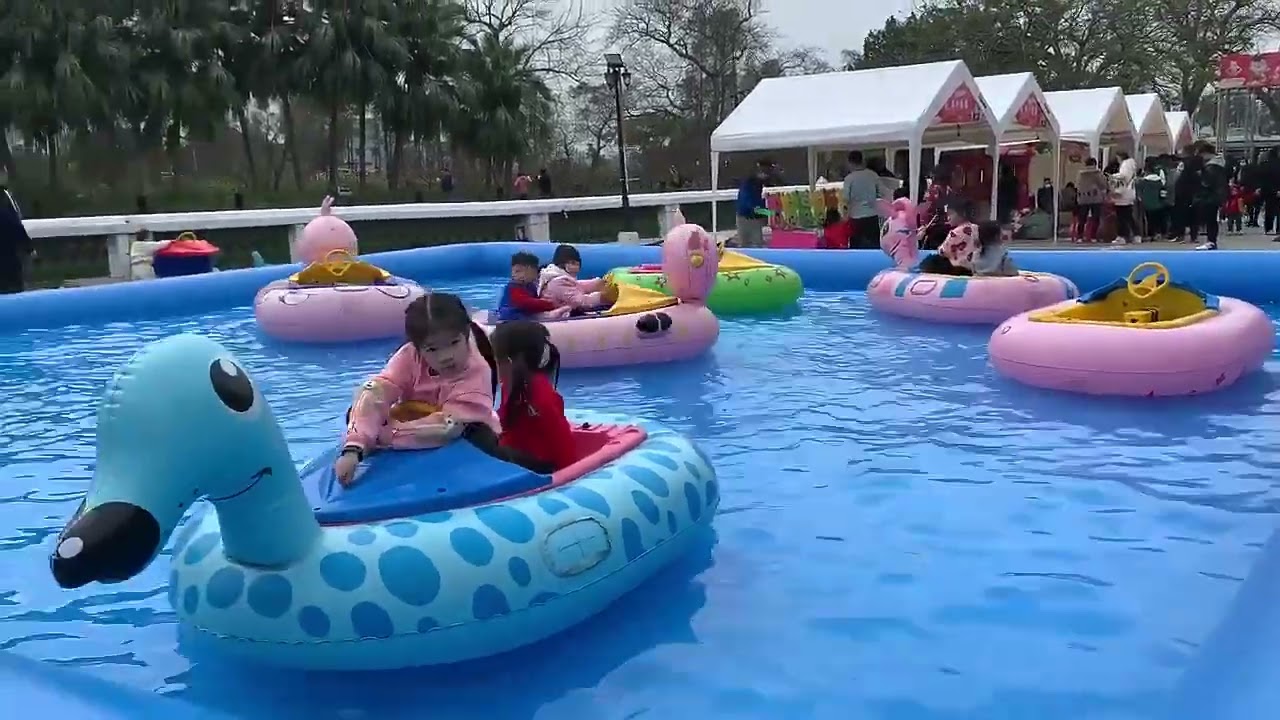
- The water: existing pool, planned pool, or a portable/inflatable pool you’d buy alongside the boats.
- New build vs. fleet replacement: replacing tired boats is a different spec conversation than a first install.
Then prepare a purchasing checklist to attach to every RFQ: quantity, power preference, branding, spare-parts package, delivery destination, target opening date, and which documentation you’ll need for your market. Suppliers who get this brief quote the exact same scope, allowing you to finally compare like with like.
One thing to settle early: don’t confuse a low unit price with a low project cost. A cheap boat with no spares, a mismatched charger, and EXW shipping terms can land more expensive than a fully specified quote. We’ll come back to that in the ROI section — it’s the mistake we see most.
How Many Boats? Run the Water-to-Wheel Fleet Fit First
Buy the fleet your water and your demand can actually support — not the number that physically floats. Overbuying strands capital in boats that idle; underbuying builds a queue that kills repeat rides. The Water-to-Wheel Fleet Fit is the method we use to land in the middle. It runs on two sides — the water (how much usable space you have) and the wheel (how fast you can cycle riders through) — and you take the lower answer.
You work out two numbers, then pick the smaller one. That’s the whole method.
1. The Water Side — How many boats can safely run at once
- Start with your usable water, not total water. Take the full surface area, then subtract the parts boats can’t use: filtration and drain zones, shallow spots, the docking and loading area, a safety margin along the walls, and any fixed features like islands or poles. What’s left is your real operating space.
- Ask how much room one boat needs to move. This is bigger than the boat itself — it needs turning room, bumping room, and clear sightlines for your operator. Get this per-boat figure from your supplier for the exact model and pool shape you’re using; guessing from the hull size alone is how pools end up gridlocked.
- Divide the first by the second. Usable water divided by the room one boat needs gives you the maximum boats that can safely run at the same time.
2. The Demand Side — How many boats your busiest hour needs
- Estimate riders at your peak hour. How many paying riders do you expect in your single busiest hour?
- Work out how many riders one boat handles per hour. A ride isn’t only the ride itself — add loading, unloading, cleaning/reset, and any charging downtime to get the full cycle time. A shorter cycle means one boat serves more riders per hour.
- Match the two. Peak riders divided by what one boat handles per hour tells you how many boats your demand actually needs.
Then take the lower of the two numbers. To show the logic with example figures only: if demand points to 8 boats but the water safely holds 6, don’t buy 8 — extend hours, speed up the cycle, or rethink the pool. If the water holds 12 but demand only justifies 6, you’ve just found both your starting fleet and your room to grow.
| What you need | Where the number comes from |
|---|---|
| Total water surface area | Pool drawing or a quick physical measurement |
| Space boats can’t use | Your pool plan (drains, shallows, dock, wall margins) |
| Room one boat needs to move | Your supplier, for your specific model and pool shape |
| Ride cycle time | Your estimate or a trial run (ride + load/unload + reset) |
| Riders at your peak hour | Your own venue traffic forecast |
| Boats to buy | The lower of the water capacity number and demand number |
Then one last decision, made on purpose rather than by default: a rotation boat. If your season is long, your nearest technician is far, and parts take weeks, a spare boat keeps the attraction open during repairs. If not, skip it. A bumper boat fleet should pass the Water-to-Wheel Fleet Fit before it passes procurement approval.
Note: Any dimensions, ride durations, or demand figures plugged in here are illustrative example inputs — not operating benchmarks or guarantees. Confirm the maneuvering footprint and safe active count for your specific model and site.
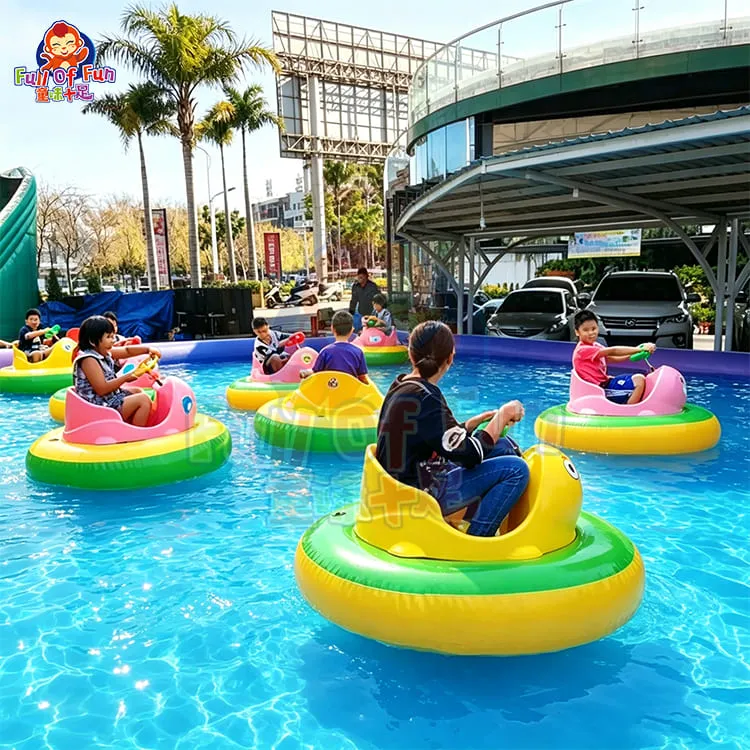
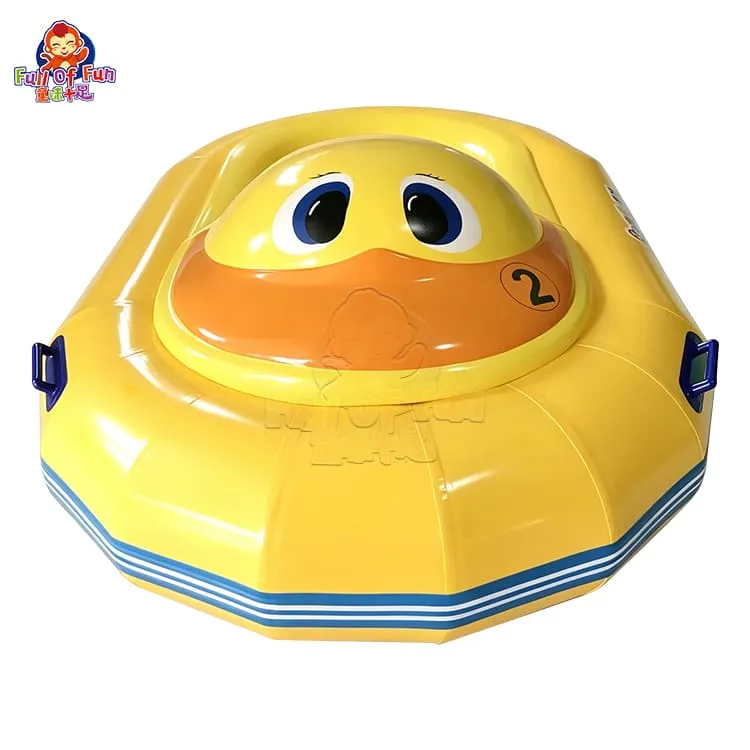
Choosing Among Commercial Bumper Boats for Sale: Match Configuration to Your Water
Match the boat to the operating environment, not to the photo in the catalog. Two boats can look identical and behave completely differently once you factor in who rides them, what water they sit in, and how your staff charge and store them overnight.
The decisions that actually matter:
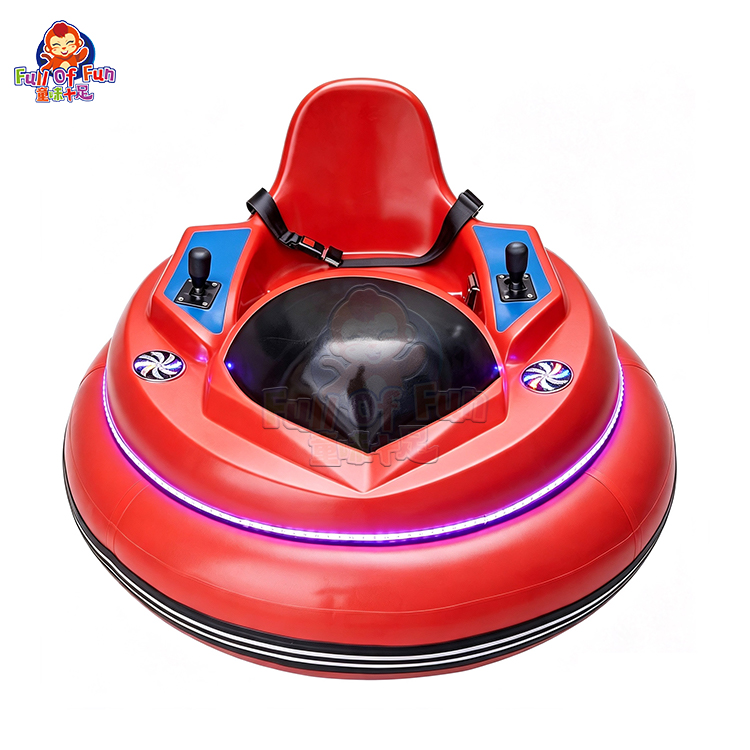
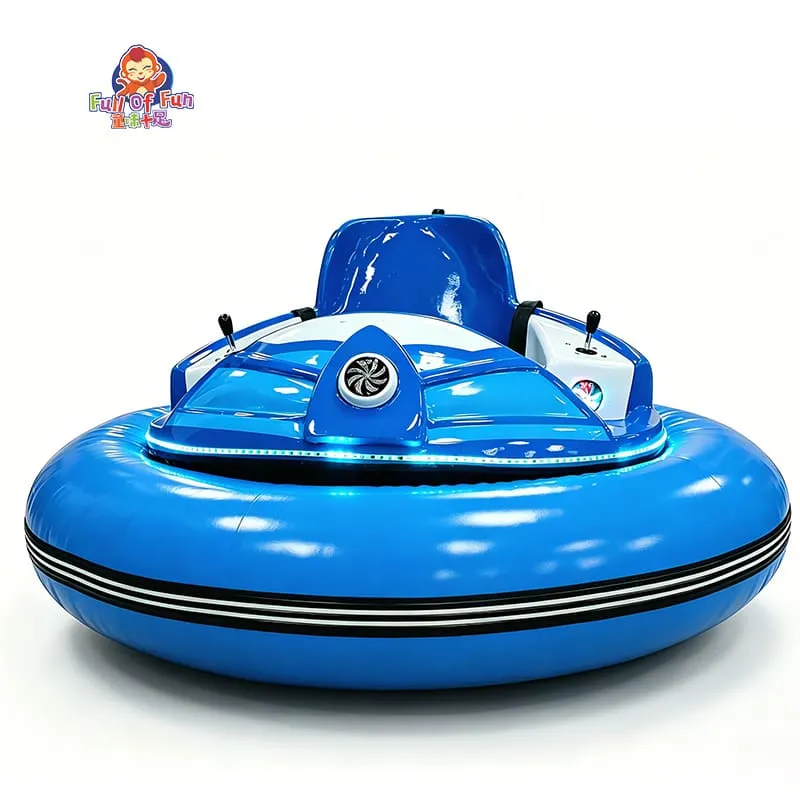
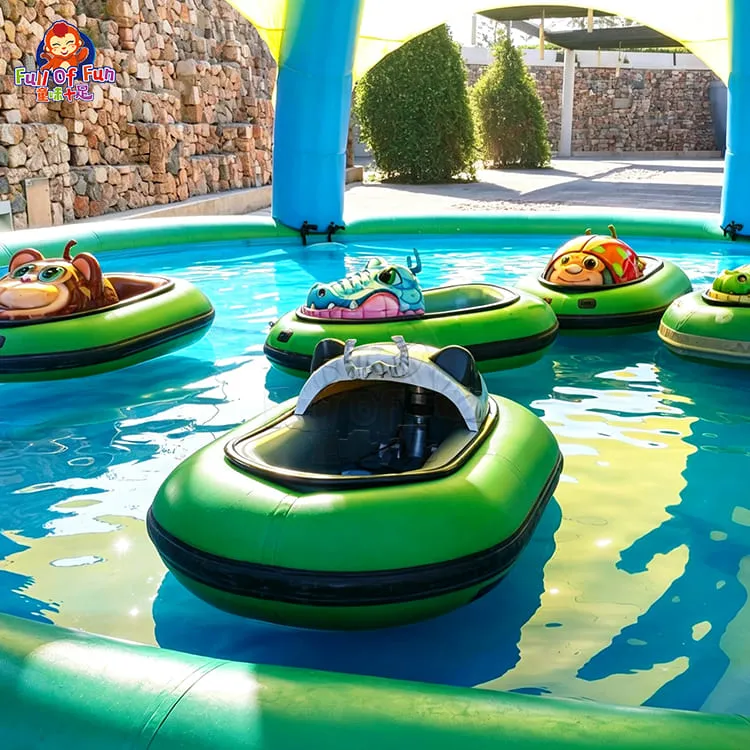
- Propulsion and charging workflow: Electric bumper boats are a common commercial configuration in the projects we ship — generally quieter, with no fuel handling and simpler daily operation — though the right choice depends on your site and market. And “electric” is not one thing. Ask how the charging works: swappable batteries vs. charge-in-place, how many chargers ship, and what the overnight routine looks like for your whole fleet. This drives your labor plan more than the spec sheet suggests.
- Rider capacity and profile: Single-seat, two-seat, adult-rated, child-rated. Confirm weight limits and age suitability against your target crowd rather than assuming.
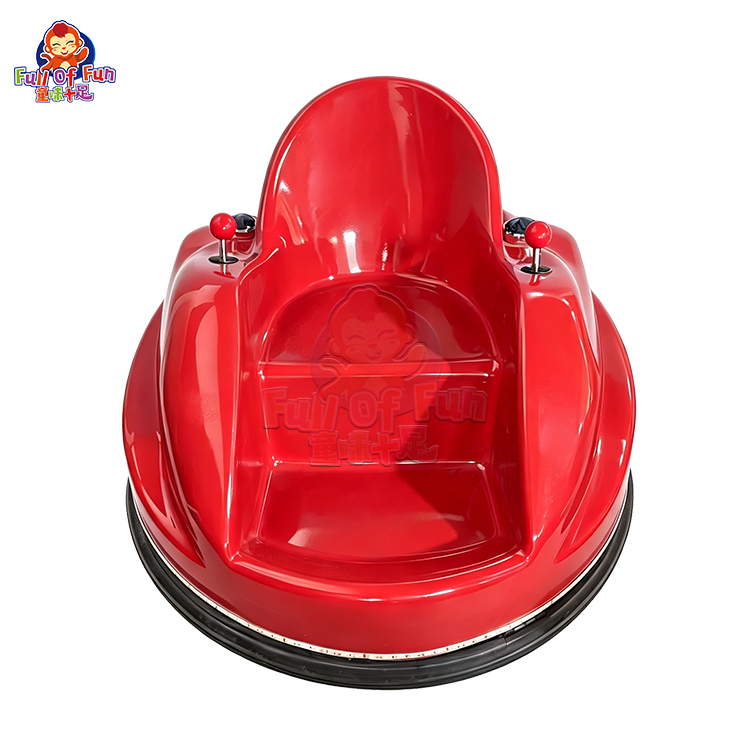
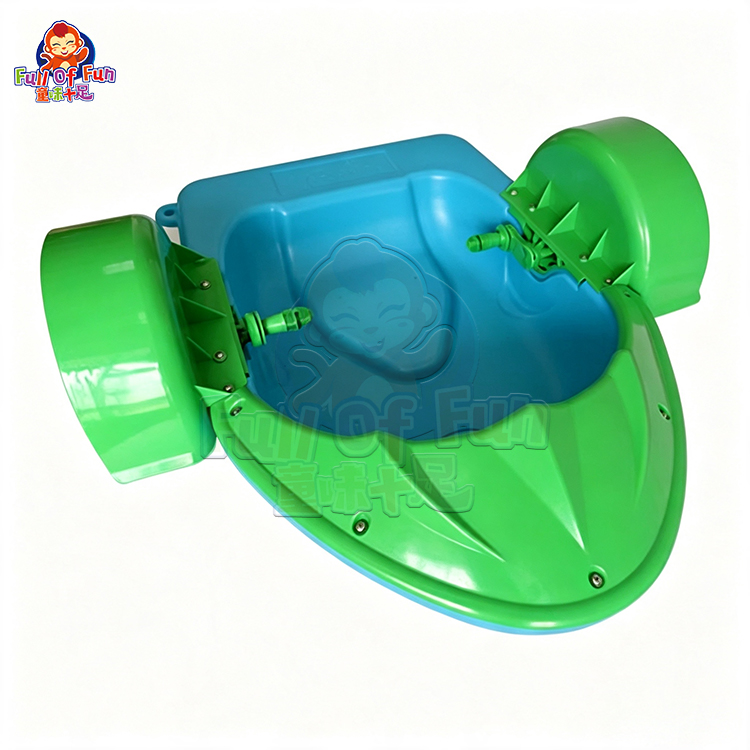
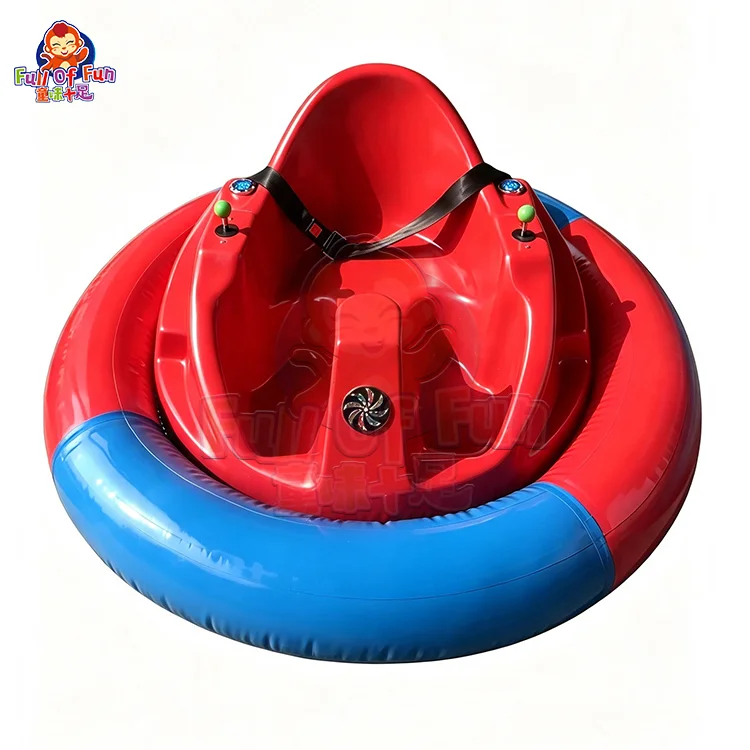
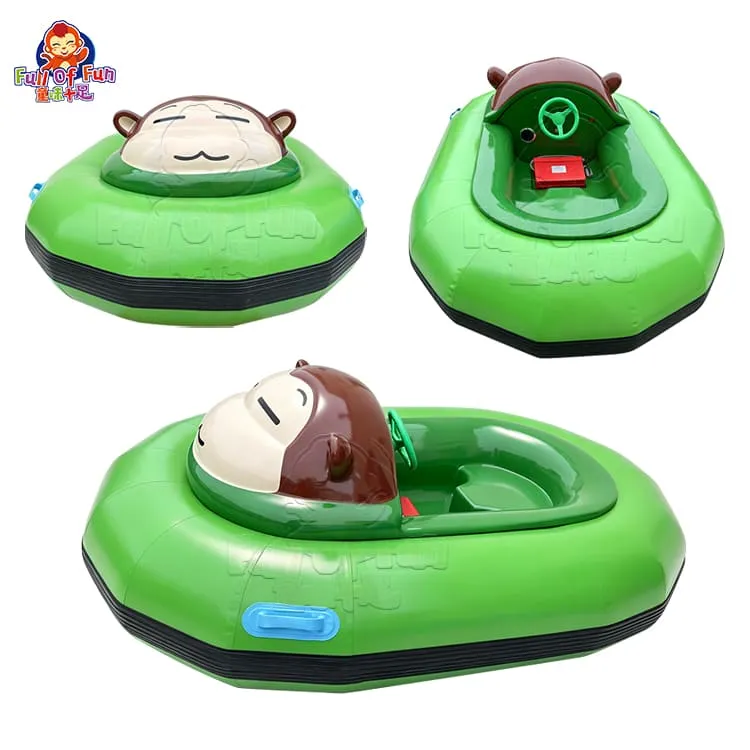
- Hull and bumper: Hull style (seamless molded FRP/PE), heavy-duty inflatable bumper ring or PVC rub rail, seat ergonomic design, steering wheel/joystick, and throttle layout. If water-spray or squirt features are part of the appeal, confirm they’re built-in on the model you’re quoting.
- Water conditions: Freshwater, chlorinated, salt water, indoor pool, or outdoor-in-full-sun. State your water condition up front — it affects material choices (e.g., anti-corrosion hardware, UV-stabilized resins and plastics).
- Branding: Color palette, custom logos, LED accent lighting, and themed graphics. Worth locking before production, not after.
The rule that saves the most grief: insist on a model-specific specification sheet, not a generic product image. Any runtime, speed, charge time, or water-depth number should arrive tied to a named model and the conditions it was measured under. Runtime in particular depends on load, driving style, water resistance, battery age, and temperature — a single “runs X hours” claim with no conditions attached tells you very little. This isn’t just diligence; the exact configuration you confirm here becomes the benchmark you inspect against later.
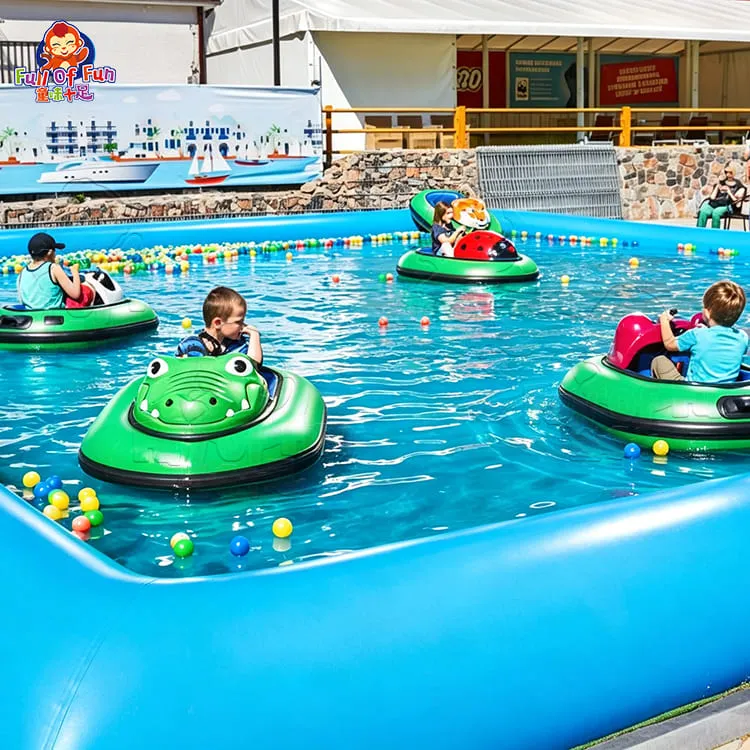
Plan the Water, Safety and Daily Operations Before You Order
Site readiness is a production-order prerequisite, not an opening-week scramble. The boats are the easy part. What trips up first-time operators is everything around the water — and most of it is destination-specific, which means your supplier can’t answer it for you.
Confirm these locally, in writing, before you commit to a build slot:
- Permits, insurance, and staffing: Local permits, water-use permissions, lifeguard or attendant obligations, life vest rules, and rider age restrictions vary by country, region, and municipality — and by your insurer. This is a “call your local authority and your insurer” item, not a supplier item.
- Water conditions and depth: Confirm minimum and maximum operating water depth with both the supplier and your local safety authority. Depth, edge protection, filtration intake safety, and rescue access belong in this review.
- Guest flow and loading: Ticketing, waivers and rules signage, queue railings, a defined non-slip loading dock, a clear exit area, and accessibility. Design a separated boarding/exit zone — don’t treat the whole pool perimeter as ride space.
- Daily procedures: Opening checks, battery charging schedules, daily cleaning/sanitation, hull inspection, rescue drills, and night closing routines. Write them down before day one.
- Weather and off-season: High-wind/lightning closure policies and secure, dry storage where the fleet lives during the off-season.
This is a planning checklist, not a substitute for local engineering, safety, and regulatory review. Requirements differ by jurisdiction — validate every item with the relevant local authority and a qualified professional.
Are Bumper Boats Profitable? Build the Splash-Season Break-Even Ladder
The ticket price is not your profit. It’s a confusion we see derail otherwise sound business cases. The Splash-Season Break-Even Ladder addresses it by forcing you to calculate contribution per paid ride first, then testing whether one season’s demand can recover the whole installed investment. No revenue promises — just your numbers, run honestly.
The 5 Rungs of the Break-Even Ladder:
Rung 1 — Total Installed Cost: Equipment price + export packing + international freight & insurance + import duties/taxes + delivery to site + pool prep/docking + initial spare parts + commissioning.
Rung 2 — Contribution per Paid Ride: Ticket price minus per-ride variable costs (payment processing fees, attendant labor allocated per ride, charging power, cleaning/wear).
Rung 3 — Estimated Seasonal Paid Rides: Operating days x average paid rides per day (capped strictly by physical fleet capacity).
Rung 4 — Seasonal Operating Contribution: (Seasonal Paid Rides x Contribution per Ride) minus Seasonal Fixed Costs (lease, core staff, insurance, marketing, maintenance reserve).
Rung 5 — Payback Seasons: Total Installed Cost (Rung 1) ÷ Seasonal Operating Contribution (Rung 4).
Run it three ways. Always.
| Line Item | Conservative Case | Expected Case | Peak Season Case |
|---|---|---|---|
| Operating days / season | 60 days | 90 days | 120 days |
| Avg. paid rides / day (fleet) | 120 rides | 250 rides | 450 rides |
| Ticket price / ride | $6.00 | $7.00 | $8.00 |
| Variable cost / ride | $1.50 | $1.40 | $1.30 |
| Contribution / ride | $4.50 | $5.60 | $6.70 |
| Seasonal fixed overhead | $8,000 | $10,000 | $12,000 |
| Total seasonal paid rides | 7,200 rides | 22,500 rides | 54,000 rides |
| Seasonal net contribution | $24,400 | $116,000 | $349,800 |
| Est. Installed Cost (6-8 boats) | ~$25,000 | ~$28,000 | ~$32,000 |
| Estimated Payback Period | ~1 season | ~0.25 season (weeks) | Rapid (weeks) |
The discipline behind the ladder:
- The conservative case exists to show your downside — it doesn’t need to look flashy.
- The expected case is what you plan and finance against.
- The peak case never justifies the purchase on its own. If a project only works at peak, it doesn’t work.
- If revenue looks strong but payback stays weak, the problem is usually installed cost, labor model, operating days, or ticket structure — not the boat.
Disclaimer: The Splash-Season Break-Even Ladder is a planning tool, not a revenue or payback guarantee. Every price, ride count, and cost entered above is an illustrative example input — not market data, not a Full of Fun quotation, and not a forecast. Actual results depend on weather, footfall, pricing, hours, staffing, regulations, maintenance, and downtime.
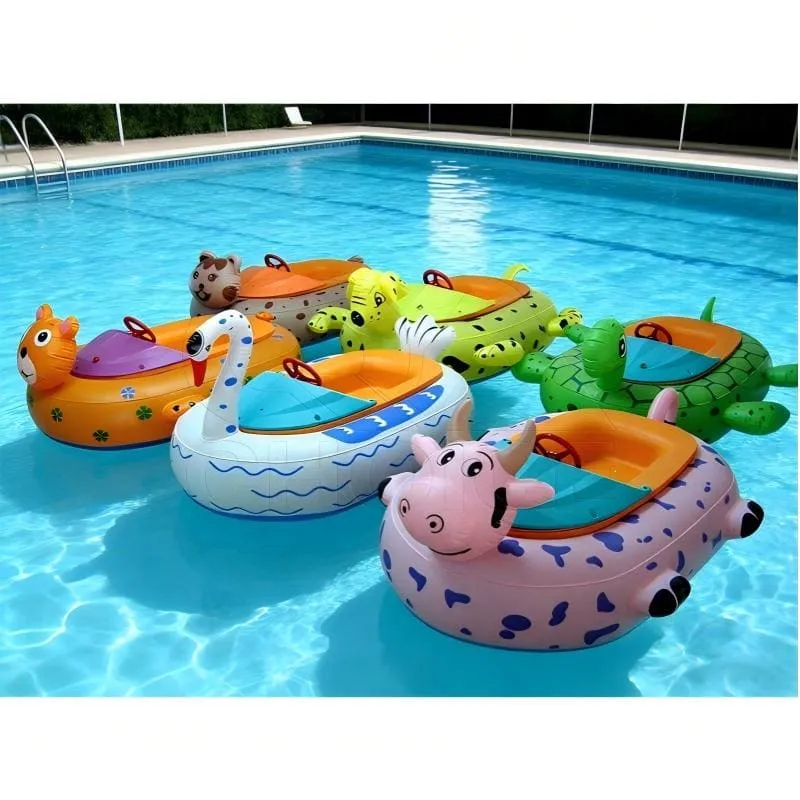
Sourcing Commercial Bumper Boats for Sale From China: The China-to-Splash Release Path
A China-sourced bumper boat isn’t procurement-ready until it has a China-to-Splash Release Path. The deposit is not the finish line — the boats floating and earning on opening day is. A lot of avoidable risk sits in the gap between those two moments, and it’s far more manageable when you treat it as six distinct stages instead of one leap of faith.
Stage 1 — Scope Lock
Before the final quote: pool dimensions, active fleet quantity, model and seating, battery/charger approach, branding, destination, requested Incoterm, spare-parts package, and required market compliance documents. This is the written scope sheet that makes competing quotes comparable.
Stage 2 — Pre-Production Verification
Confirm engineering drawings, mold specs, hull color swatches, decal proofs, voltage/plug specs for chargers, and component datasheets before assembly starts. Stop errors before resin is poured.
Stage 3 — In-Production Milestones
Receive photo/video updates during hull molding, electrical wiring, motor mounting, and bumper tube attachment. Ensures transparency throughout the build cycle.
Stage 4 — Pre-Shipment Factory Inspection (7-Point Check)
Every unit undergoes the mandatory 7-Point Hull-to-Drive Inspection (detailed below) in water testing tanks prior to balance payment release.
Stage 5 — Shipping & Customs Clearance
Export wooden crating, Bill of Lading, commercial invoice, packing list, and CE/RoHS certificates provided for seamless customs clearance at destination port.
Stage 6 — On-Site Commissioning & Launch
Unboxing, battery charging verification, pool buoyancy check, staff operator training, and grand opening launch.
The 7-Point Hull-to-Drive Inspection Checklist
We perform this rigorous water-tank test on every bumper boat before packing:
- Hull Waterproofing & Structural Seal: Full water immersion test to verify zero hull leaks, seam splits, or deck ingress.
- Inflatable Bumper Pressure Seal: 24-hour air-retention test on PVC/TPU inflatable rings to guarantee no valve or seam leakage.
- Drive Motor & Steering Responsiveness: Full power forward/reverse, turning radius check, and propeller shaft seal inspection under load.
- Battery & Charger Electrical Cycle: Voltage delivery test, thermal monitoring during charge, and circuit breaker cut-off check.
- Water Squirt Pump Function: High-pressure water squirt gun flow test, hose fittings check, and electric pump isolation.
- Control System & Emergency Kill-Switch: Timer accuracy, coin/card reader interface, magnetic key switch, and instant emergency stop function.
- Cosmetic & Hardware Review: Stainless steel fastener grade check, seat security, decals placement, and gel-coat finish quality.
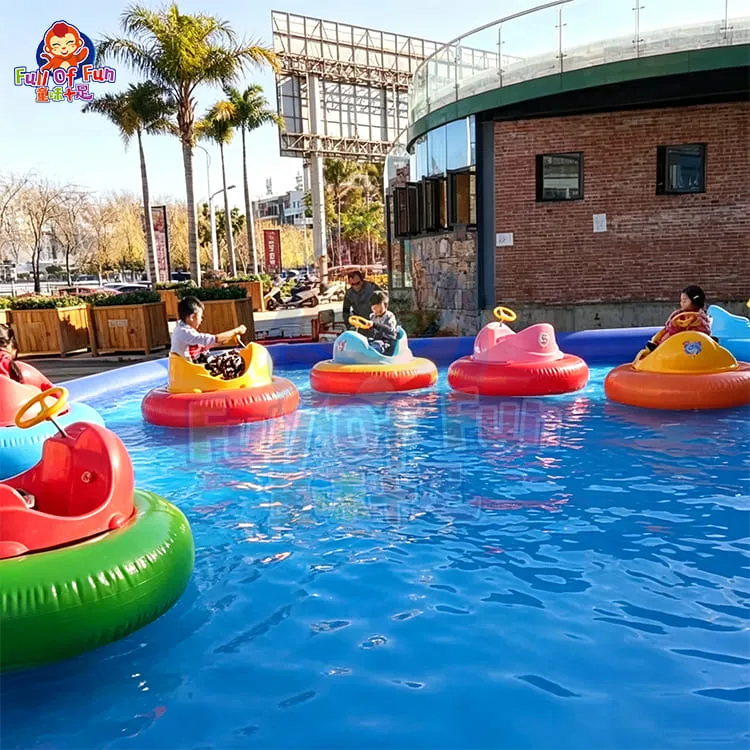
Why Operators Choose Full of Fun for Bumper Boats
When you invest in commercial water rides, the supplier’s manufacturing standard determines whether your fleet lasts one season or five. Here’s why venues in over 100 countries trust Full of Fun:
- 15 Years Export Experience: Deep understanding of global shipping logistics, port procedures, and international safety expectations.
- Marine-Grade Construction: Thick anti-UV FRP hulls, corrosion-resistant stainless steel (316/304) hardware, and high-tensile PVC bumper rings built for daily commercial abuse.
- Flexible Order Size (MOQ = 1): Whether you need a single replacement boat or a fleet of 20 with custom branding, we support your venue scale.
- International Compliance: CE, RoHS, and UKCA documentation available to streamline local inspection and venue insurance approvals.
- Spare Parts & After-Sales Backing: Dedicated stock of motors, impellers, chargers, bumper tubes, and control boards available for fast air dispatch.
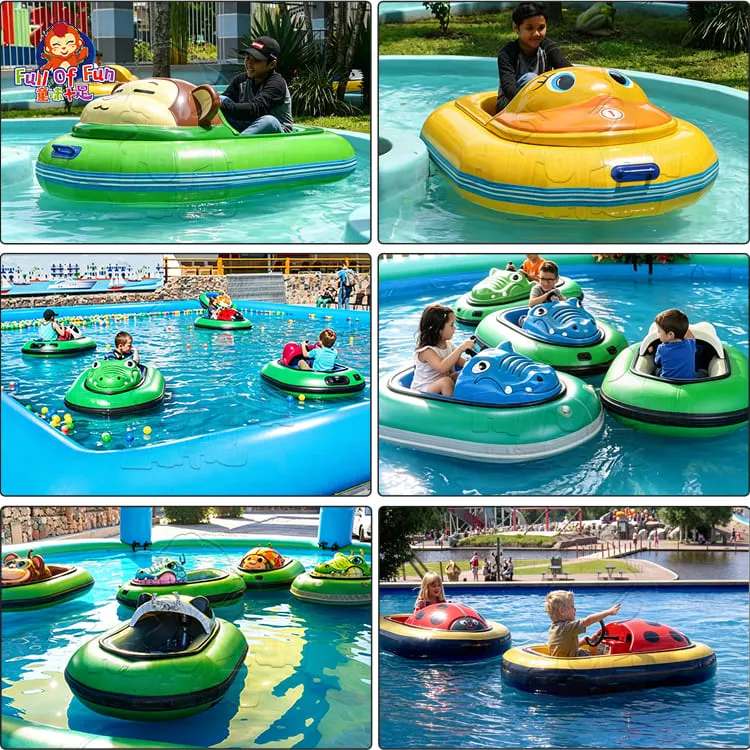
Frequently Asked Questions (FAQ)
How deep does a pool need to be for commercial bumper boats?
Most commercial bumper boats require a water depth of at least 35 cm to 50 cm (approx. 14 to 20 inches) for optimal propeller clearance and maneuverability. Always confirm draft requirements for your selected model.
How long do electric bumper boat batteries run on a single charge?
Depending on battery type (lead-acid vs. high-capacity lithium) and rider weight, typical runtime ranges from 5 to 8 hours of continuous operation. Swappable battery trays allow continuous non-stop operation during peak operating hours.
Can adults ride bumper boats, or are they only for kids?
We offer single-seat adult models as well as spacious 2-seater (parent + child) designs rated for payloads up to 150–200 kg (330–440 lbs), making them ideal for family venues.
What maintenance do commercial bumper boats require?
Daily routine involves battery charging and checking bumper ring air pressure. Weekly checks include inspecting propeller shafts for debris (hair or weeds), checking electrical connectors, and wiping hull surfaces.
Can bumper boats be used in salt water or chlorinated pools?
Yes, provided the boats are specified with anti-corrosion hardware and sealed motor housings. Rinsing lower drive assemblies with fresh water after salt or heavy chlorine use prolongs component life.
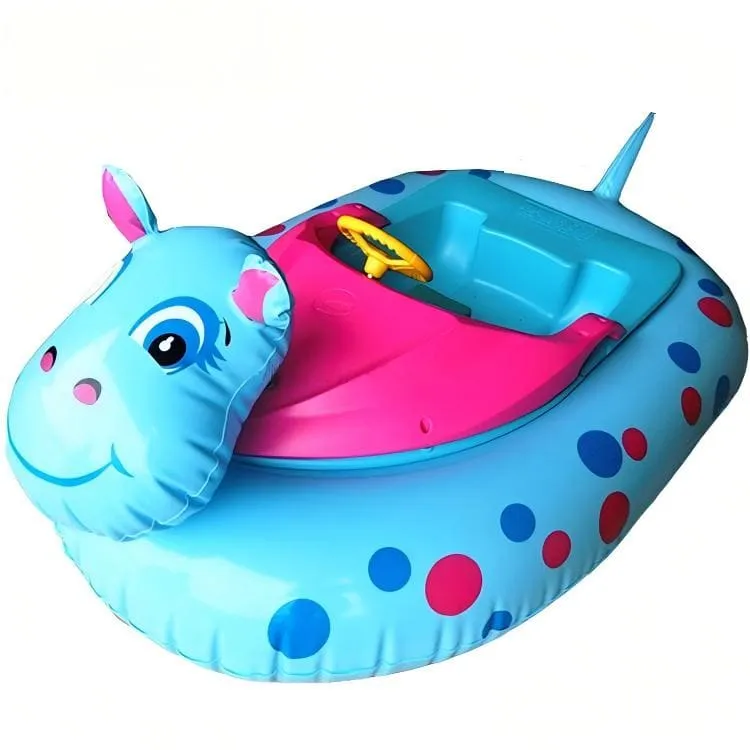
Ready to Size Your Bumper Boat Fleet?
Turn your water area into a high-margin attraction. Our team will help you run the Water-to-Wheel Fleet Fit and build an exact landed cost quote for your destination.
Next steps:
- Request Model Spec Sheets: Get complete engineering drawings, motor specs, battery options, and color options.
- Pool Layout Review: Send us your pool dimensions or site plan for a free fleet-sizing calculation.
- Custom RFQ Quote: Get direct factory pricing with door-to-door ocean freight and spare parts packages included.
Let’s make your water attraction a reliable profit center in 2026.