
Here’s the short answer: if your site has room for only one machine, gets moderate daily traffic, and you want to sell both snacks and drinks, a combo vending machine is almost always the smarter buy. A new snack-and-drink combo unit runs roughly $3,000–$5,500, and it does the work of two separate machines in the footprint of one.
We’ve been building and shipping vending and arcade equipment for 15 years, to operators in more than 100 countries. The pattern is consistent: most first-time buyers ask “which machine makes more money,” when the real question is “one combo or two singles for this spot.”
The biggest myth we hear? That a combo machine is a compromise, that it can’t hold enough or keep drinks cold. It can. In this guide: (1) how a combo actually works inside, (2) a side-by-side scorecard against two separate machines, (3) a simple 3-question test to decide, plus capacity, pricing, and how to pick a supplier who won’t disappear after the sale.
Why a Combo Vending Machine Makes Sense in 2026
Combo machines are winning placements because space and simplicity now matter more than raw shelf count. The global retail vending market sits around $77.7 billion in 2026 and is forecast to reach $99.2 billion by 2033 (Grand View Research, Retail Vending Machine Market Report 2026–2033, ~3.6% CAGR). Growth isn’t coming from bigger machines. It’s coming from smarter, smaller, contactless units squeezed into locations that never had vending before.
That shift favors the combo. Break rooms, small gyms, apartment lobbies, clinics, workshops, boutique hotels, none of these have the floor space or the foot traffic to justify two full-size machines. They have room for one. And the operator servicing them wants one stop, one restock, one payment system to reconcile.
There’s a second force at work: cashless. The intelligent and cashless vending segment is growing at double-digit rates (Fortune Business Insights, Intelligent Vending Machine Market, 2026), far faster than the market as a whole. A modern combo machine is where that trend lands, one card reader, one telemetry board, both product types.
Here’s what that means for you as a buyer:
- Fewer, better locations beat more machines. One combo in a good spot outperforms two singles crammed into a mediocre one.
- Cashless is no longer optional. Roughly half of vend transactions in developed markets are now card or mobile, and that share keeps climbing.
- The machine is the easy part. Location and product mix decide your revenue. The machine just needs to not break.
So the question isn’t whether combo machines are viable. They are. The question is whether a combo fits your location better than two separate units, and that’s a decision you can actually calculate. Let’s start with what’s inside one.
What a Combo Vending Machine Is (and How It Actually Works)
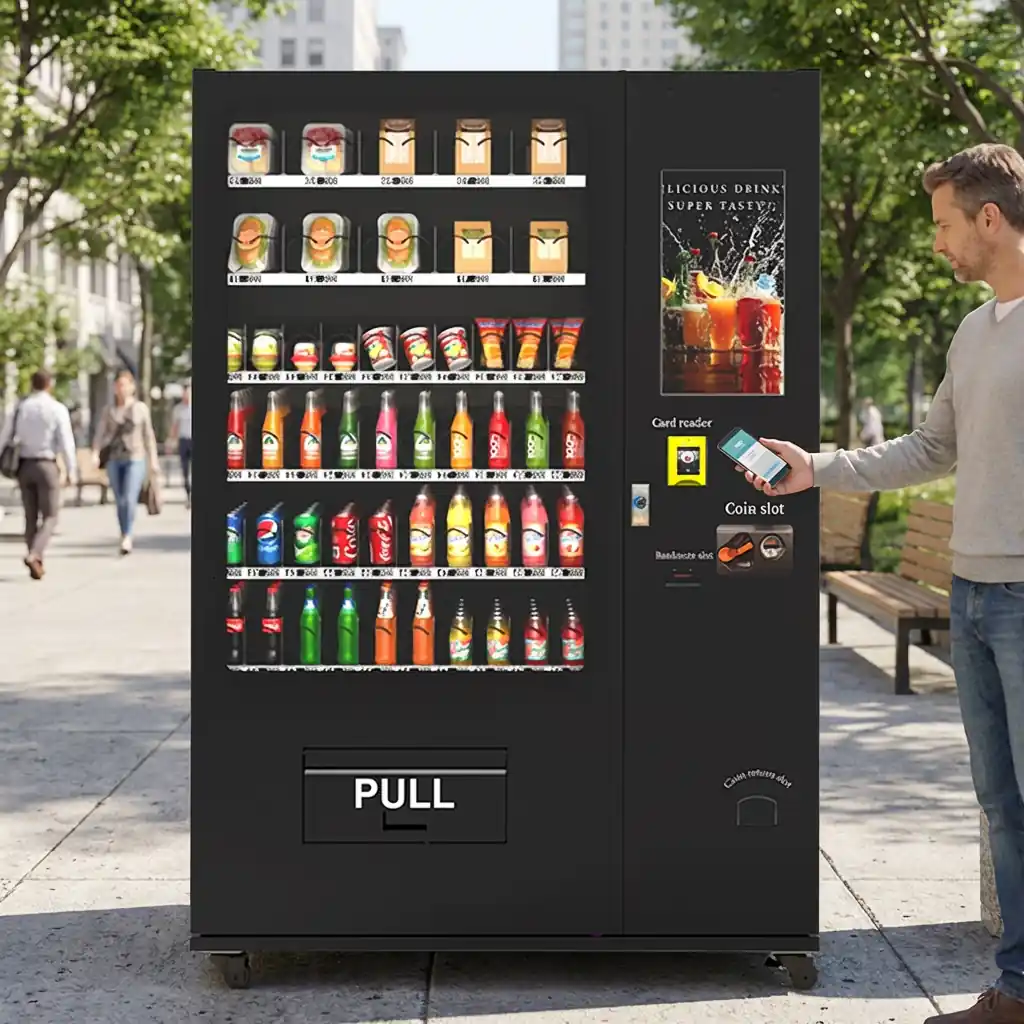
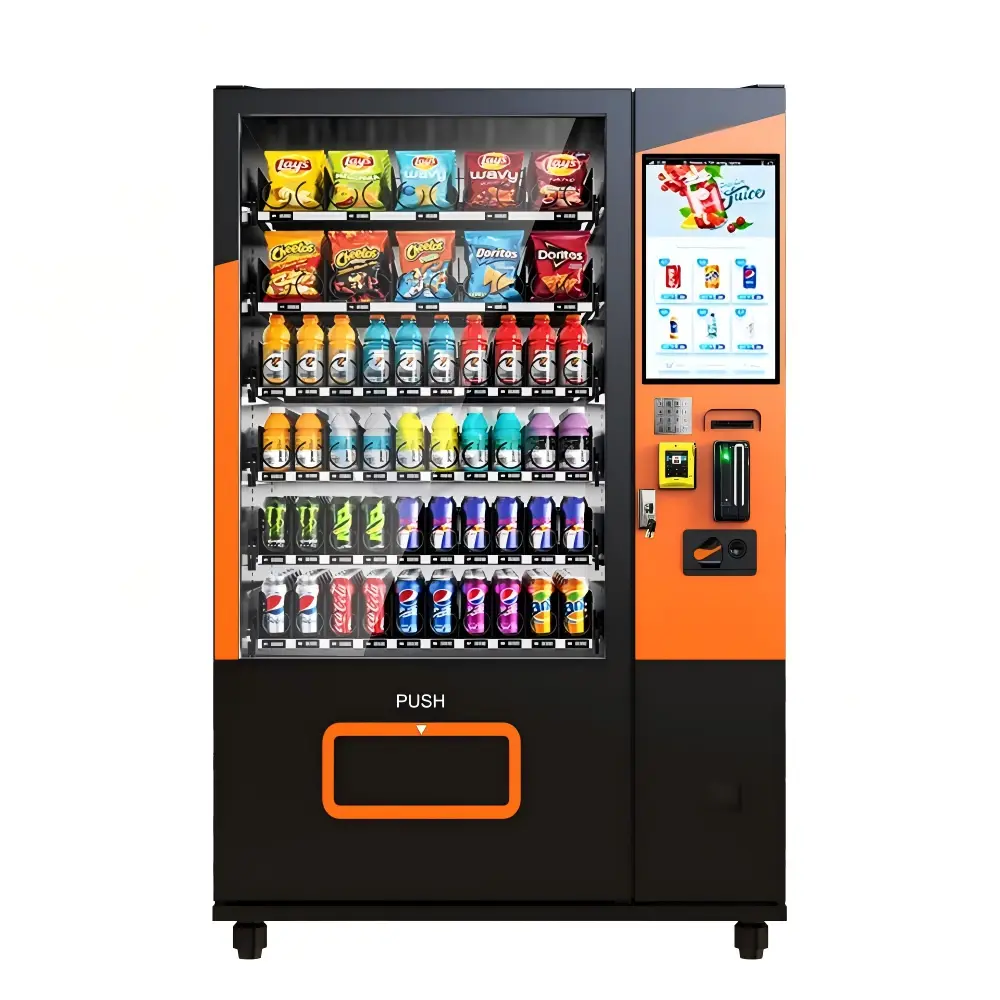
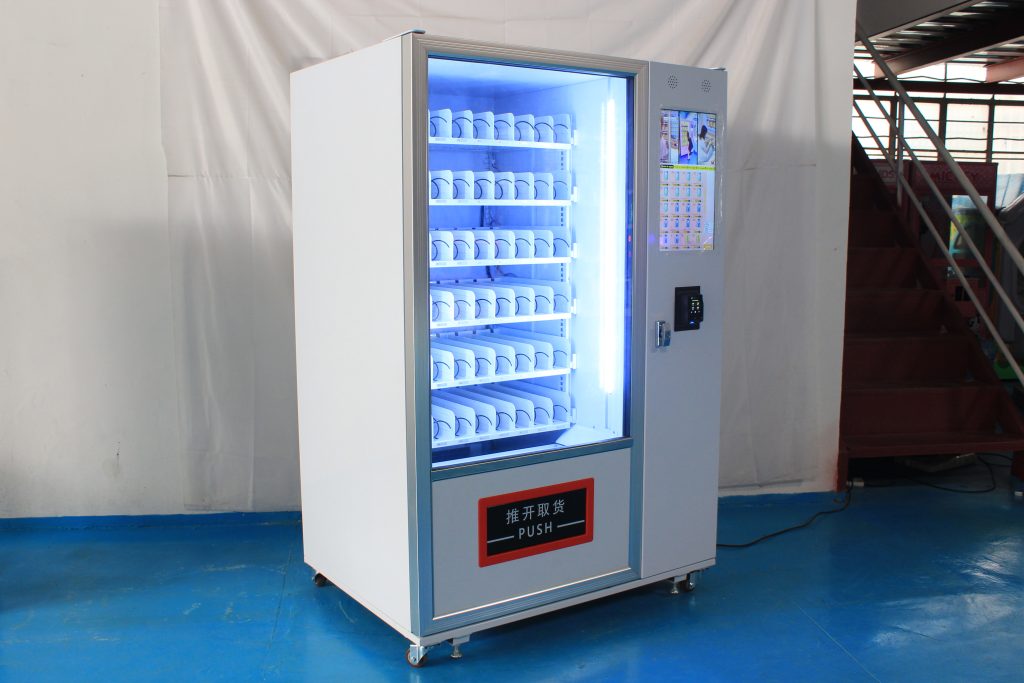
A combo vending machine is a single cabinet that dispenses both snacks and cold drinks, using one payment system and one refrigeration setup. Think of it as a snack machine and a drink machine that share a body, a compressor, and a controller.
Inside, three things do the heavy lifting:
- Spiral coils (the snack zone). Rows of motorized spirals hold chips, candy, bars, and packaged goods. When a customer pays, the selected coil rotates and drops the item. Standard, reliable, easy to service.
- A refrigerated zone with dual-temperature control. This is the part people underestimate. A well-built combo runs one compressor feeding two temperature zones, so the snack shelves stay at ambient temperature while the drink section holds a chilled 4–7°C. Cans and bottles stay cold; chocolate bars don’t melt. Based on our own product engineering, this dual-zone design is the single biggest quality difference between a combo that lasts and one that fails in year two.
- The MDB controller and payment stack. MDB (Multi-Drop Bus) is the industry wiring standard that lets one control board talk to the coin mechanism, bill validator, and cashless reader at once. One board runs the whole machine.
That’s the honest mechanical picture. A combo isn’t two machines bolted together. It’s one integrated system where the refrigeration and the controller are shared, which is exactly why it costs less to buy and less to run than two separate units.
One thing worth saying plainly: the quality of that shared refrigeration is where cheap combos cut corners. We’ve seen operators buy a bargain unit, then watch the compressor struggle to hold temperature once the machine is full on a hot day. Ask any supplier about the compressor rating and the temperature range before you buy. If they can’t answer, walk.
Now that you know what’s inside, here’s the comparison that actually drives the buying decision.
Combo vs Two Separate Machines: The Scorecard
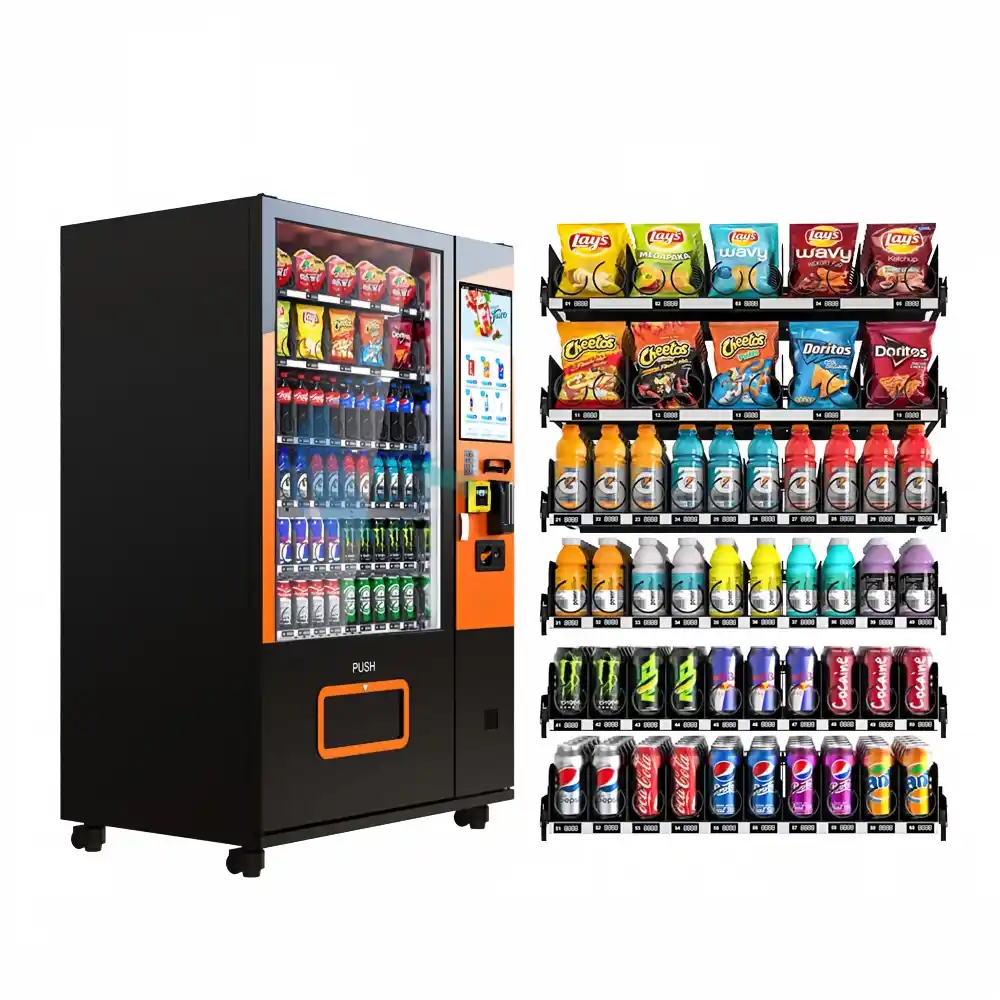
Most guides tell you a combo “saves space.” True, but that’s not a decision, it’s a slogan. Here’s the actual side-by-side, across the six dimensions that decide the money. We call it the Combo-vs-Two Scorecard, and it’s the table we walk our own clients through.
| Dimension | One Combo Machine | Two Separate Machines (snack + drink) |
|---|---|---|
| Footprint | ~1 machine’s floor space | ~2 machines’ floor space |
| Purchase cost (CapEx) | ~$3,000–$5,500 (one unit) | Two units, typically higher combined |
| Energy use | One compressor, one draw | Two refrigeration systems, higher power bill |
| Total capacity | Shared bays, slightly less per category | Full capacity per category |
| Service & restock | One stop, one route visit | Two machines to fill and check |
| Location flexibility | High, fits tight spaces | Low, needs a wider spot |
A few honest notes on this table:
- The capacity row is the one real trade-off. A combo splits its cabinet between snacks and drinks, so you get fewer facings of each than a dedicated single would give. For most low-to-medium traffic sites, that’s a non-issue. For a 500-person factory floor, it can be.
- The energy and service rows are estimates that scale with your machines and route (running two refrigeration systems and making two restock stops is roughly double the combo, though the exact figure depends on your equipment and driving distance). Directionally, though, two machines cost more to run and more to service. Every time.
- The CapEx row understates the gap in practice, because two machines also mean two delivery charges, two installs, and two payment contracts.
So the scorecard tilts toward combo on five of six dimensions, and the one exception, capacity, only bites at genuinely high-volume locations. That’s the pattern we’ve watched play out across thousands of installs.
Not sure which side of that line your location sits on? Start a live chat and tell us your daily foot traffic, we’ll tell you straight whether a combo fits.
If you want a faster way to decide without studying a table, use the test below.
The “Combo-or-Two” Test: 3 Questions
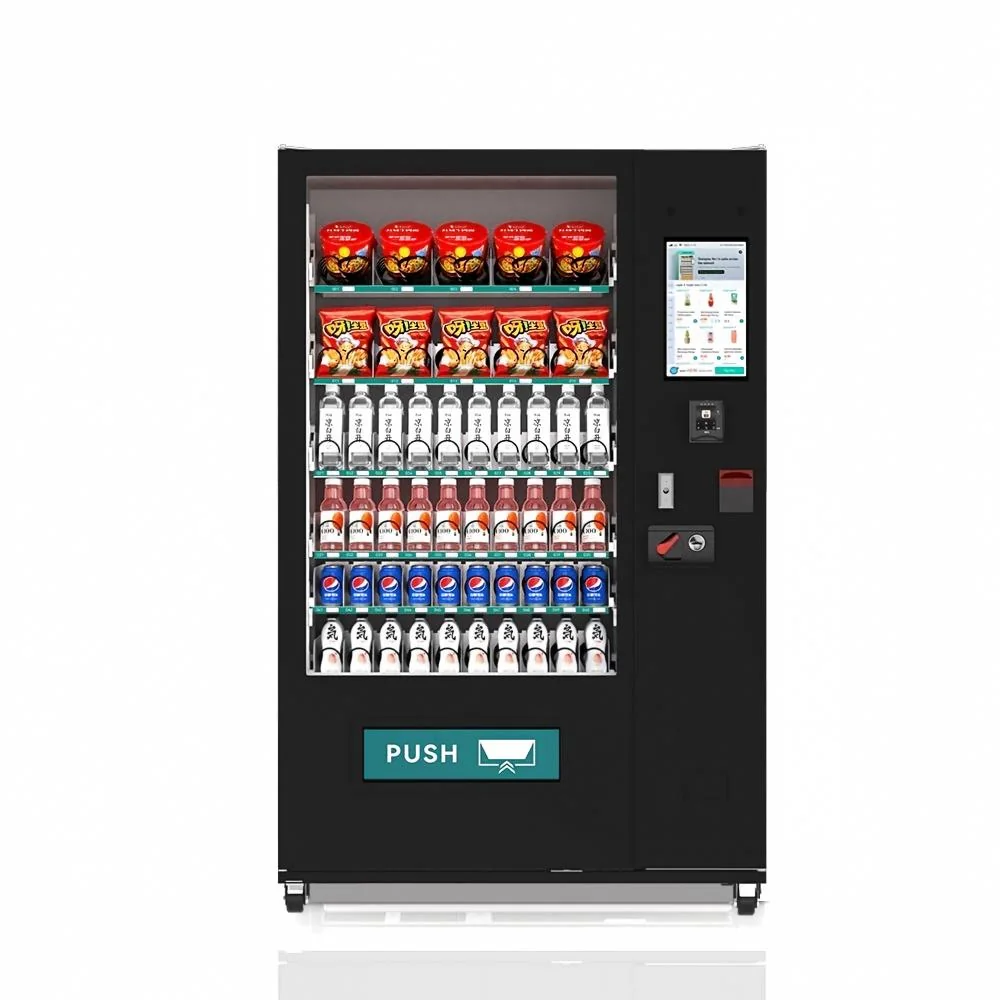
When an operator can’t decide, we run them through three questions. Score one point toward “combo” for each yes. Two or more points, and a combo is almost certainly your machine.
- Footprint — Is your usable floor space under about 8 square feet, or can you not fit two machines side by side? Most single machines need roughly 4–5 sq ft each plus clearance. If you’re tight, that’s a point for combo.
- Volume — Do you expect fewer than roughly 60–100 vends per day at this spot? This is a rough planning range, not a hard rule, actual volume swings with location and pricing. Below it, a combo’s shared capacity is plenty and a second machine just sits half-empty. Above it, and if demand skews heavily to one category, two singles start to earn their space. Under that range: point for combo.
- Budget — Is your budget for this location under about $5,000, and do you want to cover both snacks and drinks from day one? If you want the full snack-and-drink offer without buying two machines, that’s a point for combo.
Add it up. Two or three points, buy the combo, it’s the obvious fit. One point, it’s a judgment call, look hard at your traffic. Zero points (big space, high volume, healthy budget, one dominant category), that’s the rare case where two dedicated machines will out-earn a combo.
We built this test because the honest answer for most small and mid-size locations, offices, gyms, lobbies, clinics, is the same: one combo, placed well. The operators who overpay are the ones who buy two machines “to be safe” and then service a half-empty drink unit for two years.
That capacity worry is the number one hesitation we hear, so let’s deal with it directly.
Capacity and Selections: Will a Combo Hold Enough?
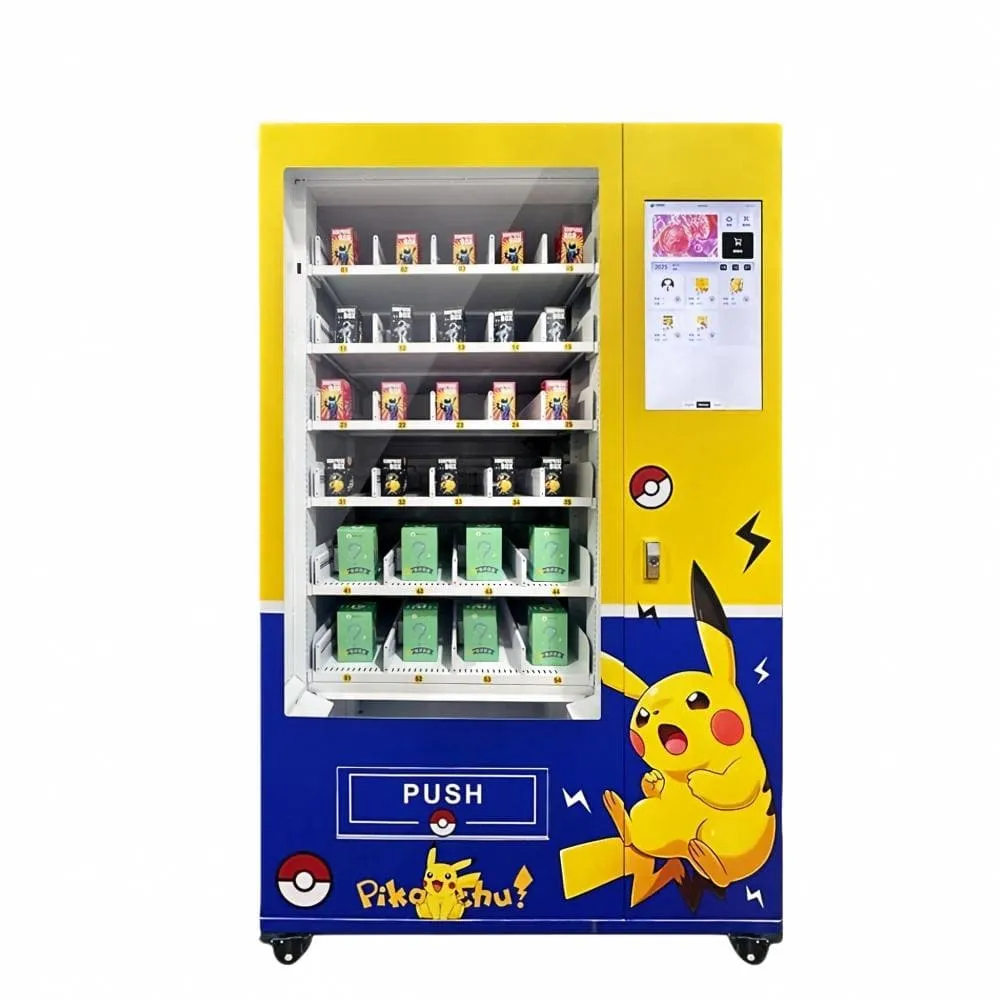
Short answer: for the locations combos are built for, yes, comfortably. A typical combo machine offers around 30–45 selections split between snacks and drinks, based on our own model range and common industry configurations. That’s usually 5–7 snack rows over 2–3 refrigerated drink shelves, though the split is often adjustable.
Here’s the reality check that settles most capacity worries: a machine doesn’t fail because it holds too few product types. It fails because the wrong products sit in it, or because nobody restocks it on time. We’ve seen a 36-selection combo out-earn a 60-selection giant next door, purely because the combo’s owner rotated the top sellers and kept it full.
A few practical points on capacity:
- Depth matters more than variety. Ten strong sellers stocked deep beat thirty slow movers stocked thin. A combo’s selection count is almost never the bottleneck.
- The drink zone is the constraint to watch. Cold bays take more room per unit than snack coils. If your location is drink-heavy (a gym, an outdoor worksite), confirm the refrigerated capacity specifically, not just the total count.
- Adjustable spirals extend the range. Good combos let you widen or narrow spiral spacing, so you can run everything from gum to sandwiches without buying new hardware.
If your spot truly needs hundreds of facings, you’re not in combo territory, you’re in dedicated-machine or bank-of-machines territory, and we’ll tell you that honestly. But that’s a small minority of locations. For the rest, the capacity of a well-configured combo is a solved problem.
Which brings us to the question every buyer actually opens the tab for: what does it cost?
How Much Does a Combo Vending Machine Cost in 2026?
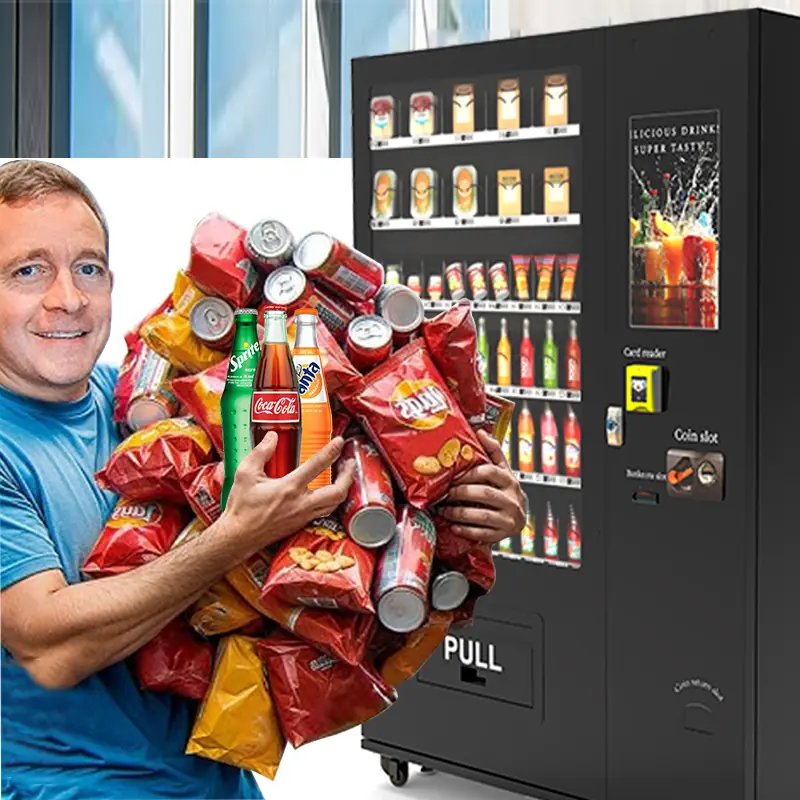
A new snack-and-drink combo machine costs roughly $3,000 to $5,500 in 2026 (Vendsoft 2026 Cost Guide; Vending.com’s 2026 pricing puts new combo units at about $3,300–$5,250). Refurbished units can run lower, and premium smart models with large touchscreens and AI cameras run higher.
Here’s how that price breaks down and what actually moves it:
| Cost factor | Typical impact |
|---|---|
| New vs refurbished | Refurbished can save 30–50%, but check the compressor age |
| Payment system | Adding a cashless card reader: a few hundred dollars, non-negotiable in 2026 |
| Refrigeration quality | Better compressor and dual-zone control cost more upfront, save on failures |
| Screen & smart features | Touchscreen + telemetry + AI cameras push toward the premium tier |
| Capacity & size | More selections and a bigger cabinet raise the price |
Two cost mistakes we watch buyers make, both expensive:
- Buying the cheapest unit to “test the waters.” The bargain machine’s refrigeration is where the savings came from. It’s also what strands you when it can’t hold temperature in July. A mid-tier combo with a solid compressor is the floor, not a luxury.
- Skipping the card reader to save money. If half your customers want to tap a card and can’t, you’ve lost half your sales to save $300. That’s not a saving.
On payback: a combo in a decent location typically returns its cost in roughly 6 to 18 months, though this is an estimate that swings widely with foot traffic, pricing, and product cost. A busy office break room lands at the fast end. A quiet lobby sits at the slow end. Anyone quoting you a guaranteed payback without asking about your location is guessing.
Want a real cost-and-payback estimate for your specific spot? Send us your location details and we’ll build the numbers with you, no obligation.
Cost sorted, the next question is which combo fits your particular type of location.
Which Combo Machine Fits Your Space? A Scenario Guide
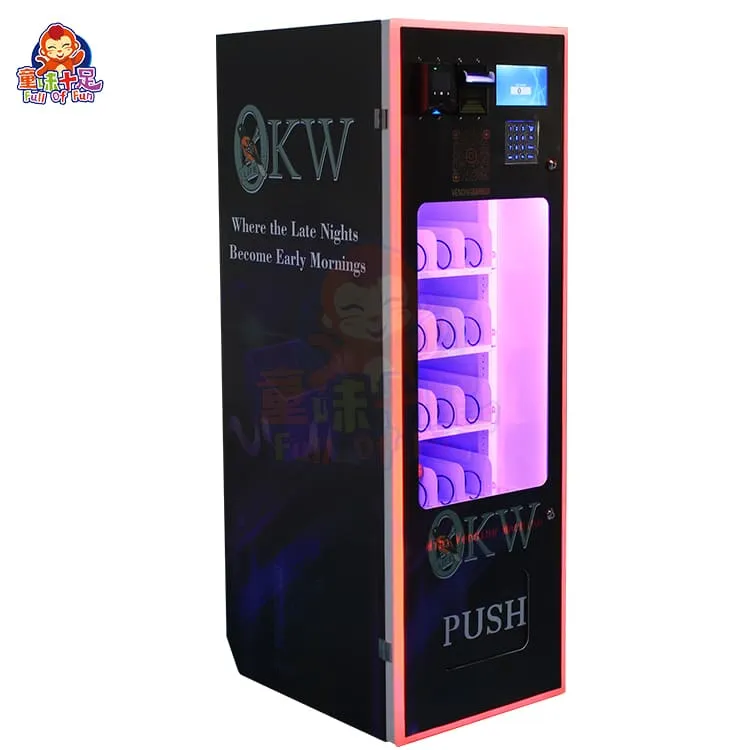
The best combo for an office is not the best combo for a gym. Match the machine to the location, not the other way around. Here’s the quick lookup we use with buyers, based on what actually sells in each setting.
| Location | What sells | What to prioritize in the machine |
|---|---|---|
| Office / break room | Coffee-break snacks, sodas, water, healthier options | Balanced snack/drink split, quiet compressor, cashless |
| Gym / fitness studio | Protein bars, drinks, electrolyte and water | Larger refrigerated zone, chilled capacity first |
| Apartment / condo lobby | Convenience snacks, drinks, late-night grab-and-go | Compact footprint, 24/7 reliability, card + mobile pay |
| Small hotel / motel | Water, soft drinks, chips, travel snacks | Slim cabinet, quiet operation, contactless |
| Workshop / warehouse | Filling snacks, energy drinks, water | Rugged build, high drink capacity, simple service |
| Clinic / waiting room | Water, light snacks, healthier picks | Clean look, quiet, reliable refrigeration |
A pattern to notice: the two variables that change most across locations are the snack-to-drink ratio and the refrigerated capacity. A gym or a worksite is drink-heavy, so you want a combo that leans cold. An office is more balanced. This is exactly why we tell buyers to size the drink zone to the location first, then fill the snack rows around it.
Two placement mistakes worth avoiding:
- Don’t put a drink-heavy location on a snack-heavy machine. You’ll sell out of water by noon and have stale chips at close.
- Don’t chase the “premium” touchscreen model for a low-traffic lobby. The screen won’t sell more in a spot with 30 vends a day. Put your money into reliable refrigeration and cashless instead.
Tell us your location type and we’ll recommend the right configuration. Start a chat here.
Whatever the location, one feature set is now mandatory across all of them: modern payment and remote management.
Payment and Remote Management: The Non-Negotiables
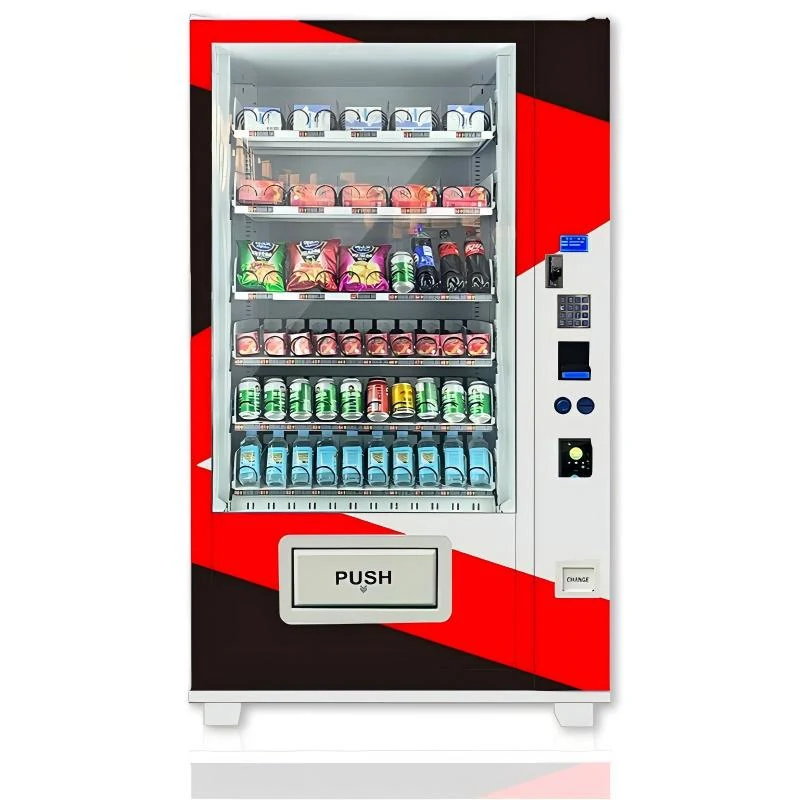
In 2026, a combo vending machine without cashless payment and remote monitoring is a machine that leaves money on the table. The cashless and intelligent vending segment is growing at double-digit rates (Fortune Business Insights, Intelligent Vending Machine Market, 2026), and that’s not a fad, it’s how people pay now.
Two capabilities matter, and they’re separate things:
- Cashless payment. A card and mobile reader (tap, chip, Apple Pay, Google Pay) is table stakes. A meaningful share of customers carry no cash at all; if they can’t tap, they don’t buy. This is the single highest-ROI add-on on the whole machine.
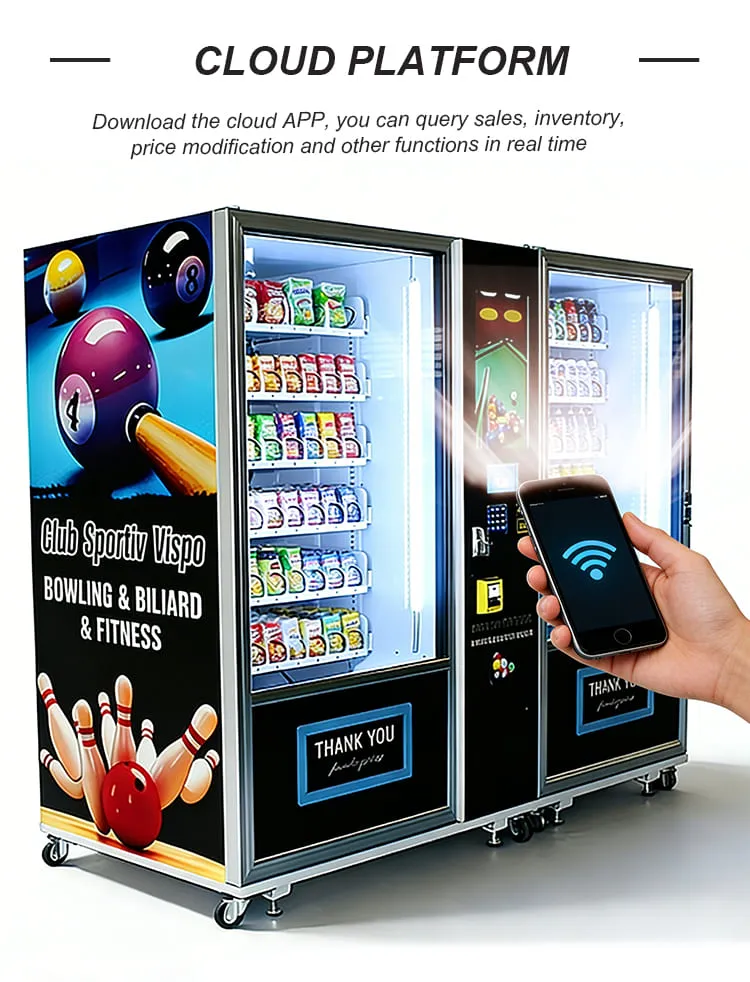
- Telemetry and remote management. This is the quiet money-saver. Telemetry (the machine reporting its sales and stock levels back to you over cellular) means you restock before a slot runs dry, not after. You see which products move, cut the ones that don’t, and stop making blind service trips. Based on our experience and broad industry consensus, remote management is what turns a vending machine from a chore into a route you can actually scale.
Here’s the operator’s-eye view of why this matters: the cost of vending isn’t the machine, it’s the driving. Every unnecessary restock trip, every “sold out” slot you didn’t know about, every product that sat and expired, that’s where margin leaks. Cashless captures the sale. Telemetry protects the margin. Get both.
One caution: make sure the machine uses the MDB standard so the payment and telemetry hardware is interchangeable and upgradeable. Proprietary systems lock you into one vendor’s readers and one vendor’s fees. Ask.
Get the payment and monitoring right, and most of what’s left is avoiding the handful of mistakes that catch first-time buyers.
Common Mistakes First-Time Combo Buyers Make
After 15 years, the failures rhyme. Here are the ones that cost real money, so you can skip them.
- Buying capacity you’ll never fill. The instinct to “go big” strands you with half-empty bays and a bigger power bill. Size to your actual traffic, revisit the Combo-or-Two Test above.
- Ignoring the compressor spec. The refrigeration is the heart of a combo. A weak compressor that can’t hold temperature on a hot day will cost you drink sales and eventually a repair bill that dwarfs the initial saving.
- Treating cashless as optional. Covered above, but it’s the most common and most expensive mistake, so it’s worth repeating. No card reader in 2026 means lost sales, full stop.
- Choosing a supplier with no after-sales presence. A combo is a refrigerated machine with electronics and moving parts. It will eventually need a part or a fix. If your supplier can’t ship a spare spiral or a compressor and can’t get you a technician’s answer, a cheap machine becomes an expensive paperweight.
That last point is the one buyers underweight most, and it’s the one we take most seriously. So here’s how we’ve built around it.
How Full of Fun Builds Combo Machines for Real Operators
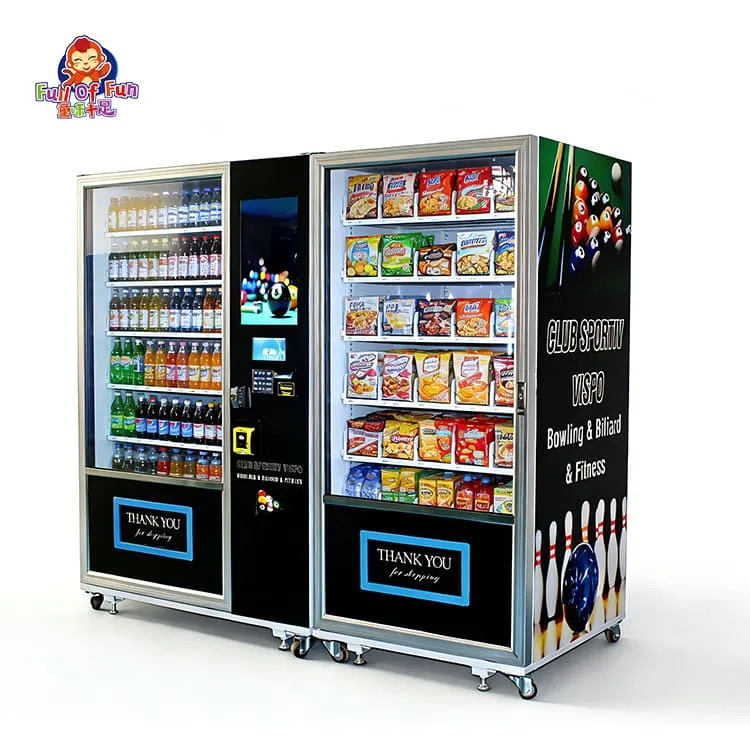
We design our combo vending machines around the two failure points we’ve watched sink other people’s units: weak refrigeration and no support after the sale. That’s the whole philosophy, put the money where the machine actually breaks.
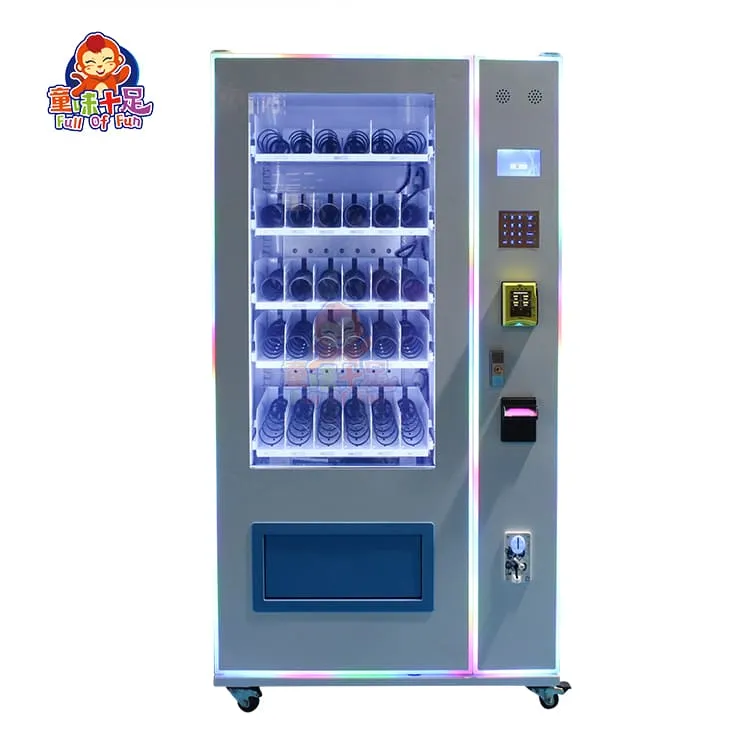
On the hardware side, our combo units run a dual-temperature-zone design off a single efficient compressor, so the drink section holds a reliable chill while the snack rows stay ambient, even on a hot day with a full load. The spirals are adjustable for everything from gum to sandwiches, and every machine is MDB-standard, so you can fit any mainstream cashless reader and telemetry board you prefer, no lock-in.
On the trust side, this is where 15 years shows up. We operate a 10,000 m² production facility with an annual output of over 10,000 units, and we’ve shipped to operators in more than 100 countries. That scale isn’t a vanity number, it’s why we can hold spare parts, turn around a compressor or a spiral quickly, and give you a straight technical answer when something needs fixing. A vending machine is only as good as the company standing behind it in month 14.
If you’re comparing a combo against splitting your budget into two separate machines, we’re happy to run the actual numbers for your location, that’s the Combo-vs-Two Scorecard applied to your real traffic and space. It’s the same conversation we have with every operator before they buy.
Combo Machine Specifications and Certifications
Here’s the specification profile to expect from a professional-grade combo vending machine, and what our units carry.
| Specification | Typical range |
|---|---|
| Selections | ~30–45, snack + drink (configurable) |
| Temperature zones | Dual zone, ambient snack + ~4–7°C drink |
| Payment | Coin, bill, and cashless (card + mobile), MDB standard |
| Refrigeration | Single efficient compressor, dual-zone control |
| Remote management | Telemetry-ready for sales and stock monitoring |
| Cabinet | Compact single-machine footprint |
On certification: our machines are CE and RoHS certified, the marks buyers in the EU and many other markets need to import and operate legally. If you sell into a market with its own requirements (UKCA for the UK, for example), ask us before you order, we’ll confirm what applies to your destination rather than guess.
A quick, honest note on certification: it’s not a marketing badge, it’s an import requirement. A machine without the right marks for your market can be stopped at customs. Always confirm the certification matches your destination before you pay a deposit, with any supplier, not just us.
Why Operators Choose Full of Fun
Three reasons come up again and again when operators tell us why they stayed:
- We build for the failure points, not the spec sheet. Dual-zone refrigeration and MDB-standard electronics mean the machine keeps drinks cold and lets you upgrade payment on your terms.
- We’re a manufacturer, not a reseller. Buying direct from a 10,000 m², 10,000-unit-a-year factory means better pricing, real customization, and parts that actually exist when you need them.
- We’re still here in year two. Support to 100+ countries, lifetime technical help, and spare parts on the shelf. That’s the difference between an asset and a paperweight.
Ready to compare a combo against two machines for your location? Send your inquiry with your space and traffic details, and we’ll come back with a configuration and a real quote.
Frequently Asked Questions
For most small and mid-size locations, yes. A combo does the job of two machines in one footprint, at a lower purchase and running cost. It’s worth it whenever your space is limited, your daily volume is low to moderate, and you want to sell both snacks and drinks. It’s only not the best choice at genuinely high-traffic sites where one product category dominates.
A new snack-and-drink combo machine runs roughly $3,000 to $5,500 in 2026, depending on capacity, refrigeration quality, and smart features. Refurbished units cost less but check the compressor age. Adding a cashless card reader costs a few hundred dollars and is essential today.
A well-built combo does, because it uses a dual-temperature-zone design: one compressor chills the drink section to about 4–7°C while the snack rows stay at ambient temperature. The key is the compressor quality. A cheap unit may struggle to hold temperature when full on a hot day, so always ask about the refrigeration spec.
Typically around 30–45 selections split between snacks and drinks, often adjustable. For low-to-medium traffic locations that’s plenty. If you need hundreds of facings for a high-volume site, you’re better off with dedicated machines.
A combo wins on footprint, purchase cost, energy use, servicing, and location flexibility. Two separate machines win only on total per-category capacity, which matters just at high-volume, single-category sites. Use the 3-question Combo-or-Two Test above: two or more “yes” answers point to a combo.