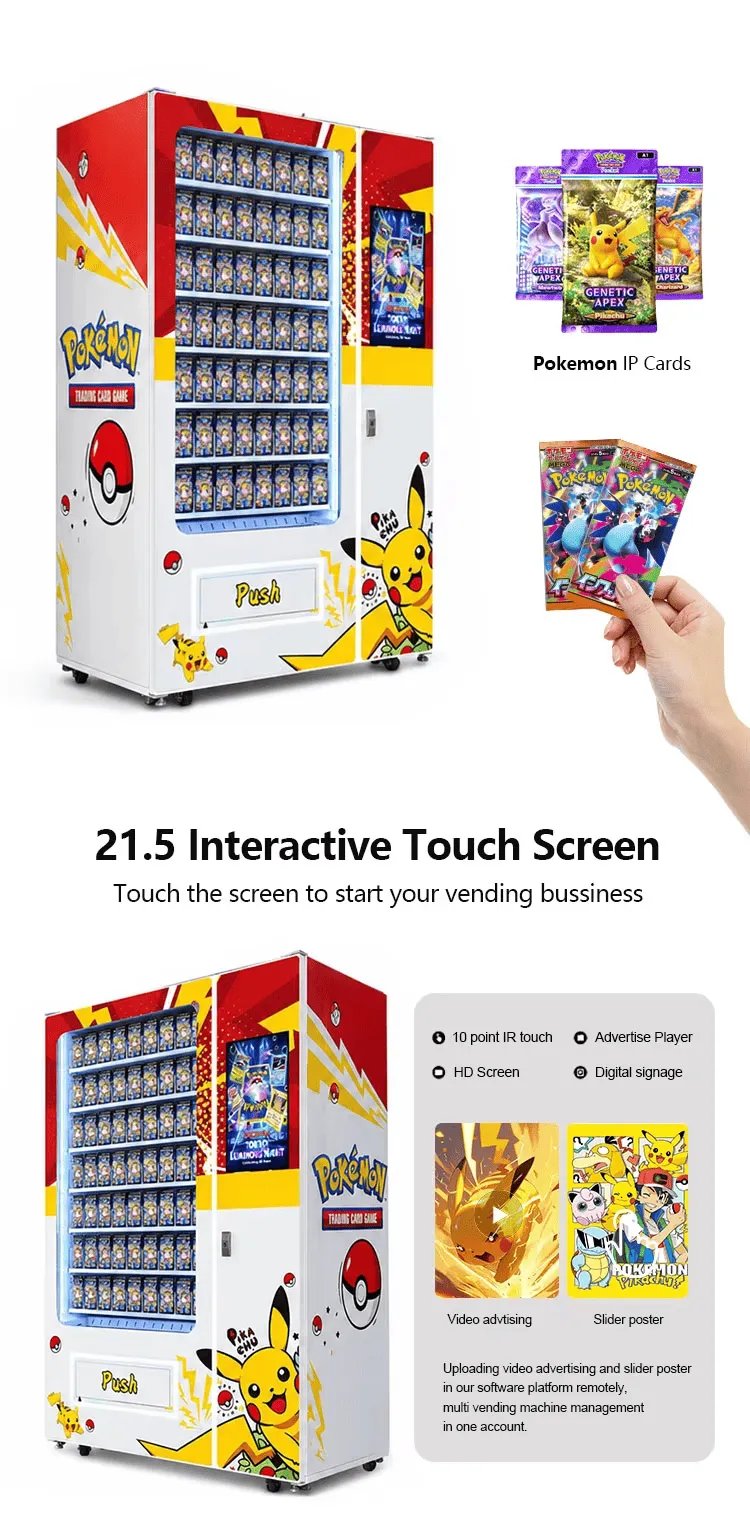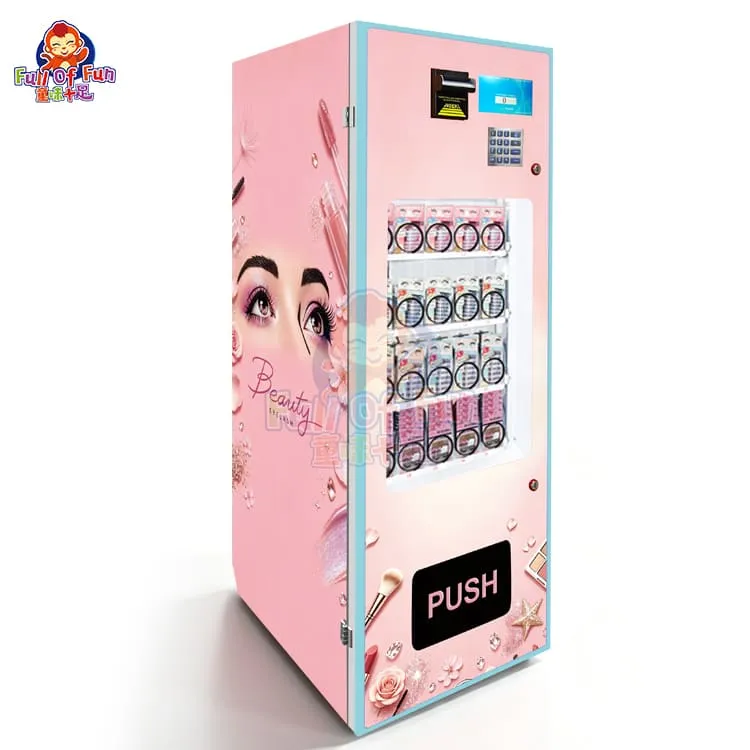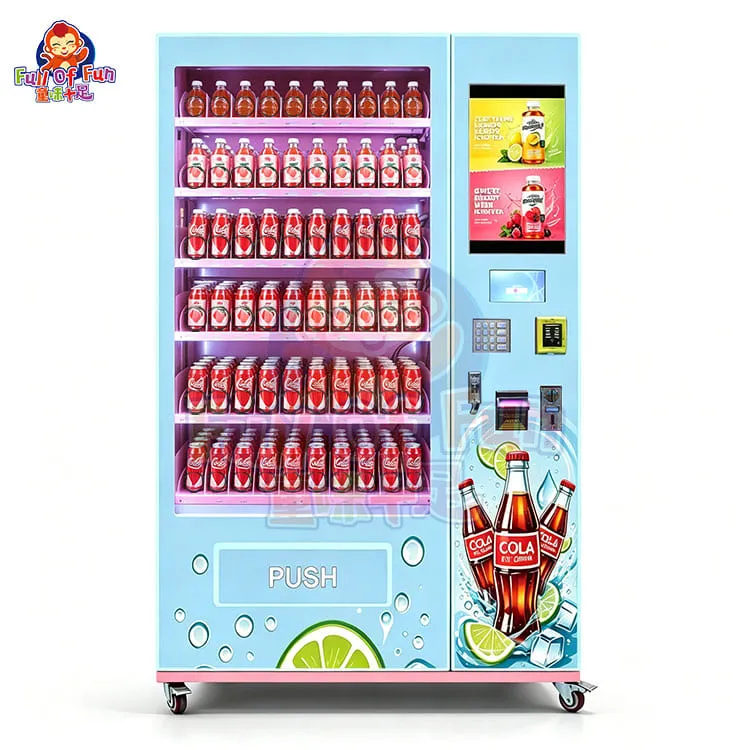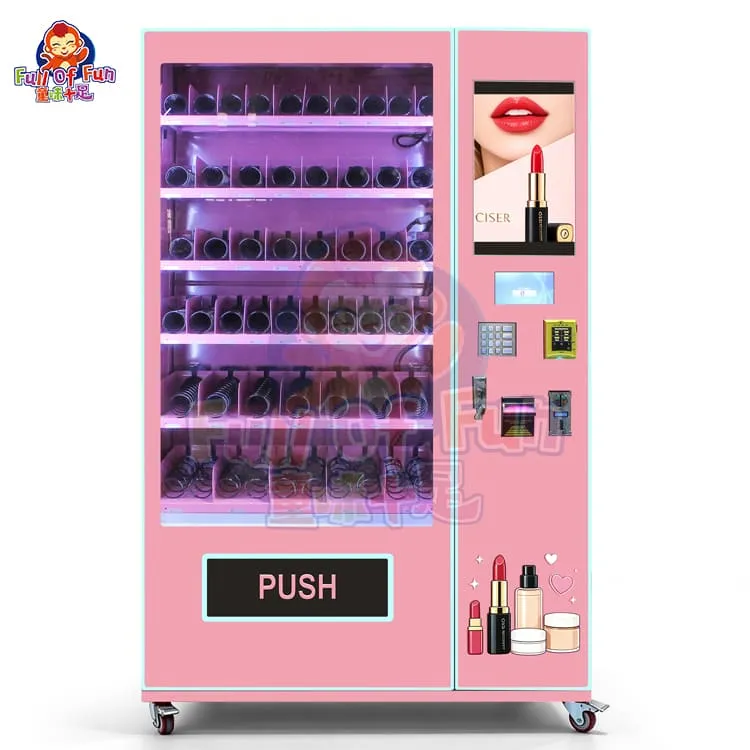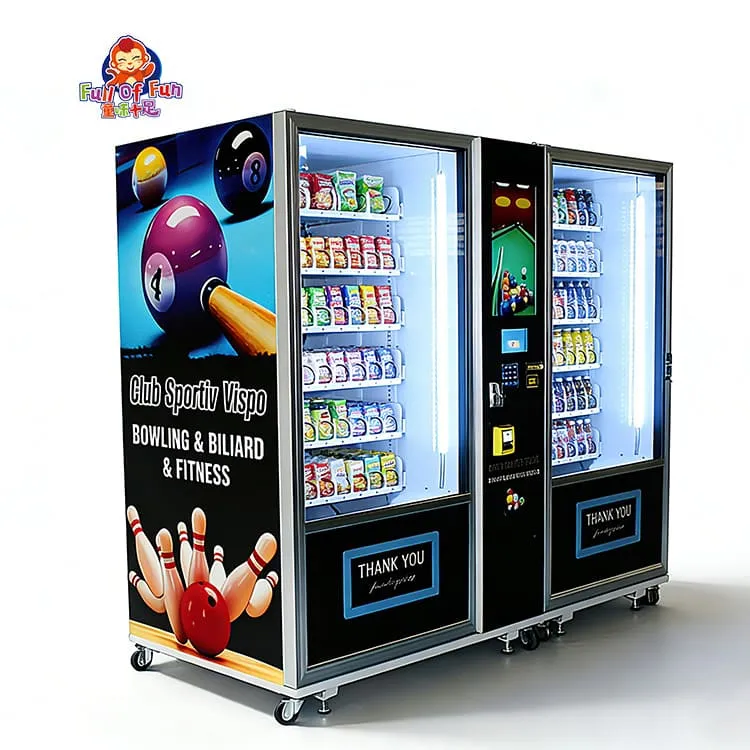

Here’s the short answer: yes, you can sell Pokémon cards through a vending machine in most markets, as long as you’re stocking authentic cards sourced through legitimate channels rather than counterfeits. Machine cost ranges from $650 for a small unit to $1,350 for a large one. How often you restock depends on foot traffic and how many channels you’re running — there’s no fixed number for that. If you’re weighing whether this business is worth pursuing, here’s what to know, in order.
We manufacture vending machines and work directly with overseas buyers, mall operators, and independent operators. The question “how do I get a Pokémon card vending machine” has come up a lot more in the last couple of years, and that’s not random — collectible card demand has been climbing, and vending is one of the few retail formats that turns that demand into a business you don’t need to staff.
One myth needs addressing upfront: placing a machine in a busy spot doesn’t automatically generate money. The machine is a tool. What actually determines whether this works is location, sourcing, and how often you refresh the inventory. We’ll go through this step by step — from whether it’s actually legal, to what it costs, to how to order one.
Why Pokémon Card Vending Machines Are Getting More Attention Right Now
Spending on Pokémon and other non-sports trading cards jumped roughly 350% between 2020 and 2025, according to market research firm Circana. The global trading card game market itself was valued at around $13.3 billion in 2025, according to Mordor Intelligence. That’s not just a vibe — card shops still see lines for new releases, unboxing content keeps circulating on social platforms, and the buyer base includes both younger collectors and people treating cards as a small investment, all backed by real sales data. That kind of product fits vending naturally: low unit price, small physical size, and a customer who’s likely to come back for another pack.
Unattended retail has also become more normal — in airports, malls, apartment buildings, people are used to “insert payment, get product” as a shopping format now in a way they weren’t a few years ago. For someone testing a low-cost retail idea, a vending machine skips the lease and the staffing that a physical card shop would require.
That combination — rising demand for a specific product, plus a retail format with almost no overhead — is why the question of whether you can actually do this is worth answering properly.
Can You Actually Sell Pokémon Cards Through a Vending Machine?
Yes. Selling authentic cards sourced through legitimate channels through a vending machine is the same retail activity as selling them at a counter — you’re not manufacturing or counterfeiting anything, you’re just changing how the transaction happens. What does vary is local business licensing: some cities and countries have specific permit requirements for unattended vending, so it’s worth checking with local authorities before you commit to a location, not after.
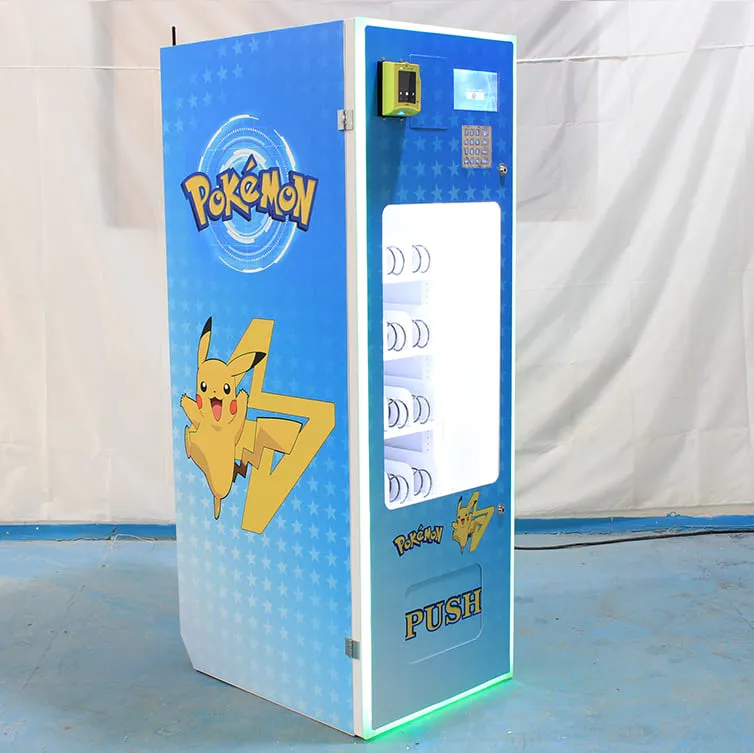
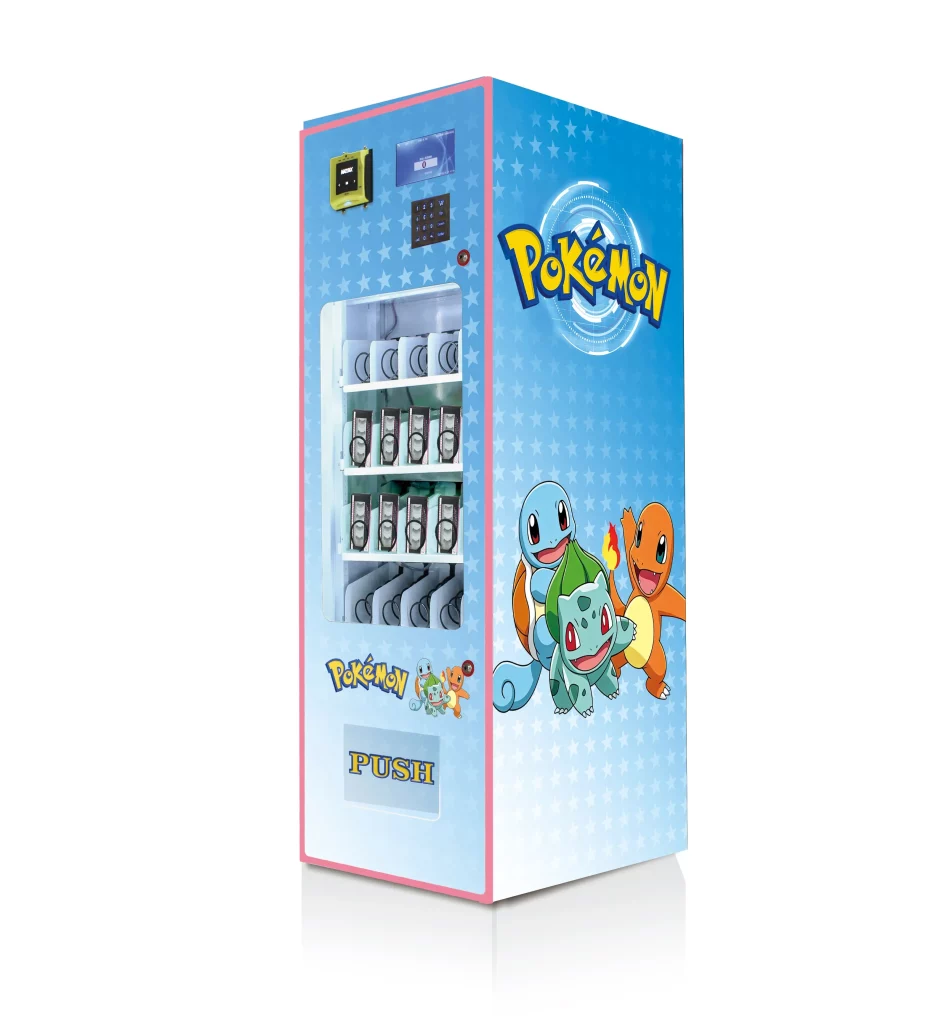
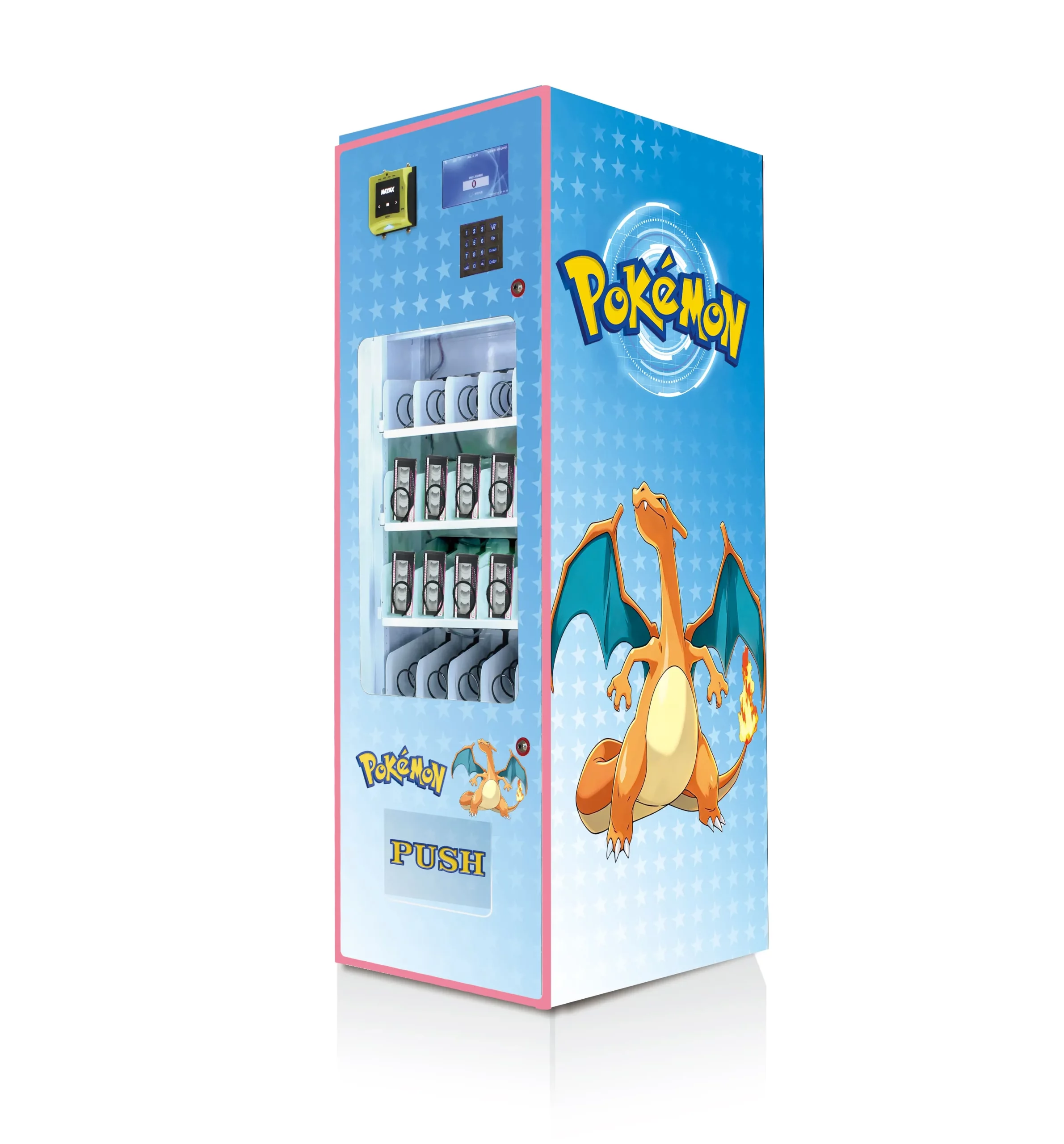
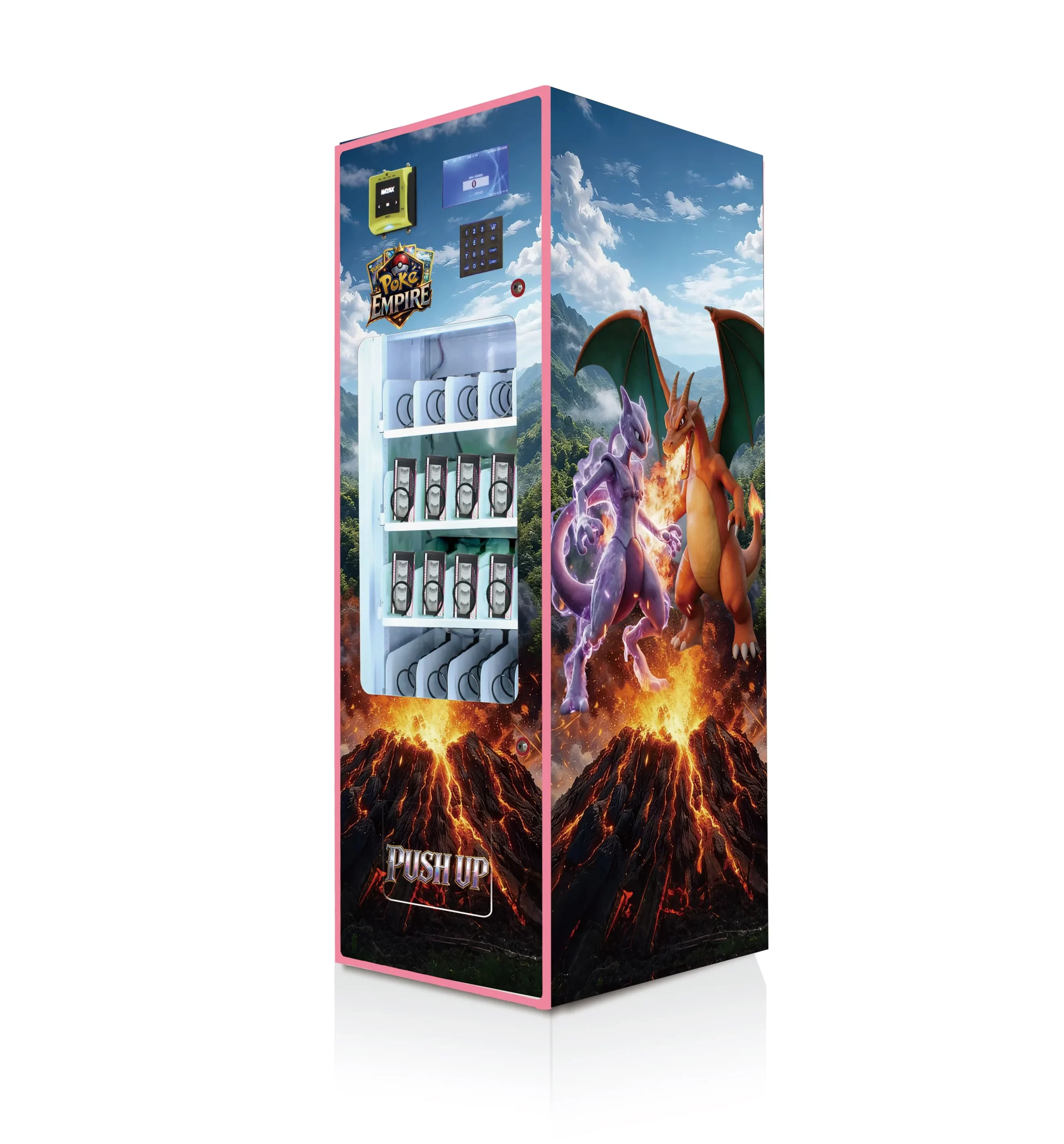
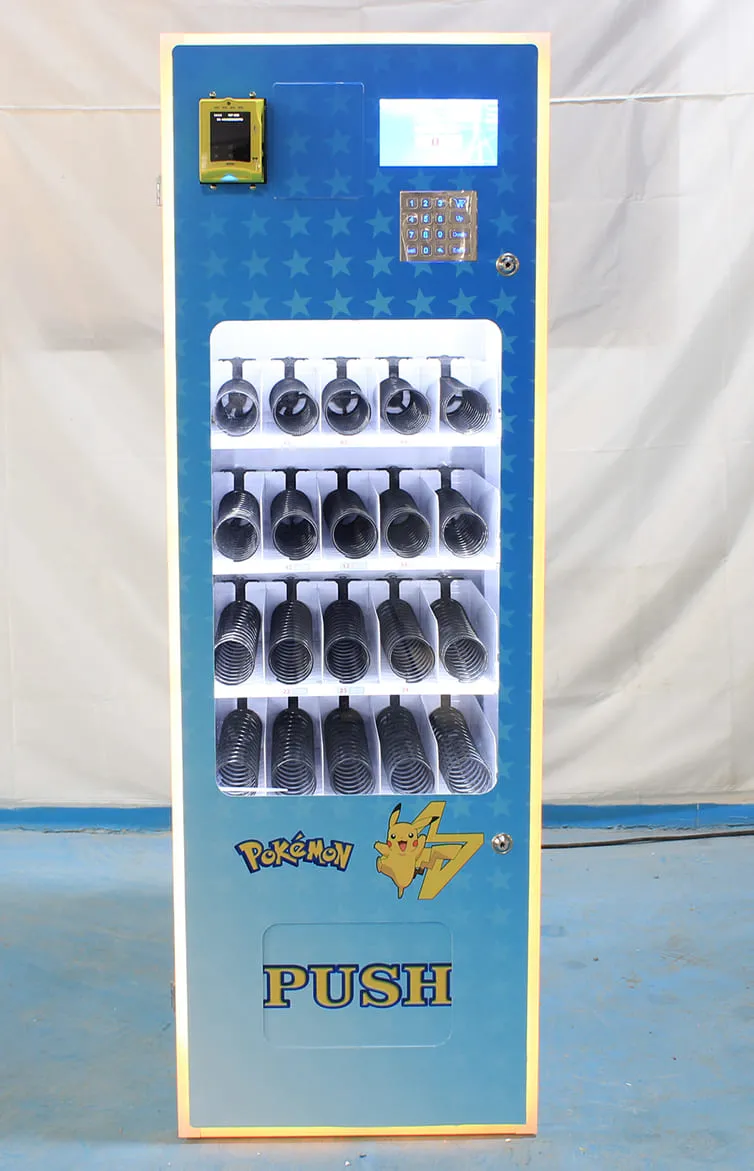
What makes a single machine flexible enough to actually do this is the channel design. The “channels” are the individual slots inside the machine that hold and dispense product, and ours are adjustable — you can resize the width and depth to match what you’re stocking. That means the same hardware selling Pokémon card packs today could be reconfigured to sell other trading cards or small toys later, without buying a new machine.
That flexibility matters more than it sounds. Card trends shift. A machine that only works for one product locks you into that product; one with adjustable channels doesn’t.
Is It Actually Profitable? Here’s What Determines That
Honestly: the machine doesn’t guarantee profit. Whether this makes money depends on how you run it, not which unit you bought. That’s not the answer most people want, but it’s the accurate one.
The variables that actually move the needle:
- Margin between sourcing cost and sale price. Where and how you source cards affects your margin more than anything else — the same machine can be a good or bad investment depending purely on this.
- Foot traffic at the location. This matters more than the machine spec. A great machine in a low-traffic spot still underperforms.
- How often you rotate inventory. Leaving the same packs in for months kills repeat interest. Refreshing stock is what brings people back.
- Visibility and placement within the location. Near a checkout counter or entrance beats a corner nobody walks past.
Collectible cards do have a natural edge here: there’s a bit of a “pack-opening” anticipation built into the product itself, which tends to drive repeat purchases better than a plain snack machine does. But that’s a product advantage, not a guarantee — this is still a retail business, and it still requires the same diligence any retail business needs.
A more useful exercise than trusting anyone’s generic “payback period” claim is running your own numbers: your cost per card pack, your intended sale price, and how many packs you’d need to sell to cover the machine cost. That simple math tells you more than any blanket profitability claim — including ours.
Pricing: Small Model at $650 vs. Large Model at $1,350
Cost is usually the first question, so here it is directly:
| Model | Reference Price | Best Fit |
|---|---|---|
| Small | $650 | Limited budget, testing a location, smaller footprint |
| Large | $1,350 | Higher-traffic locations, want more product variety at once |
Worth being upfront about: this price covers the machine itself, not card inventory, international shipping, or local customs duties — those are separate costs to factor into your total investment. Anyone quoting you a payback period based on machine cost alone isn’t giving you the full picture.
If you haven’t decided between the two, a reasonable approach is starting with the small model to test one location, confirming customers actually buy there, and then scaling up to the large model — rather than committing to the bigger unit on day one.
Restocking: How Often Do You Actually Need to Refill It
There’s no universal number here — it depends on foot traffic at the location and how much inventory each channel holds. High-traffic locations often need restocking once or twice a week; slower locations can go longer between visits.
The practical approach: check the machine more frequently during the first few weeks after installation to learn how fast a specific location actually sells through inventory, then settle into a fixed restocking schedule once you know the pattern. Restocking itself doesn’t take special skill — you’re opening the channels and refilling cards — which is part of why this works as a side business rather than a full-time job.
Channel capacity also plays into this: a larger unit with more channels holds more inventory at the same sell-through rate, so it naturally needs restocking less often than a small unit selling at the same pace. Worth factoring in when you’re deciding between the two models.
Mistakes First-Time Operators Actually Make
Working with first-time vending operators, the issues that come up aren’t usually mechanical failures. They’re these:
- Betting everything on one product category. Demand shifts. A machine with fixed, non-adjustable channels leaves you stuck if customer interest moves away from Pokémon cards specifically.
- Sourcing cheap from unverified suppliers. Selling counterfeit cards, even unintentionally, damages your reputation and carries real legal risk. It’s not worth the savings.
- Choosing a location for cheap rent instead of foot traffic. Low rent usually means low traffic, and no machine compensates for that.
- Placing the machine in an unmonitored public spot without securing it. Small unattended units in low-visibility areas do get tampered with or taken — factor security into your location choice, not just cost.
Avoiding these matters more than which machine you buy.
How to Get (and Buy) a Pokémon Card Vending Machine
The process itself is straightforward:
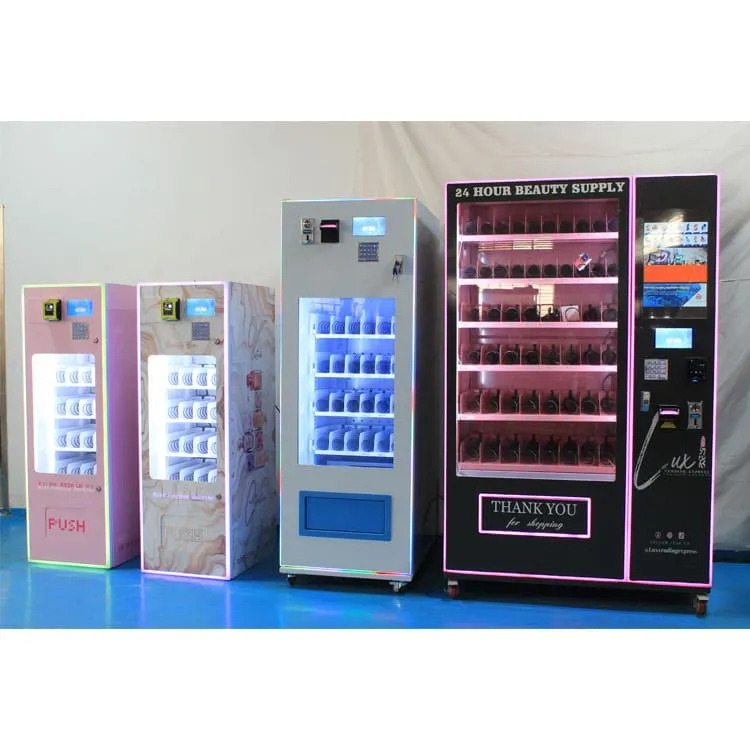
- Pick a model. Choose between small ($650) and large ($1,350) based on budget and space — starting small to test is a reasonable default if you’re unsure.
- Confirm channel configuration. Tell us the product dimensions you’re planning to stock (card pack size, and whether you might mix in other small items later), and channels get set up accordingly.
- Place the order. Once model and configuration are confirmed, the order goes through.
- Sort out international shipping. As a cross-border order, get shipping method, expected delivery window, and customs/duties in your country confirmed before the order ships, so it doesn’t delay your launch.
- Stock it and launch. Once it arrives, load the channels per your configuration and you’re operational.
If you’re still deciding between models or how to configure the channels, reach out with your location and budget and we can give you a more specific recommendation.
Frequently Asked Questions
Can I sell Pokémon cards in a vending machine?
Yes, as long as the cards are authentic and sourced through legitimate channels. It’s legal in most markets the same way any retail resale is, but check local permit requirements for unattended vending before committing to a location.
How do I get a Pokémon card vending machine?
You order directly from a manufacturer, choose a small or large model based on budget, and specify the channel configuration for the products you plan to stock.
Are Pokémon card vending machines a good business? Are they profitable?
Profitability depends on sourcing cost, location foot traffic, and how often you rotate inventory — the machine itself is a tool, not the deciding factor.
How much is a Pokémon card vending machine?
The small model runs about $650, and the large model about $1,350. That’s machine cost only, not including card inventory or shipping.
How often do Pokémon card vending machines need restocking?
There’s no fixed schedule — high-traffic locations often need it weekly or biweekly. Monitor closely for the first few weeks to learn your specific location’s pace.
How do I buy a Pokémon card vending machine?
Confirm your model and channel configuration, then place the order. For cross-border purchases, get shipping and customs timelines confirmed upfront. Reach out for a specific quote.
If this business fits your situation, whether you’re still researching or ready to order, reach out with your budget and location details and we’ll recommend the right model and channel setup for you.