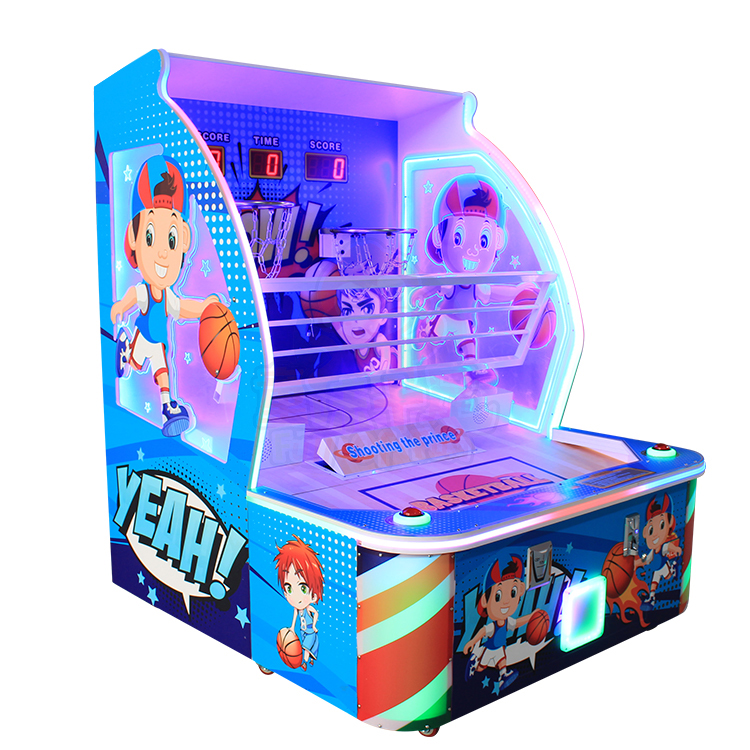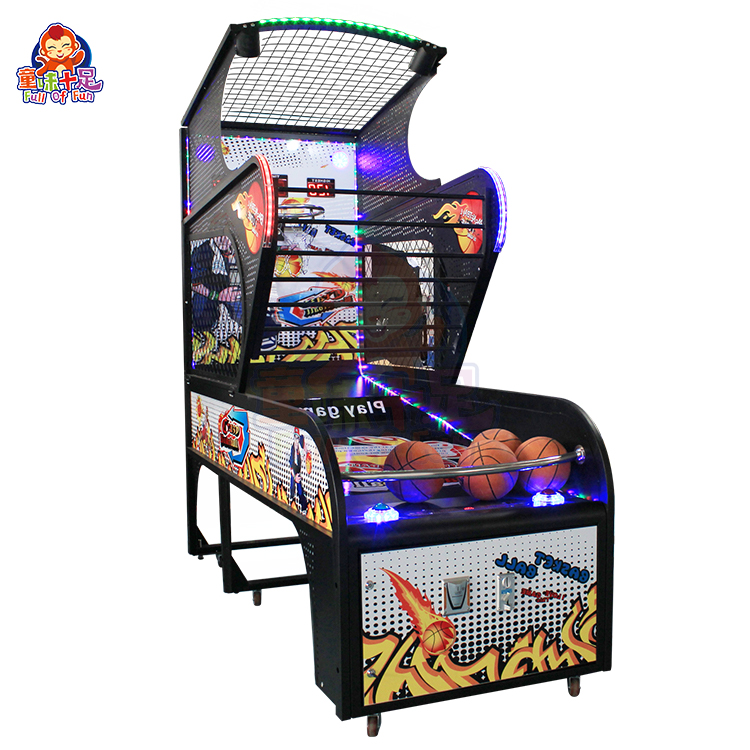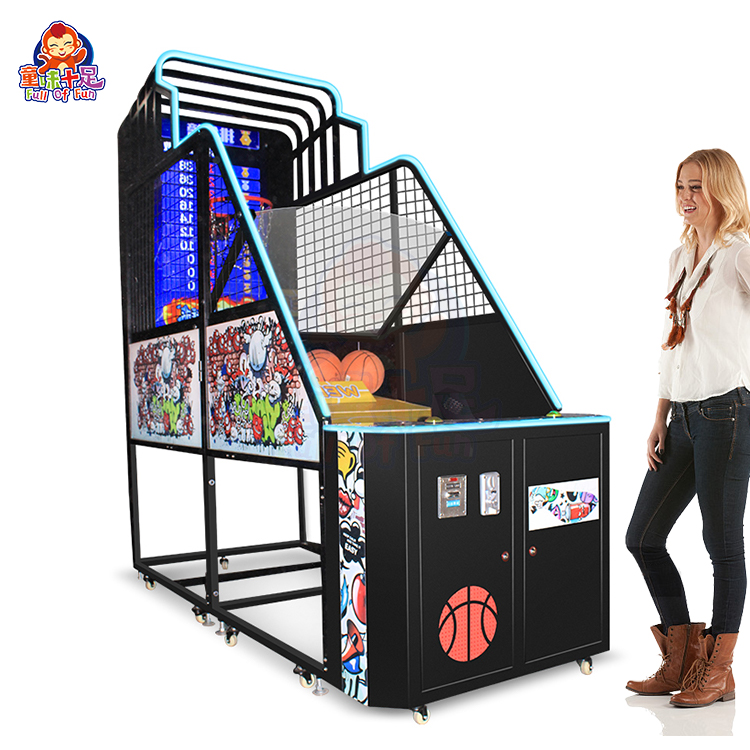

Here’s the short answer: put it where people already walk slowly and can watch each other play. As a planning estimate, reserve about 1.2–1.8 m of clear floor in front of the cabinet for shooting and exit, keep roughly 0.9–1.2 m for circulation where your layout and local code permit, and never let the shooting area eat into an accessible route or a fire exit path.
I’ve spent 15 years as an export manager at Full of Fun, shipping arcade and vending machines to more than 100 countries. Family entertainment centers (FECs), bowling centers, cinema lobbies, trampoline parks, hotel game rooms. I’ve walked a lot of floor plans, and I’ve seen the same machine earn twice as much 8 meters from where it started.
The myth I want to kill first: “high traffic equals high income.” Traffic that walks past at speed is worthless. What you need is qualified footfall plus dwell time plus sightline. So when operators ask me where to place a basketball arcade machine, I never answer with a venue name � I answer with a method. This guide covers physical clearance, our internal Footfall-to-Hoop Index, a 4-zone way to map any venue, patterns by venue type, dead zones to avoid, and how to test a spot before you commit.
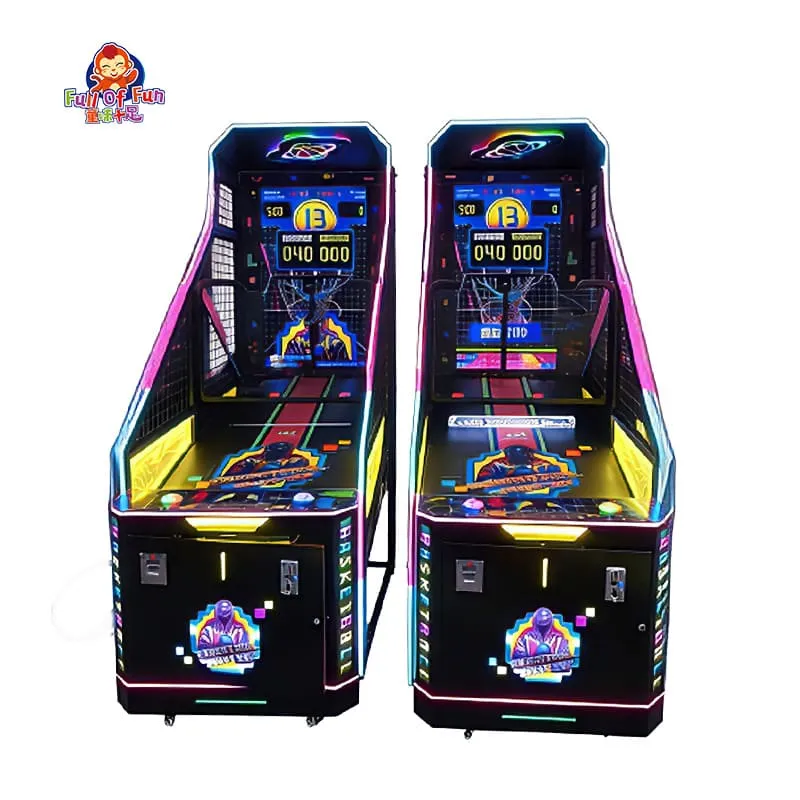
Where to Place a Basketball Arcade Machine: Why Location Decides Performance
Location is the single variable you can change for free, and it moves results more than the cabinet you choose. Two identical machines, same price setting, same firmware, same balls. One sits at the end of a hallway near the restrooms. One sits beside the prize counter where families queue. The second one gets played, because play is a social act before it’s a purchase.
Basketball cabinets are impulse products. Nobody plans their evening around a hoop game. They see it, they hear the buzzer, they see a friend’s score on the LED, and their hand goes to their pocket. That whole chain takes about four seconds. If your placement breaks any link in it — the machine isn’t visible, the path to it isn’t obvious, there’s nowhere to stand and watch — the chain never completes.
In our 15 years shipping to 100+ countries, the pattern repeats. Operators who relocate a slow machine within the same venue usually see it improve, and sometimes dramatically. Operators who blame the game and buy a different model, then put it in the same bad corner, usually stay disappointed.
There’s one more reason location matters more for basketball than for most amusement equipment: the game has a spectacle radius. A claw machine performs quietly. A basketball cabinet is loud, fast, and physical, with a visible timer and a scrolling score. Players perform. Bystanders watch. That’s free advertising, but only if there are bystanders in the first place.
A quick framing note on money. This article deliberately stays on placement. If you want revenue modeling, pricing logic, and cost structure, read our detailed basketball arcade machine revenue and profit analysis instead of trying to reverse-engineer numbers from this page.
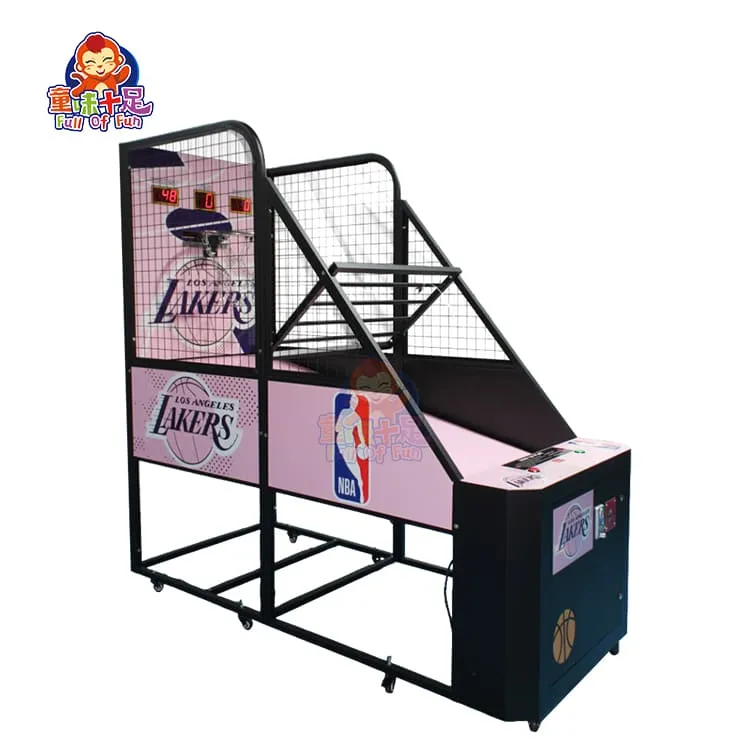
Start With the Physical Space: Footprint, Clearance, and Walkways
Measure before you shortlist locations, because a spot that fails on clearance is not a location at all. This is the least glamorous step and the one operators skip most often.
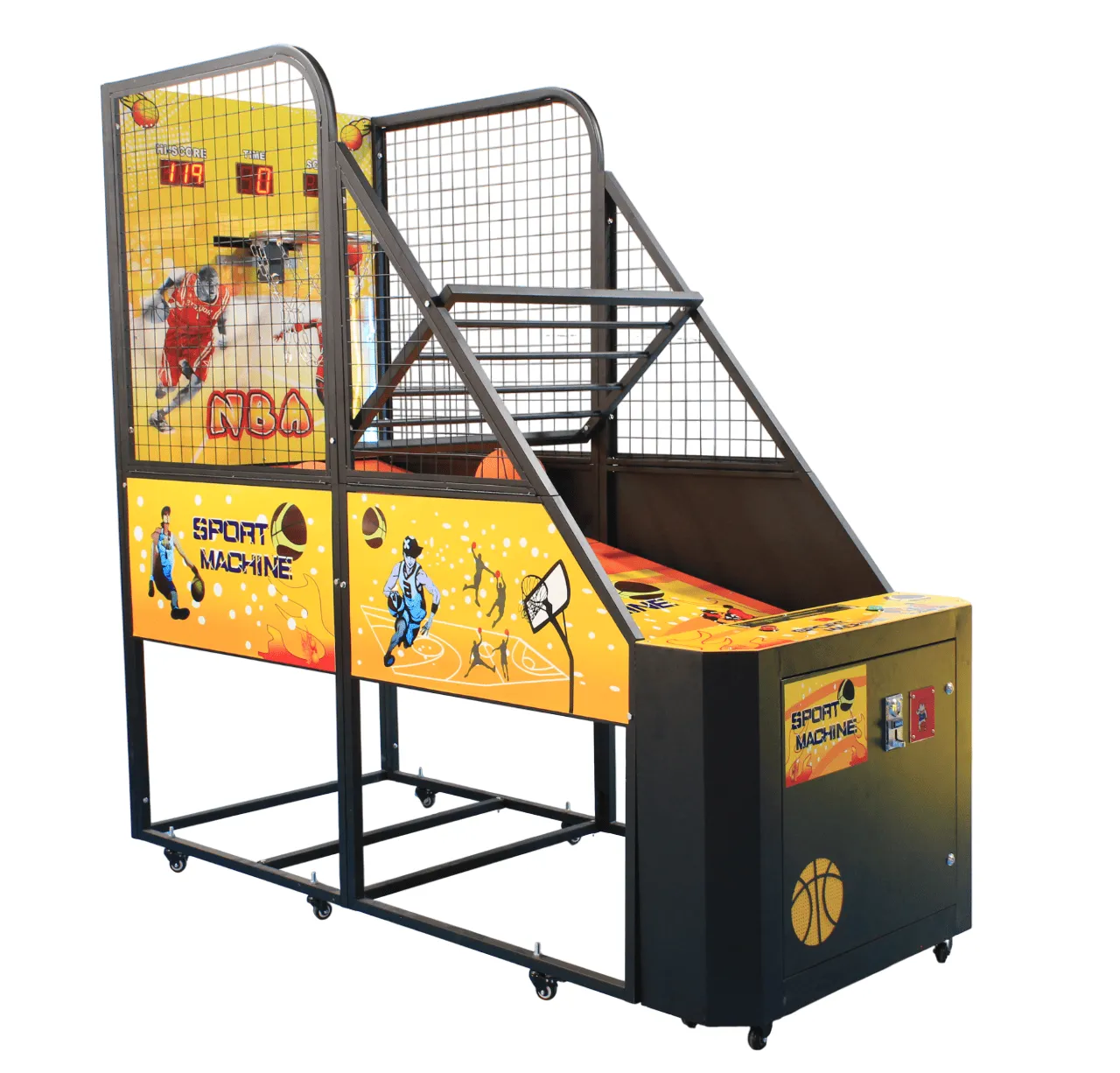
As a planning estimate for early layout work, most basketball arcade cabinets fall in these bands:
- Width: roughly 8–1.5 m, depending on whether it’s a single-hoop or twin-hoop cabinet
- Depth: roughly 5–3.0 m, including the ball return and rear hoop housing
- Shooting and exit space in front: reserve roughly 2–1.8 mof clear floor
- Circulation past the play area: keep about 9–1.2 mwhere your layout and local code permit
Treat all of those as estimates for sketching only. Confirm every dimension against the actual model’s drawing before you sign a lease or cut a floor plan, because folded shipping depth and installed playing depth are not the same number.
Accessibility and egress come first
For venues in the United States, the 2010 ADA Standards for Accessible Design (ADA = Americans with Disabilities Act) require an accessible route that is generally at least 36 inches (915 mm) wide. Your machine, your queue, and your ball-return overhang all need to stay out of that route. Outside the US, your local accessibility and fire codes govern instead — and in my experience they’re often stricter about egress widths than operators expect. Ask your landlord’s building manager for the marked egress plan. They usually have one on file.
Two traps worth naming:
Trap 1: the queue is invisible on the drawing. A CAD plan shows a 1.2 m cabinet in a 3 m corridor and everything looks fine. On a Saturday night, four teenagers stand behind the shooter and two more stand to the side filming. Your effective footprint just tripled. When I score a location, I sketch the crowd footprint, not the cabinet footprint.
Trap 2: the delivery path. One operator in Portugal bought a twin-hoop cabinet for a first-floor bowling mezzanine. Great spot. The service lift was 1.05 m wide. The machine sat in the loading bay for eleven days while they sourced a crane and a window removal crew. Measure your narrowest door, your lift car, your turning radius on the stair landing, and your ceiling height under any ductwork — before purchase, not after.
Ceiling, floor, and the physical envelope
Ceiling height matters more than people think, since the ball arcs above the hoop and many cabinets have an overhead LED marquee. Check your clear height under sprinklers, signage, and beams. On the floor side, hard smooth surfaces are your friend: carpet muffles the machine’s sound and traps dust in the ball return, and thick carpet tiles can shift under repeated foot planting.
And plan the power. A dedicated outlet within reach beats an extension cable taped across a walkway, which is both a trip hazard and a fast way to fail a safety inspection.
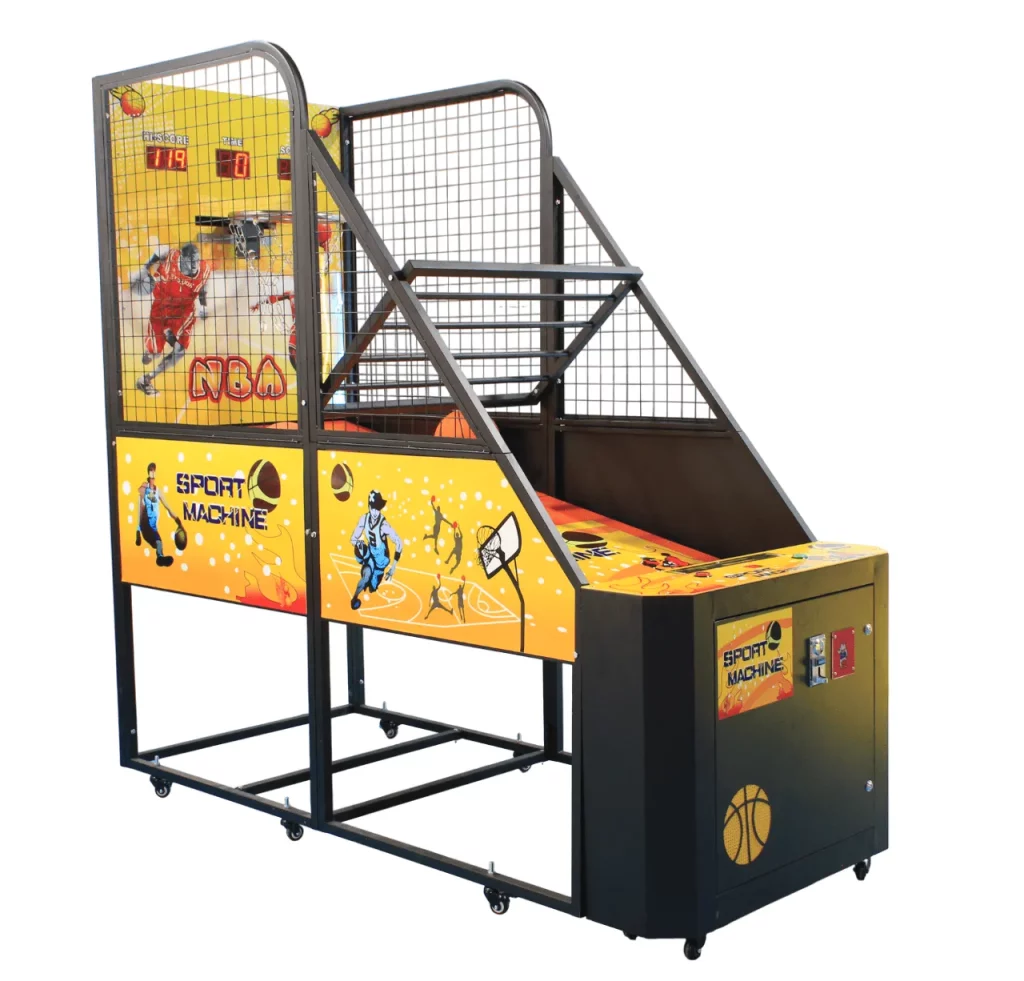
Use the Footfall-to-Hoop Index Before You Commit to a Location
Score the site before you install, because a number forces a conversation that a gut feeling doesn’t. The Footfall-to-Hoop Index is Full of Fun’s internal planning tool, developed from our own project experience across 100+ export markets. It is not an industry standard and no external body publishes it. We use it with clients on video calls when they send a floor plan, and it’s useful precisely because it makes disagreement visible.
Score each dimension 1 to 5, then apply weights.
| # | Dimension | What you’re judging | Weight | Score 1 looks like | Score 5 looks like |
| 1 | Qualified footfall | People who could realistically play, not raw counts | 20% | Staff corridor, back-of-house traffic | Main guest path in a busy FEC |
| 2 | Dwell time | Are people slowing down or standing still? | 15% | Fast transit corridor | Queue, waiting area, lounge |
| 3 | Sightline | Visible from 8–15 m and from the main approach | 15% | Hidden behind a pillar or partition | Visible the moment guests enter |
| 4 | Access | Easy, obvious, code-compliant approach | 10% | Behind other machines, up a step | Direct, level, unobstructed |
| 5 | Audience fit | Does this crowd play basketball games? | 10% | Retirement-focused lounge | Teens, families, sports fans |
| 6 | Social visibility | Can friends watch, film, and compete? | 10% | Cramped alcove, no standing room | Open floor with natural spectator space |
| 7 | Supervision | Line of sight from staff or camera | 8% | Blind corner, no coverage | Beside a counter or manned desk |
| 8 | Operating fit | Power, network, payment, cash handling, cleaning access | 7% | No outlet, no signal, hard to service | Dedicated power, good signal, easy panel access |
| 9 | Space efficiency | Revenue potential vs floor area it consumes | 5% | Prime retail-value floor | Otherwise dead but visible floor |
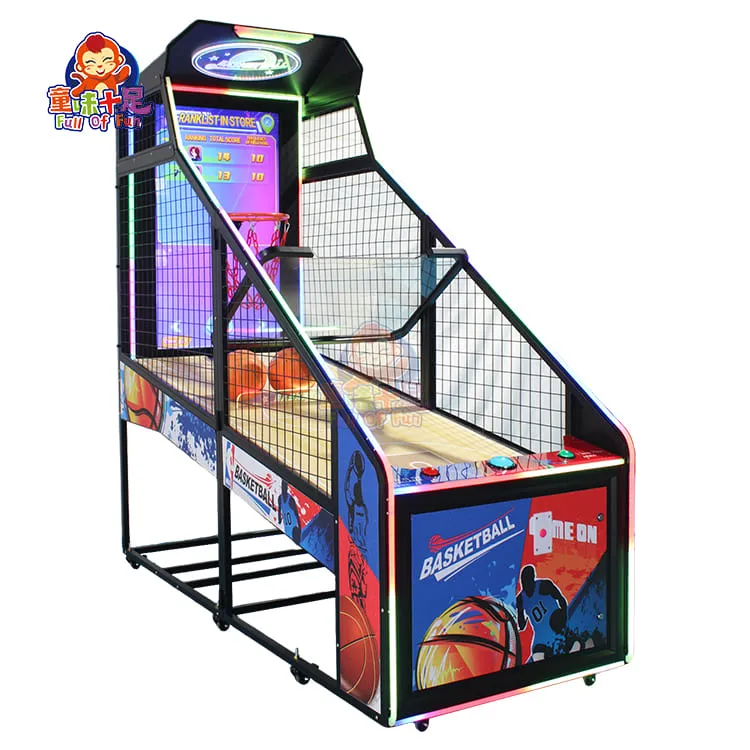
Worked example: trampoline park in Poland
A client sent us a plan for a spot beside the café seating, facing the main court entrance.
| Dimension | Score | Weight | Weighted |
| Qualified footfall | 5 | 20% | 1.00 |
| Dwell time | 4 | 15% | 0.60 |
| Sightline | 4 | 15% | 0.60 |
| Access | 4 | 10% | 0.40 |
| Audience fit | 5 | 10% | 0.50 |
| Social visibility | 4 | 10% | 0.40 |
| Supervision | 4 | 8% | 0.32 |
| Operating fit | 3 | 7% | 0.21 |
| Space efficiency | 4 | 5% | 0.20 |
| Total | 100% | 4.23 |
That’s an Anchor Zone. Note the weak point: operating fit scored 3 because the nearest outlet was 6 m away. They ran a floor channel before install. Cheap fix, found on a score sheet instead of on opening night.
Worked counter-example: mall corridor near the restrooms
Footfall 4, dwell 1, sightline 2, access 3, audience fit 2, social visibility 1, supervision 2, operating fit 3, space efficiency 3. Weighted total: 2.37. Dead Zone. High traffic, no dwell, no spectators, nobody in a playing mood. This is the exact spot operators keep choosing because “so many people walk past.”
The four tiers
| Score | Tier | What to do |
| 4.2–5.0 | Anchor Zone | Install with confidence. Consider a twin-hoop or premium cabinet here. |
| 3.4–4.1 | Playable Zone | Good. Fix the one or two weak dimensions before install. |
| 2.6–3.3 | Test Zone | Trial only. Set a review date and a relocation plan. |
| 1.0–2.5 | Dead Zone | Don’t install. Fix the zone or pick a different spot. |
One habit I’d push: score at least three candidate spots in the same venue, on the same day, by the same person. Relative scores are more useful than absolute ones.
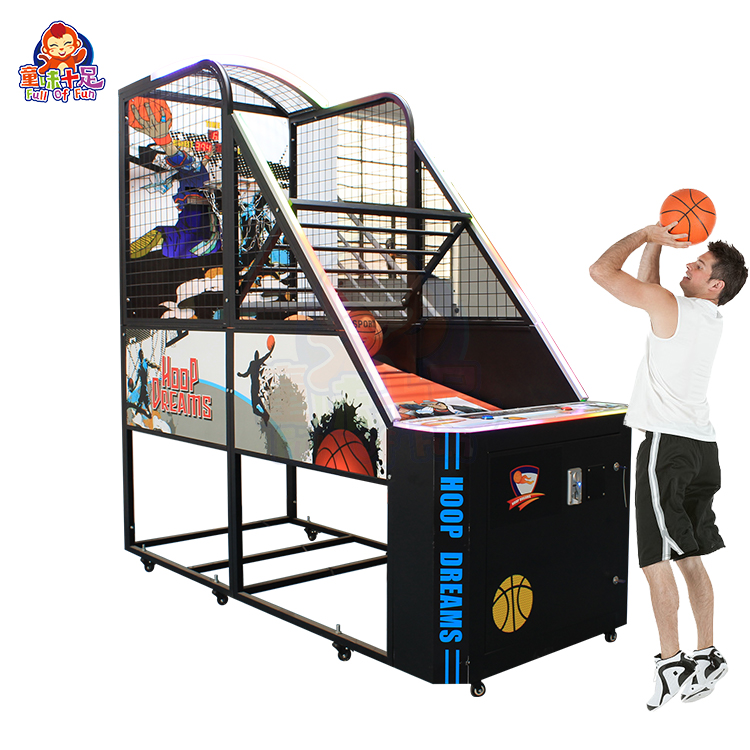
Map the Venue With the 4-Zone Placement Taxonomy
Every venue breaks into four functional zones, and a basketball machine belongs in two of them far more than the others. This is the second Full of Fun internal framework we use on planning calls — again, our own tool, not a published standard.
| Zone | What it is | Guest mindset | Basketball fit |
| Capture Zone | Entrance, lobby, first 10 m of the guest journey | Orienting, deciding | Good for visibility, weak for play — people haven’t settled yet |
| Dwell Zone | Waiting areas, queues, café seating, bowling concourse, party-room overflow | Idle, restless, killing time | Strongest fit. Idle time converts into plays |
| Social Zone | Open floor where groups gather, film, and compete | Performing, showing off | Strongest fit. Drives repeat plays and word of mouth |
| Conversion Zone | Prize counter, redemption shop, card top-up, checkout | Spending, already decided | Strong for ticket-redemption models and top-up-then-play behavior |
A single venue usually contains several zones, and they overlap. A bowling center’s concourse behind lanes 1–4 is a Dwell Zone and a Social Zone at the same time. That overlap is where I’d put the machine.
How I use this in practice: walk the venue at its busiest hour and tag zones on the floor plan with four colors. Then look for the largest overlap of Dwell and Social. Nine times out of ten, that’s your Anchor Zone candidate.
The Capture Zone deserves a nuance. Placing a basketball cabinet in the entrance lobby often does not maximize plays, but it does maximize awareness — guests see it, remember it, and come back to it after they’ve bought tokens. If your lobby is generous and you have more than one machine, a lobby unit works as a billboard. If you only have one machine, put it where people stand still.
One operator in Dubai told us their best-performing hoop game sits between the party-room corridor and the redemption counter. Parents wait there. Kids finish a party there. Two zones, one machine, constant queue.
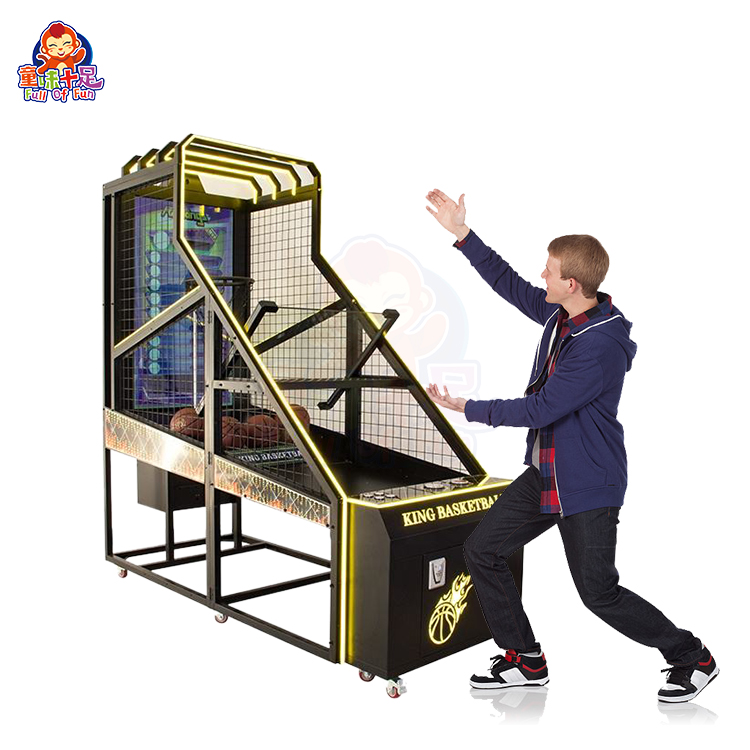
Best Placement Patterns by Venue Type
Placement rules are venue-specific, so start from the pattern that matches your business instead of a generic “high traffic area” instruction. These patterns come from our own installation and shipping experience, not from published research.
| Venue type | Best zone | Specific pattern that works | What to avoid |
| FEC / indoor playground | Dwell + Social overlap | Facing the main circulation spine, near redemption counter, with 2–3 m of open spectator floor | Back wall behind taller cabinets |
| Bowling center | Dwell | Concourse behind the lanes or beside the shoe-rental queue | Between lanes where balls and bowlers conflict |
| Cinema lobby | Capture + Dwell | Beside the concession queue, screen angled toward the ticket line | Deep in a corridor past the auditorium doors |
| Trampoline park | Social | Near café seating with sightline to the main court entrance | Inside the jump area where staff already manage crowds |
| Shopping mall / amusement corner | Capture + Social | Open frontage on the main aisle, machine turned 15–30° toward approaching traffic | Restroom corridors, service corridors, escalator landings |
| Sports bar / restaurant | Social | Away from dining tables, near the bar or a game zone, with a partition for noise | Near tables where noise ruins the meal |
| Hotel / resort game room | Dwell | Near the kids’ club or pool corridor, visible from the lift lobby | Windowless basement with no signage |
| Gym / sports club | Social | Lobby or stretching-area edge, where members socialize post-workout | Cardio floor, where it competes for attention |
| University / staff rec room | Dwell + Social | Beside seating and vending, with clear standing room | Study areas, libraries, quiet zones |
| Petrol station / convenience arcade | Capture | Window-visible position so drivers see it from outside | Behind shelving where it’s invisible from the pump |
A few pattern details worth stealing
Angle the cabinet. Turning a machine 15–30° toward oncoming traffic makes the screen and hoop visible earlier in the approach. Square against a wall is the default. Angled is usually better.
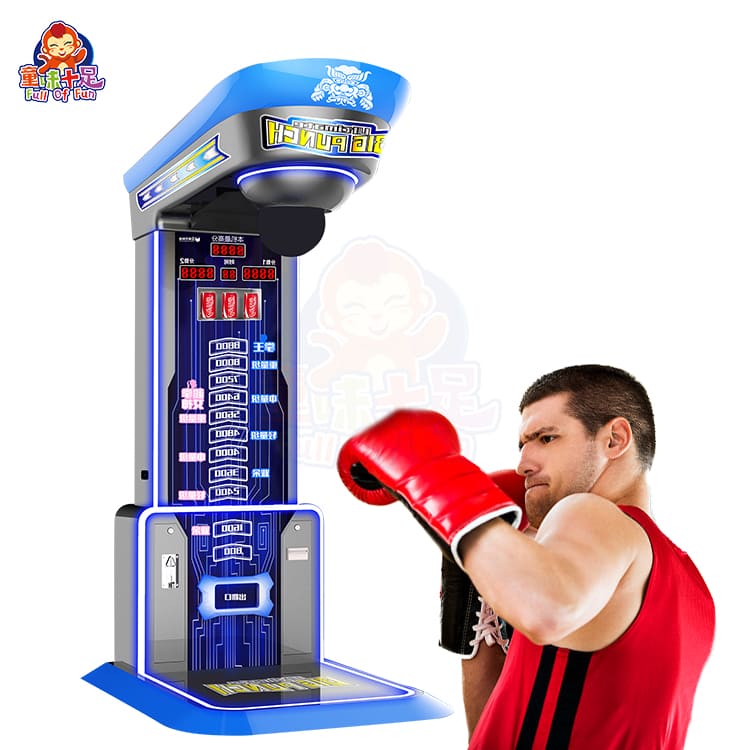
Cluster smartly. Basketball machines pair well with air hockey, boxing machines, and racing cabinets — all loud, physical, social games. They pair badly with claw machines and quiet redemption units, because the noise and the crowd interfere with careful play.
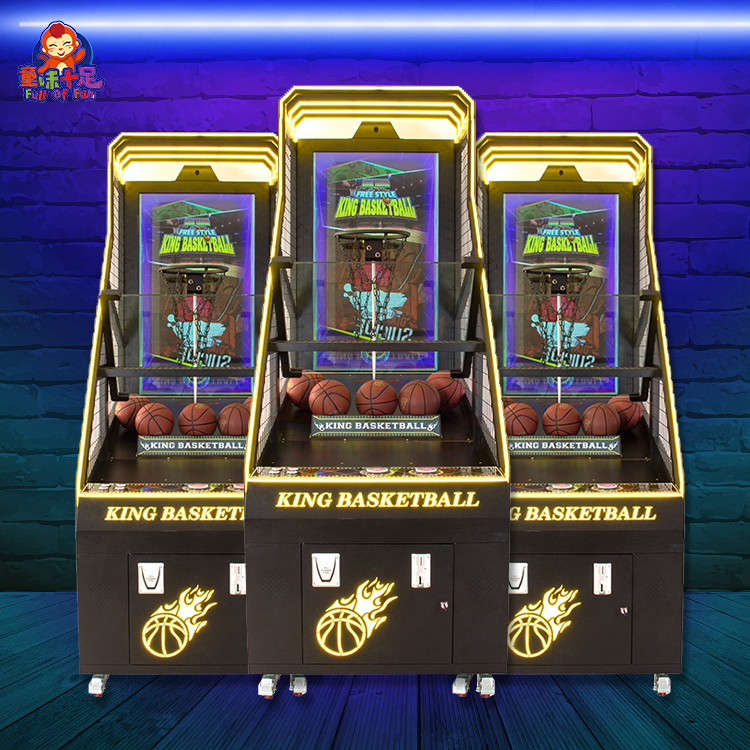
Watch the direct sun. Anything with an LCD scoreboard washes out under a skylight or a west-facing glass wall. I’ve seen a beautiful deluxe LCD screen basketball arcade machine underperform for three months purely because afternoon glare made the screen unreadable. They moved it 4 m and rotated it. Problem solved.
Avoid Dead Zones: Common Placement Mistakes
Dead zones are usually created by the operator, not the building, and most of them come from four repeated mistakes. Here they are, in the order I encounter them.
- Chasing raw footfall instead of qualified footfall.A corridor with 3,000 people per hour moving at walking speed is worse than a waiting area with 200 people standing still. Score dwell time before you get excited about a counter number.
- Blocking egress or accessible routes.This one has teeth. An operator in Texas installed two cabinets along a corridor wall, which looked fine — until the shooting queue narrowed the accessible route below the 36 inches (915 mm) that the 2010 ADA Standards for Accessible Design generally require. The fire marshal’s visit cost them a shutdown weekend and a relocation. Local codes govern in every market, so check them before install, not after a complaint.
- Ball escape paths nobody thought about.Balls leave the play area. That’s normal. What matters is where they go. I watched a mall install in Malaysia where missed shots rolled straight into the main aisle and, twice in one afternoon, into a jewelry storefront. They added a low rail and a rubber threshold strip. If your machine faces open floor, plan a soft barrier, a wall, or a directional angle that sends stray balls somewhere harmless.
- Ignoring the spectator space.A machine wedged into a 1.2 m alcove can be played, but it can’t be watched. No watchers, no social loop, fewer repeat plays. Open frontage is worth paying floor space for.
Three smaller ones I still see constantly:
- No supervision line of sight.Blind corners collect vandalism, jammed coin mechs discovered days late, and stolen balls.
- Noise conflict.A basketball cabinet next to a restaurant’s quiet seating generates complaints, and complaints generate a request to turn the volume down. A muted machine loses much of its pulling power.
- Cleaning and service access.If you can’t reach the coin door, the ball return, or the rear panel without moving the cabinet, your maintenance intervals will stretch and your uptime will fall.
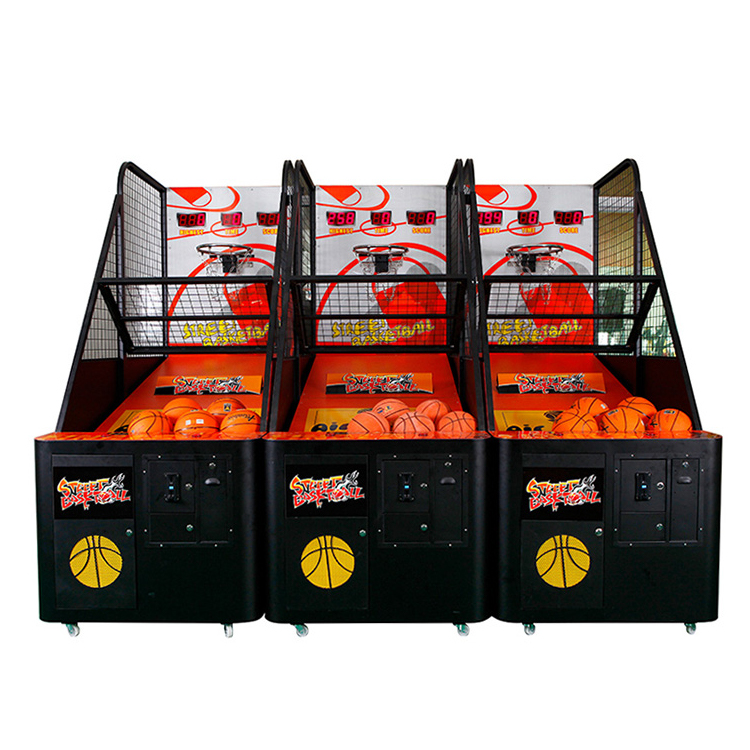
Using revenue per square foot as a comparison method
Revenue per square foot is a comparison method, not a published benchmark. Take gross revenue for a period and divide it by the active floor area the machine occupies — cabinet plus play and spectator space. The absolute number means little on its own. Compare it against your other machines in the same venue, or the same machine before and after a move. That’s the whole value: it prices the floor space that a big cabinet consumes. For actual financial modeling, use the revenue and profit analysis guide rather than estimating from placement data alone.
Match Placement to Payment, Staffing, and Daily Operations
The best-scoring location fails if it doesn’t fit how your venue actually runs. Operations are placement constraints, and I’d rather find them on paper than in month two.
Payment. Coin, token, banknote, card reader, RFID card, QR code, or a mix. Each has a placement consequence:
- Coin and token: needs a change machine or token counter within easy reach. If guests have to walk 40 m to get tokens, you’ve added friction at the moment of impulse.
- Card and RFID systems: needs cabling or reliable network coverage at the machine location. Check signal strength on site, at the exact spot, at a busy hour.
- QR and mobile payment: check mobile data and Wi-Fi in that corner. Basements and steel-framed mezzanines are frequent dead spots.
Cash handling and staffing. Cash-heavy machines belong within sight of a manned position. In our 15 years shipping to 100+ countries, unsupervised cash boxes in blind corners have been the most common source of shrinkage complaints we hear. A machine 6 m from the counter is easier to run than a machine 30 m away, even if the further spot scores slightly higher on footfall.
Cleaning and daily checks. Balls get dirty. Nets wear. Sensors get knocked. Position the machine where a staff member walking their normal route passes it several times per shift, and daily checks stop being a special trip.
Hours and seasonality. If your venue has a strong seasonal swing, keep the option of moving the cabinet. Machines on levelling feet with a clear path to a service door are relocatable. Machines built into a bespoke alcove are not.
Ventilation and heat. Electronics plus a crowd generate heat. Avoid boxing a cabinet in beside a kitchen exhaust or a sunlit glass wall without airflow.
If you’d like a second opinion before you commit, send us your floor plan and we’ll score the zone with you. We do this on a call, mark up the plan, and tell you honestly when a spot is a Test Zone rather than an Anchor Zone.
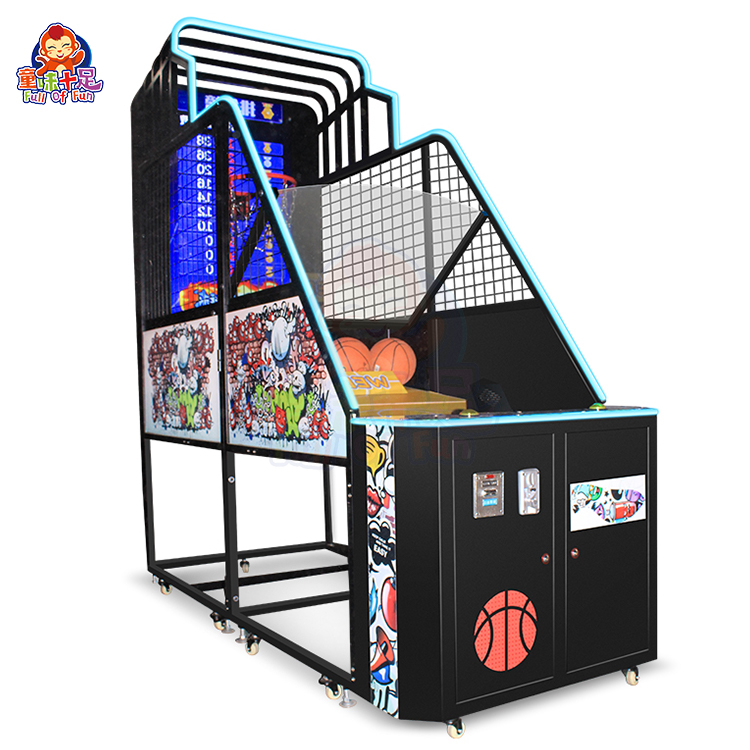
Test the Site and Measure What the Location Delivers
Treat a new location as a hypothesis with a review date, not a permanent decision. Two weeks of real data beats two hours of argument.
Here’s the test protocol we suggest to operators:
- Baseline the site.Record the Footfall-to-Hoop Index score, a photo of the sightline from the main approach, and the price per play.
- Run 14 days minimum.Include at least two weekends and one full holiday or event day if your venue has them.
- Log daily plays, not just revenue.Revenue mixes price changes with demand. Play counts isolate demand. Most cabinets can report this from the service menu.
- Track uptime separately.A slow week caused by a jammed ball return is not a placement problem.
- Move it once.If results are weak, relocate within the same venue and rerun the same 14-day test. Same machine, same price, different zone. That comparison is the most informative data you will ever collect.
Rough test bands for interpreting play counts
These are planning estimates from our own project experience, useful only as rough orientation:
| Rough band | Plays per day | How I read it |
| Weak / unproven | ~10–30 | Placement, price, or visibility problem. Investigate before blaming the game. |
| Viable | ~30–80 | The zone works. Optimize price, promotion, and tournament events. |
| Strong | Above that range | Anchor Zone behavior. Consider a second unit or a twin-hoop cabinet. |
Actual plays depend on venue, price, game condition, promotion, payment method, seasonality, and operating hours. Do not treat these bands as a forecast for your site.
What to change first when results disappoint. In order: sightline, then approach clarity, then spectator space, then price, then the machine itself. I put the machine last on purpose. In most cases I’ve reviewed, the cabinet was fine.
One more measurement worth taking: stand 12 m away at the main approach and film 60 seconds of traffic. Watch it back. Count how many people turn their head toward the machine. That head-turn count is crude, unscientific, and remarkably predictive.
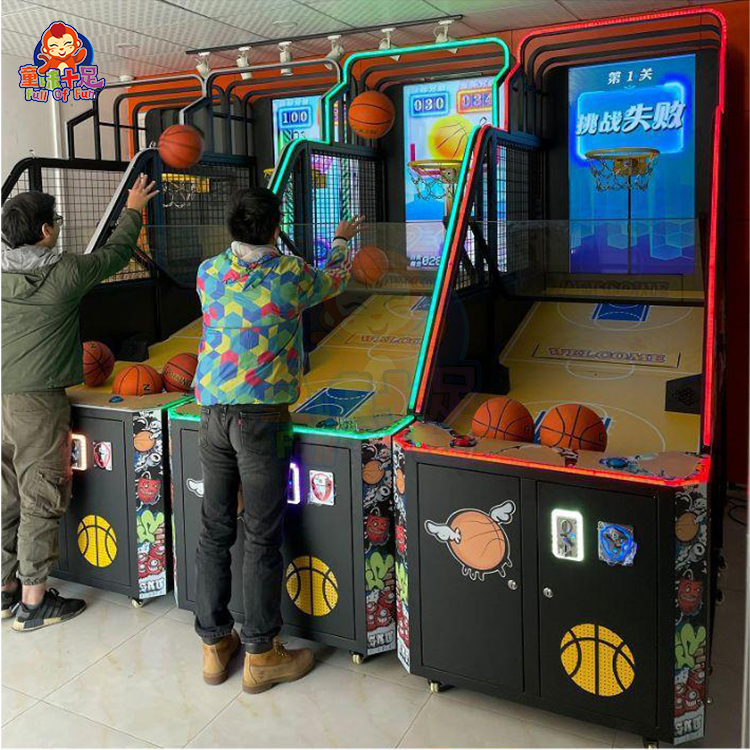
Specifications
Specifications drive placement, so pull the real drawing for your chosen model before you finalize a layout. The table below shows typical planning ranges across basketball cabinet types — treat every figure as an estimate and confirm against the actual model.
| Item | Typical planning range (estimate) | Placement implication |
| Cabinet width | ~0.8–1.5 m (single vs twin hoop) | Sets your wall run requirement |
| Installed depth | ~1.5–3.0 m | The number operators most often underestimate |
| Height (installed) | ~2.1–2.9 m including marquee | Check clear height under sprinklers and ducts |
| Shipping / folded dimensions | Smaller than installed depth | Governs your door and lift check |
| Clear space in front | Reserve ~1.2–1.8 m | Shooting stance plus exit |
| Circulation past play area | ~0.9–1.2 m where layout and code permit | Local code and accessibility rules govern |
| Net weight | Varies widely by model and materials | Check mezzanine and lift load limits |
| Power | Configured to destination market voltage and plug type | Needs a dedicated outlet, not a taped extension lead |
| Screen / scoreboard | LED scoreboard or LCD display options | LCD models need glare control |
| Payment | Coin, token, banknote, card reader, RFID, QR — model dependent | Drives cabling and network needs at the spot |
| Balls | Multiple balls with automatic return; sizes vary by model | Plan a stray-ball barrier on open frontage |
| Cabinet materials | Steel frame with acrylic, metal, and composite panels | Affects weight and outdoor suitability |
| Packaging | Export plywood or carton with foam protection | Confirm crate dimensions for your delivery path |
| Container loading | Quantity per 20ft / 40ft / 40HQ varies by model | Ask us for the exact loading plan per order |
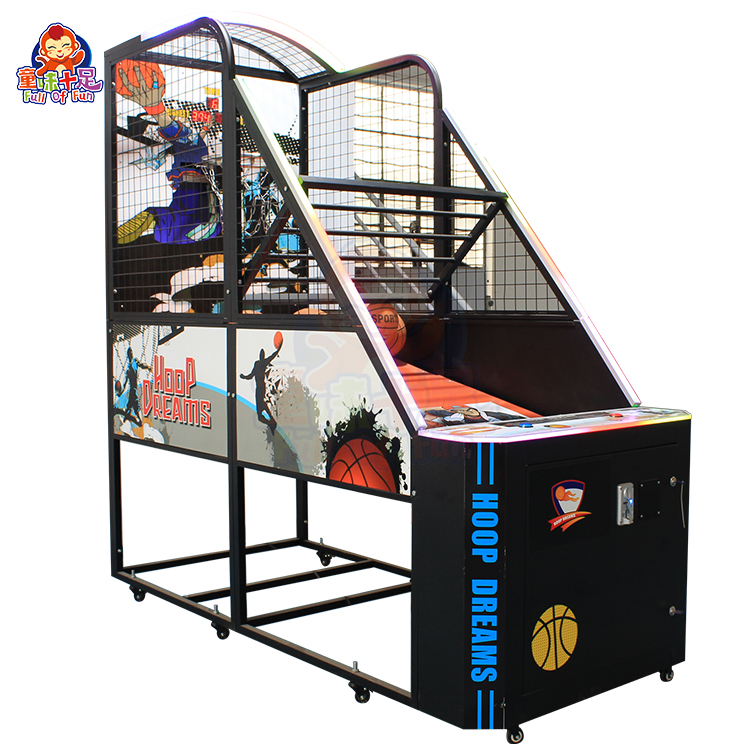
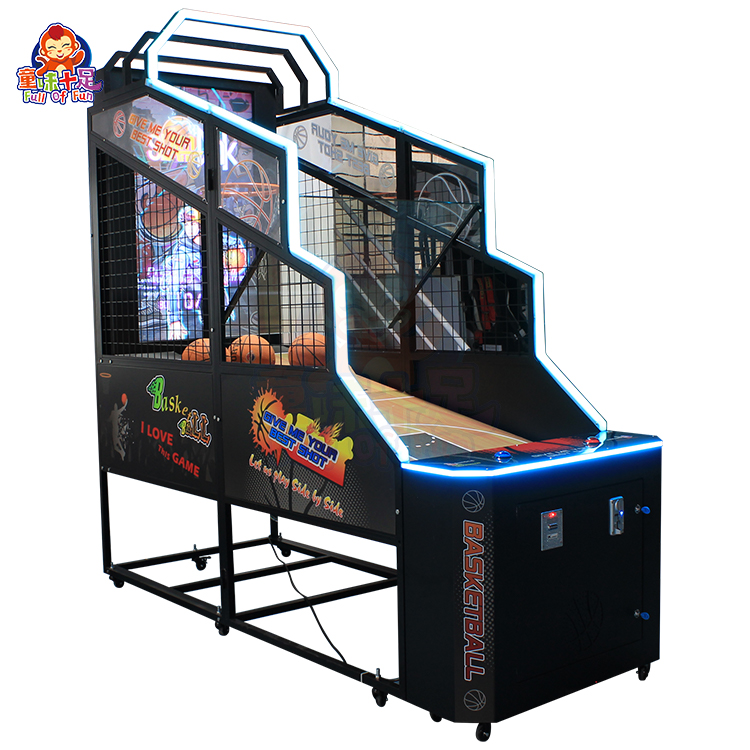
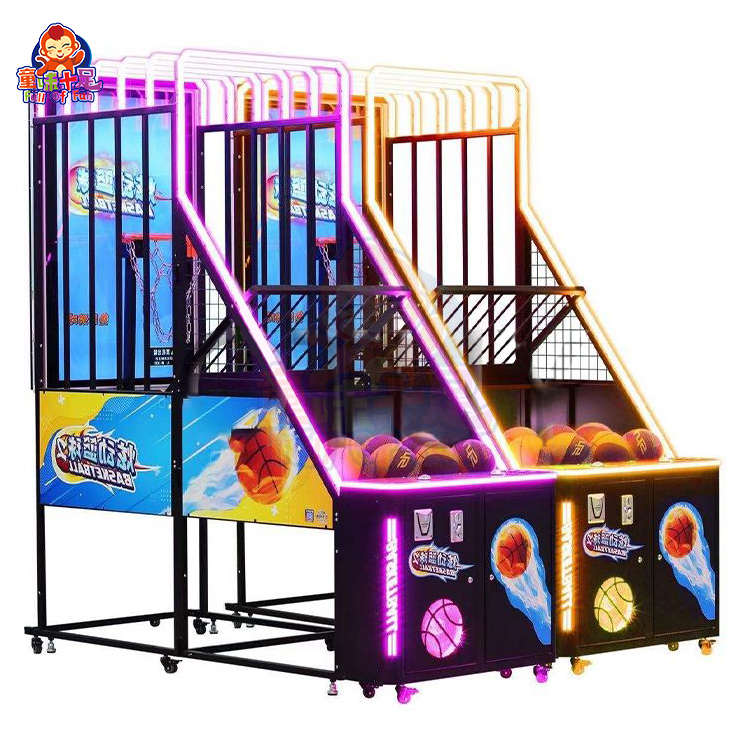
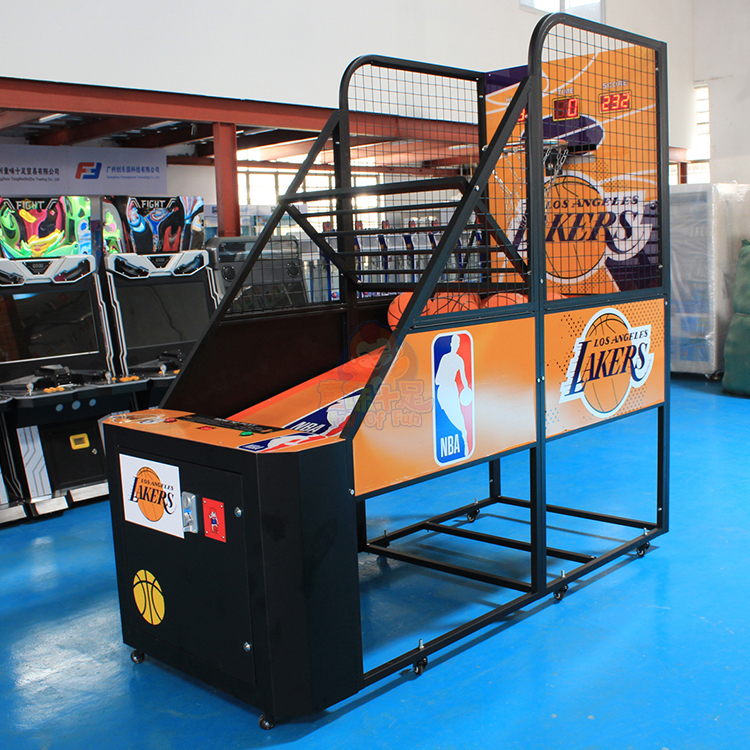
For model-specific drawings, compare the deluxe LCD screen basketball arcade machine against the NBA-style basketball arcade game machine — the footprint and spectator-space needs differ, and that difference can decide which zone in your venue works.
Certificates
Certification requirements follow your destination market, so tell us the country before we quote. We prepare export documentation and compliance paperwork per order and per model, and we’ll tell you plainly when a specific certificate applies to a machine and when it doesn’t.
- CEmarking for European market shipments, where applicable to the machine type
- RoHSdeclarations on restricted substances
- FCC-related documentation for US-bound electronics, where applicable
- ISO 9001-based quality management practices in our production process
- Test reports and technical filesavailable on request for customs and local inspection
- Country-specific electrical documentation(voltage, plug type, transformer where needed)
Ask us for the current certificate set for the exact model you’re considering. Requirements change by market and by machine configuration, and we’d rather send you the real file than a generic claim.
Company Introduction
Full of Fun is a Chinese manufacturer of arcade and vending machines with 15 years of export experience across more than 100 countries. We build coin-operated games — basketball machines, boxing machines, claw machines, racing cabinets, air hockey, kiddie rides, and vending equipment — and we ship them to FECs, bowling centers, cinemas, trampoline parks, malls, hotels, and route operators.
What that means for a placement conversation: we’ve seen the floor plans. Thousands of them. We know which corner of a bowling concourse works in Poland and why the same corner underperforms in a Gulf mall with a different traffic pattern. That experience is why we built the Footfall-to-Hoop Index and the 4-Zone Taxonomy as internal tools — not to publish a standard, but to have a better conversation with buyers before they spend money.
We support OEM and ODM work, custom artwork and branding, market-specific voltage and payment configurations, and container consolidation across product lines.
Exclusive Services
Our placement-oriented services exist because the machine is only half the purchase. Here’s what we do beyond building and shipping.
- Floor plan review and zone scoring.Send a plan or a phone video walkthrough. We score candidate spots with you and flag clearance and access problems.
- Model matching to zone.Twin-hoop for Anchor Zones, compact single-hoop for tight Dwell Zones, glare-resistant scoreboard options for sunlit floors.
- Payment system configuration.Coin, token, banknote, card, RFID, or QR, set up for your market and your venue’s cash handling reality.
- Voltage, plug, and language localization.Configured before shipment, not fixed on site.
- Custom artwork and branding.Your logo, your color scheme, your local sports theme.
- Container loading plans.Mixed-product consolidation to use full container volume.
- Spare parts kits.Balls, nets, sensors, and common wear items shipped with the order.
- Installation and troubleshooting support.Video guidance, manuals, and remote help from our technical team.
- After-sales parts supply.Ongoing availability so a jammed ball return doesn’t become a dead machine.
Frequently Asked Questions
How much space do I need for a basketball arcade machine?
As a planning estimate, allow a cabinet footprint of roughly 0.8–1.5 m wide and 1.5–3.0 m deep, plus about 1.2–1.8 m of clear floor in front for shooting and exit. Add circulation space of roughly 0.9–1.2 m where your layout and local code permit. Always confirm against the actual model drawing, since installed depth and shipping depth differ. Check your ceiling clear height too, because the ball arcs above the hoop.
Where is the best place to put a basketball arcade machine in an FEC?
Put it where the Dwell Zone and Social Zone overlap — typically facing the main circulation spine, close to the redemption counter, with 2–3 m of open floor for spectators. That combination gives you idle guests, visibility, and a crowd that watches each other play. Avoid the back wall behind taller cabinets, where nobody sees it. Keep it within line of sight of a staffed counter for supervision.
Does a basketball machine need to be near the entrance?
Not necessarily, and often it shouldn’t be. Entrances are Capture Zones where guests are still orienting and haven’t bought tokens yet, so plays tend to be lower than in waiting areas. A lobby placement works well as a visibility billboard if you have multiple machines. With only one machine, place it where people stand still.
How do I know if a location is bad before I install?
Score it, then test it. Check dwell time, sightline from 8–15 m, spectator room, supervision, and whether the shooting area intrudes on an accessible route or egress path. In the US, the 2010 ADA Standards for Accessible Design generally require an accessible route of at least 36 inches (915 mm), and local codes govern elsewhere. If the spot scores in our Test Zone band, run a 14-day trial with a relocation plan ready.
Can I move a basketball arcade machine after installation?
Yes, and you should plan for it. Keep a clear path from the machine to a service door, use levelling feet rather than bespoke built-in surrounds, and avoid permanent cabling that can’t be reworked. Relocating a slow machine within the same venue is the highest-value test you can run. Send us your model and we’ll advise on safe moving practice.
What placement mistake costs operators the most money?
Choosing raw footfall over dwell time. A fast-moving corridor with heavy traffic converts poorly compared with a waiting area where people stand still and watch each other. The second most expensive mistake is blocking an accessible route or fire exit path, which can force a shutdown and a forced relocation. Both are avoidable with a site score before purchase.
How many plays per day should I expect?
There’s no reliable universal figure, and I’d distrust anyone who gives you one. As rough orientation from our own project experience, around 10–30 plays per day suggests a placement or visibility problem, while roughly 30–80 suggests a viable zone. Actual plays depend on venue, price, game condition, promotion, payment method, seasonality, and operating hours. For financial modeling, use our revenue and profit analysis guide instead.
Why Operators Choose Full of Fun
Operators come back to us because we argue with them about placement before we take an order. That sounds like a strange selling point. It isn’t. A machine in a Dead Zone generates a complaint, a warranty claim, and a lost repeat customer. A machine in an Anchor Zone generates a second order.
Fifteen years of exporting to more than 100 countries gives us pattern recognition that a spec sheet can’t. We know which cabinet depth fits a European bowling concourse and which one doesn’t clear a Southeast Asian mall’s service lift. We know that Gulf-market FECs run different hours and different family patterns than Latin American ones, and that changes where the machine should sit.
Beyond that: in-house manufacturing, OEM and ODM flexibility, market-specific configuration before shipment, spare parts kits with every order, container consolidation across product lines, and a technical team that answers when a sensor misbehaves in month seven.
Plan Your Basketball Arcade Machine Placement
Placement is a decision you make once and live with for years, so make it with data. Score your candidate zones. Check clearance and accessibility. Run a 14-day test. Move the machine if the numbers say to.
If you want help with any of that, share your venue type, floor area, and target market for a placement-oriented machine recommendation and we’ll come back with a model shortlist matched to your zones, a footprint drawing you can drop into your floor plan, and an honest read on whether your chosen spot is an Anchor Zone or a Test Zone. Send Inquiry and include a photo or sketch of the space — that’s usually all we need to start.