

Real data from a manufacturer that ships 1,000+ units a year — how fast can you really break even?
1. Why Now Is the Best Time to Invest in a Beauty Vending Machine
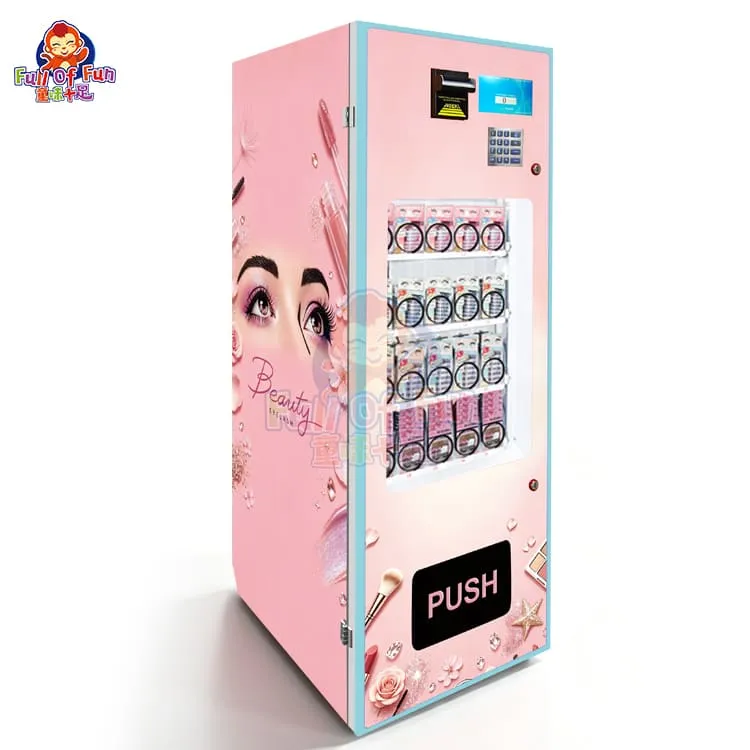
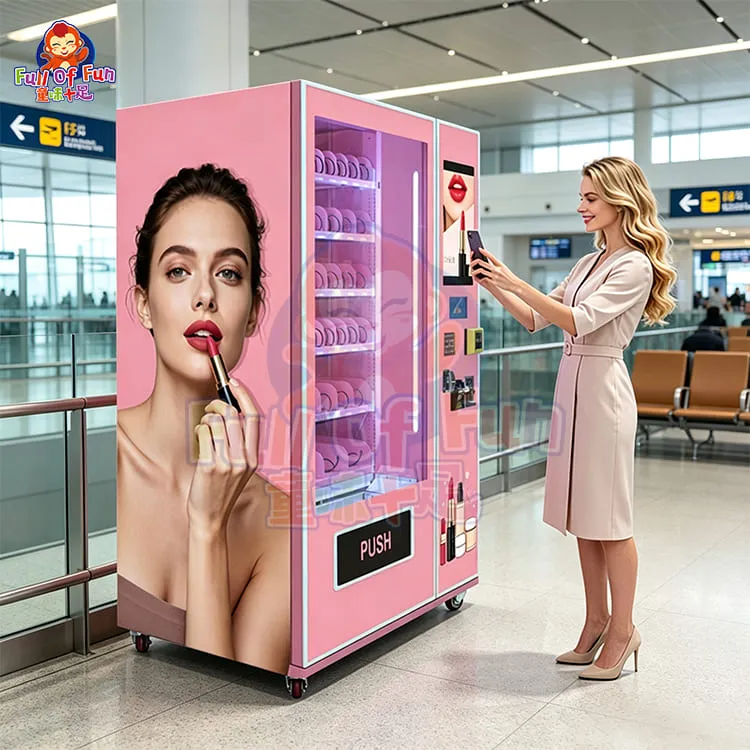
Unmanned retail machines are popping up everywhere in malls. You’ve probably noticed them — blind box machines, cotton candy machines, phone case printers, and more and more pink beauty vending machines. Standing in the mall atrium watching young people line up to buy, you start doing the math: how long would it take this machine to pay for itself?
This article gives you the complete answer. Based on real operating data, we break down the investment, revenue, profit, and pitfalls of beauty vending machines in depth — no hype, no fear-mongering, just numbers.
Let’s start by clearing up the biggest misconception: a beauty vending machine is not a “set it and forget it” passive income machine. It’s a micro retail terminal that requires a product strategy, location judgment, and light operations. Get it right, and it’s a money printer. Get it wrong, and it’s just a metal box.
2. Real Revenue: How Much Can One Machine Actually Make in a Month?
Three Real-World Scenarios
Scenario A: US Midwest Shopping Mall (Moderate Foot Traffic)
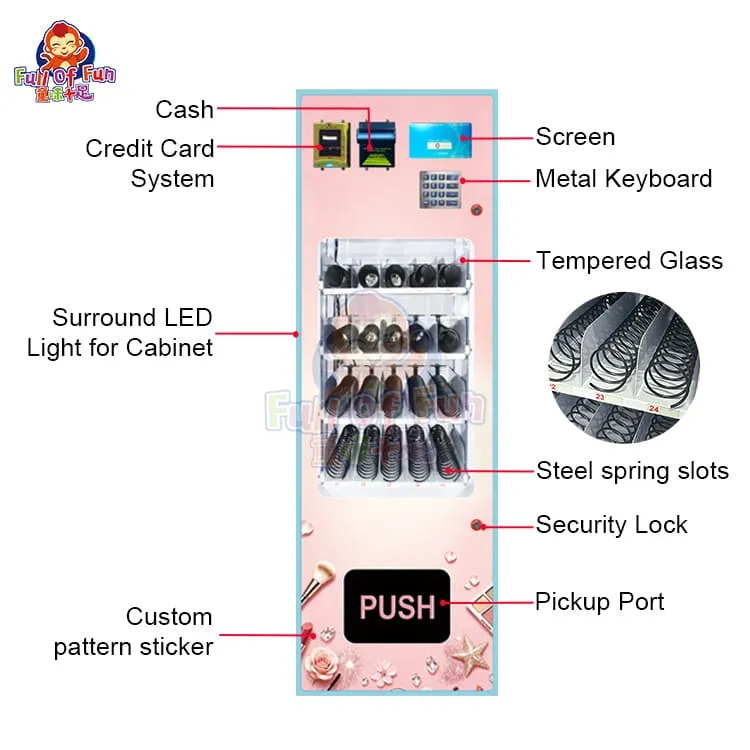
A machine placed near a mall’s cosmetics area, mainly selling lipstick, sheet masks, and mini perfumes. Daily foot traffic is around 8,000 people, with roughly 300–500 people/day actually reaching the machine.
Scenario B: UK University Town Student Center (High Traffic, Young Demographic)
Placed in a student activity center, mainly selling affordable sheet masks, lip balm, and mini makeup. Students’ impulse-purchase rate is noticeably higher than other groups.
Scenario C: Las Vegas Hotel Lobby (High Traffic, Tourist Spending)
Placed in a casino hotel corridor, mainly selling premium travel-size skincare and brand samples. Tourists spend more per order, but the conversion rate is lower.
Key takeaway: the same machine, in a different location with a different product mix, can see revenue swing from $4,500 to $14,000. That’s why location and product selection — not the hardware itself — are the decisive factors in ROI.
3. ROI Deep Dive: How Much Do You Invest, and How Fast Do You Get It Back?
One-Time Investment
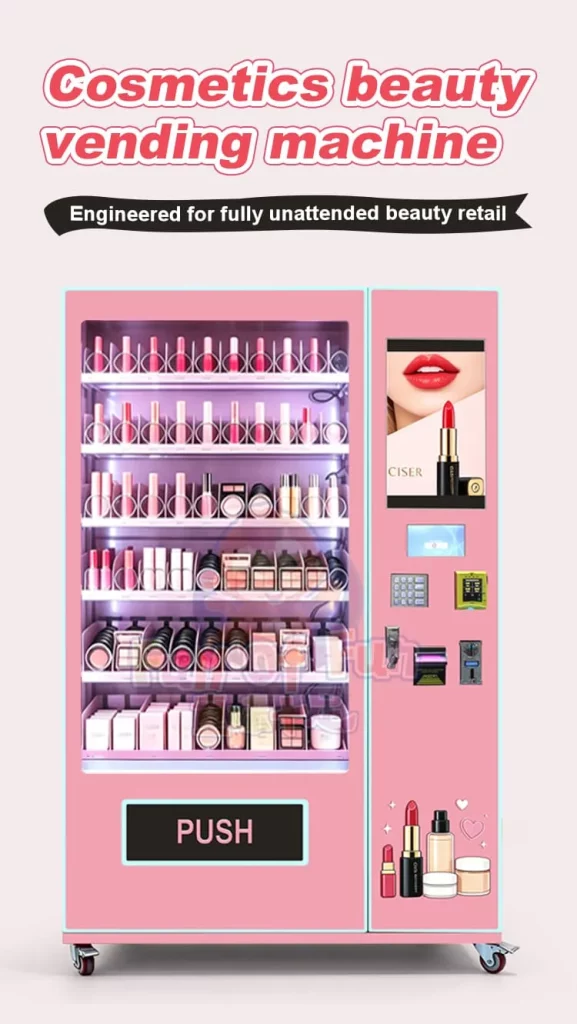
Machine unit: $800–$5,000 (entry level $800–$1,500, standard $1,500–$3,000, premium custom $3,000–$5,000)
First batch of inventory: $500–$2,000 (depending on the number of product slots and categories)
Using the mid-tier configuration most customers choose as an example: machine $2,500 + first batch of inventory $1,000 = total investment of about $3,500.
Revenue, Gross Profit, and Net Profit
The wholesale cost of beauty products runs 35%–45% of the retail price, meaning gross margin is 55%–65%. The main other operating cost is site rent (or a revenue share), generally $200–$800/month. Electricity, payment processing fees, and maintenance costs are low, totaling no more than $150/month.
Three Real Payback Scenarios (Based on Total Investment of $3,500 for the Mid-Tier Configuration)
Data source: the figures above are based on operating feedback from 50+ Full of Fun beauty vending machine customers, spanning 12 US states and 6 European countries. Individual results vary based on location, product selection, and operating ability.
4. Five Key Levers to Boost ROI
Lever One: Location — 80% of Your ROI
A great location versus a mediocre one can mean a 3–5x difference in revenue:
Tier one (monthly revenue $8,000+): large mall cosmetics areas, airport gate areas, popular tourist attractions
Tier two (monthly revenue $4,500–8,000): university student centers, movie theater lobbies, subway entrances in commercial districts
Tier three (monthly revenue $2,000–4,500): community supermarket entrances, gyms, office building lobbies
Not recommended: standalone street locations, low-traffic neighborhood convenience stores
The core principle of location selection: your target customers are already stopping and spending in that place. A beauty vending machine is a tool for intercepting purchase impulses that already exist.
Lever Two: Product Selection — Don’t Stock Everything
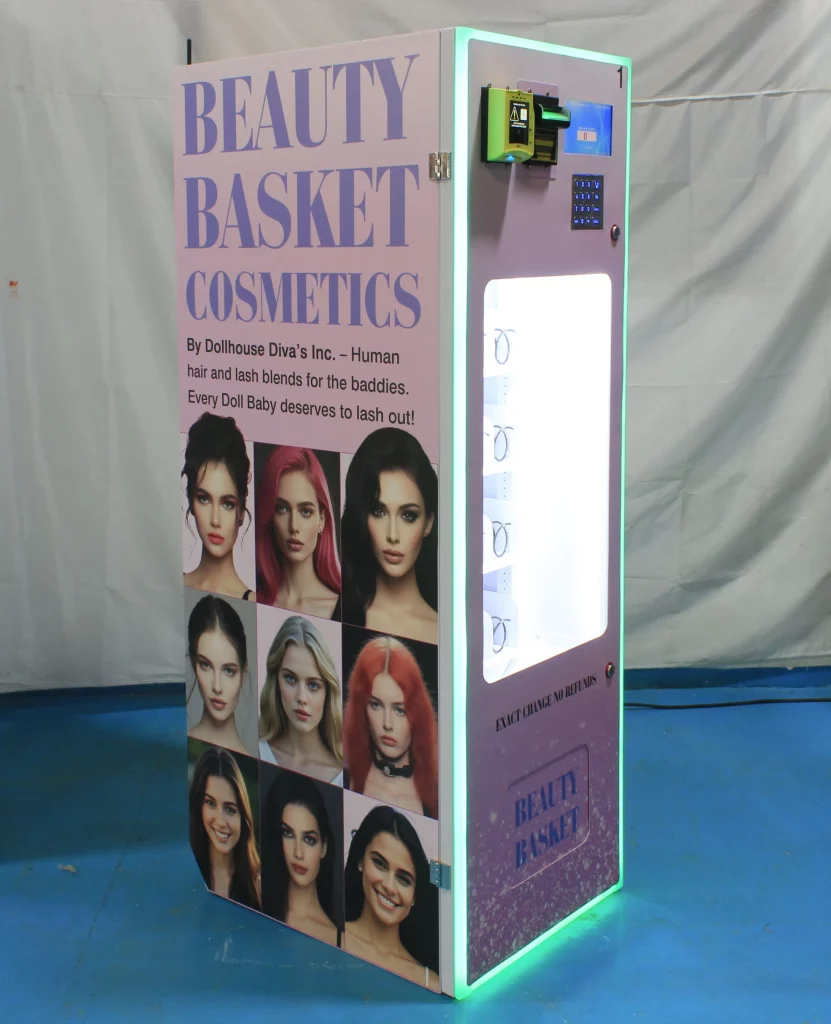
The biggest mistake is cramming 30 different products into the machine. The optimal SKU count is 15–20:
Tiered pricing: $5–10 traffic drivers (sheet masks, lip balm), $15–25 core sellers (lipstick, eyeshadow palettes), $35–60 profit drivers (serum samples, brand collaboration items)
Seasonal rotation: push sunscreen + setting spray in summer, moisturizing masks + hand cream in winter
Hero product strategy: keep 1–2 “price-comparison SKUs” priced 20% below market — it makes customers feel the whole machine is a good deal
Lever Three: Appearance — the Machine Itself Is the Advertisement
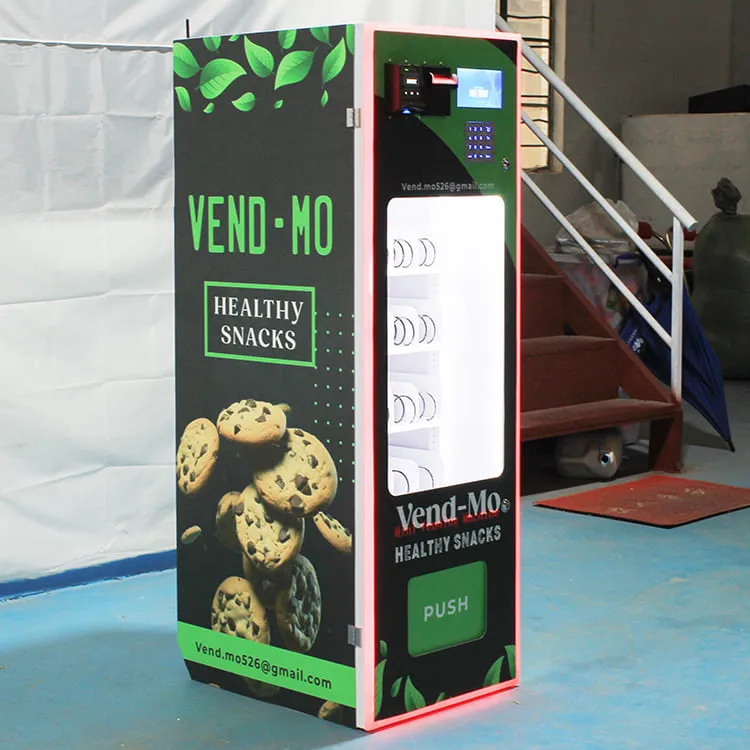
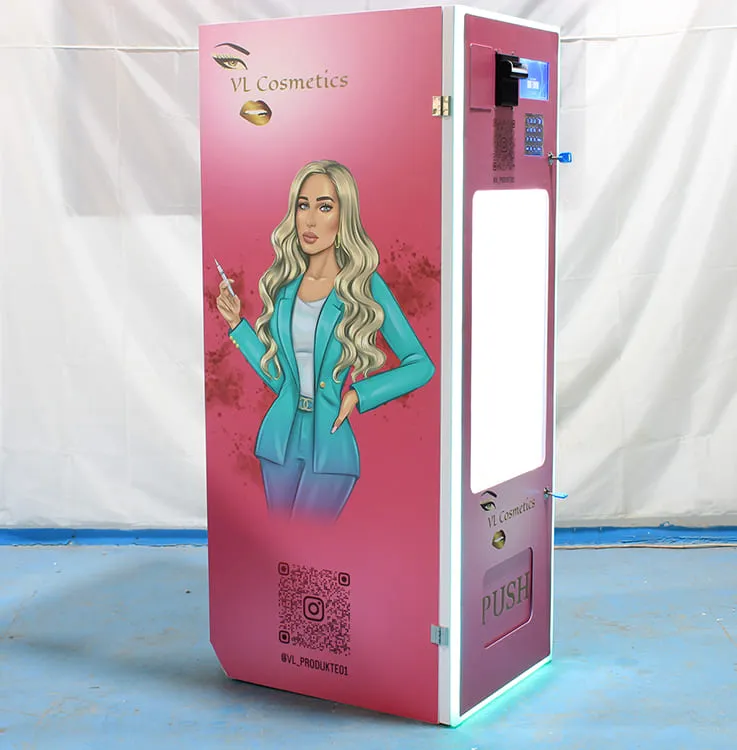
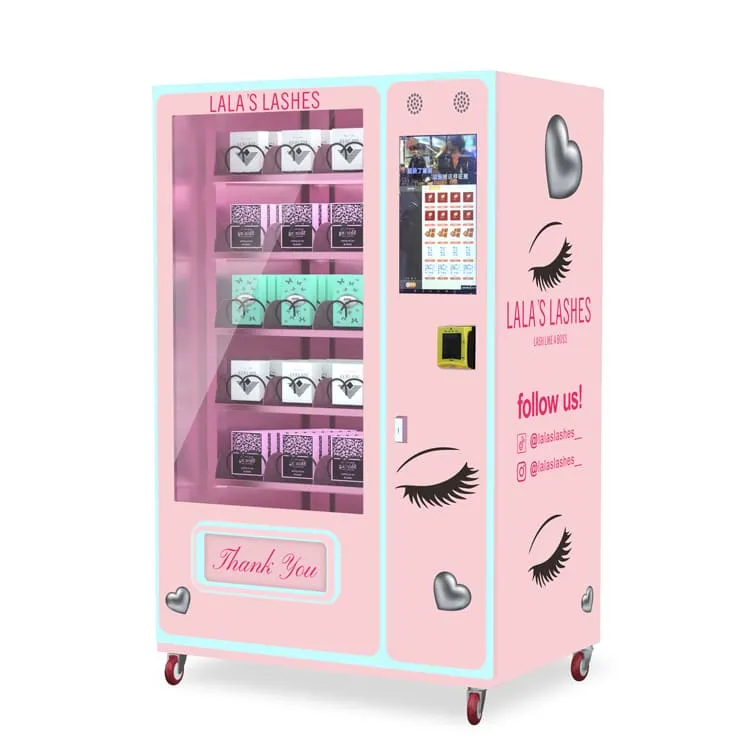
The target demographic is women aged 18–35, who are far more sensitive to aesthetics than other categories:
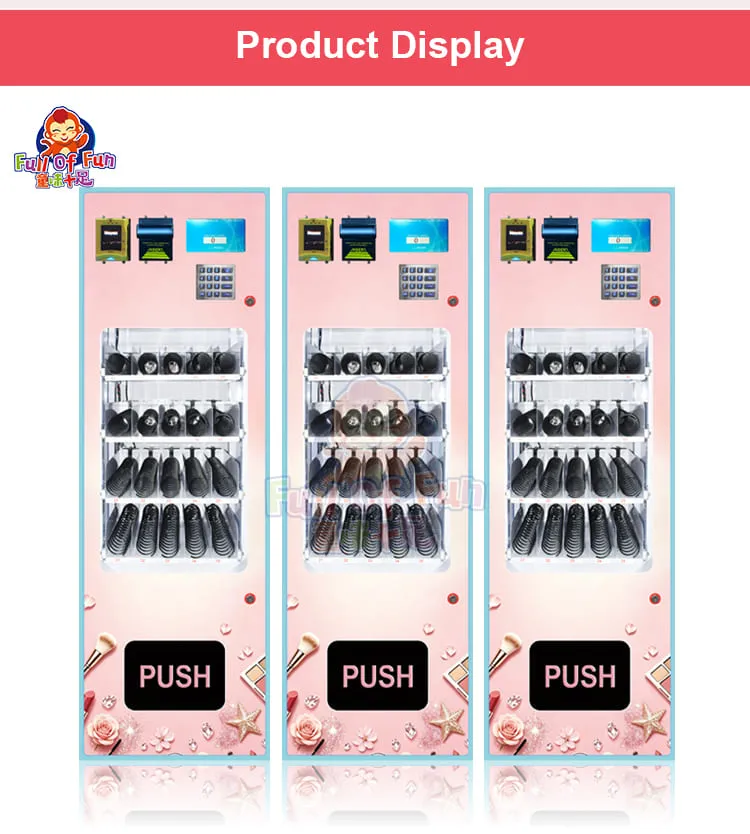
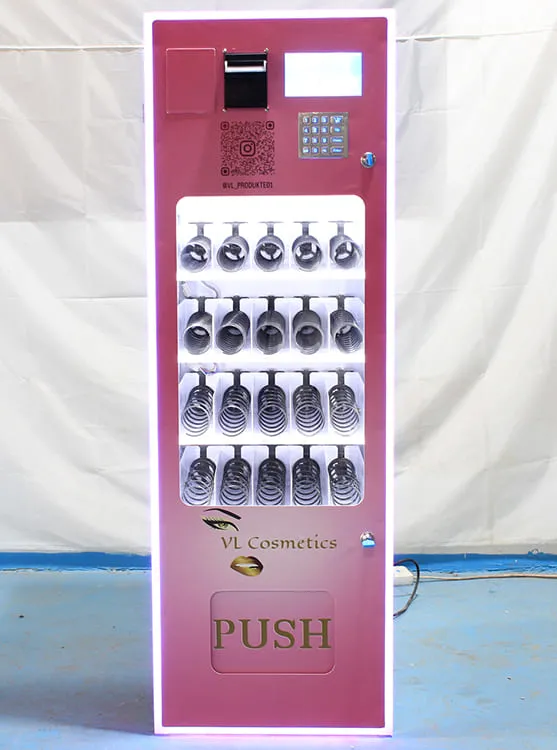
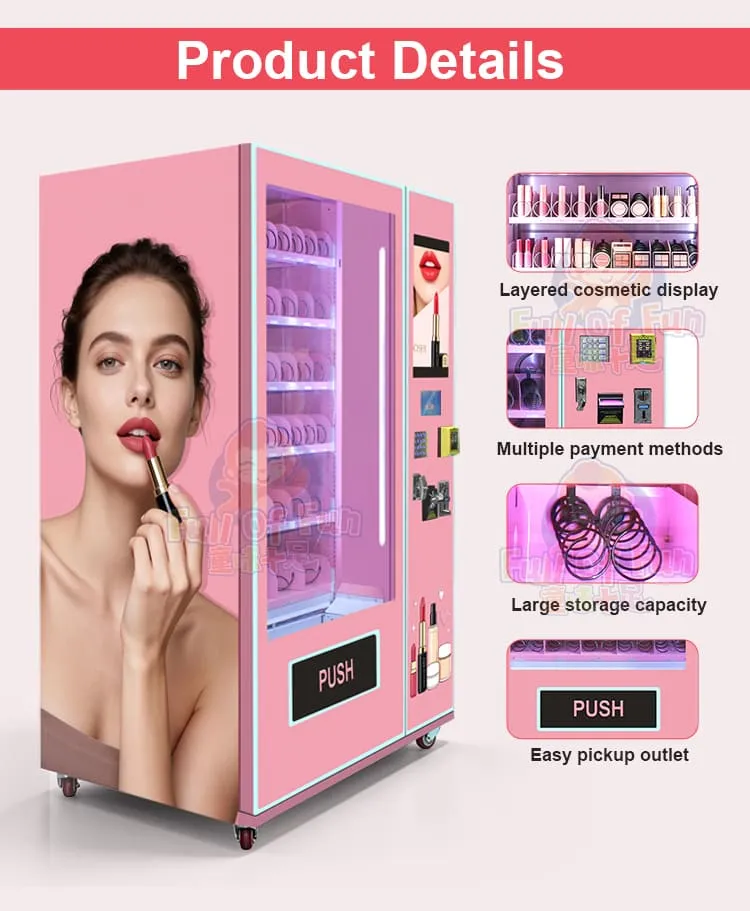
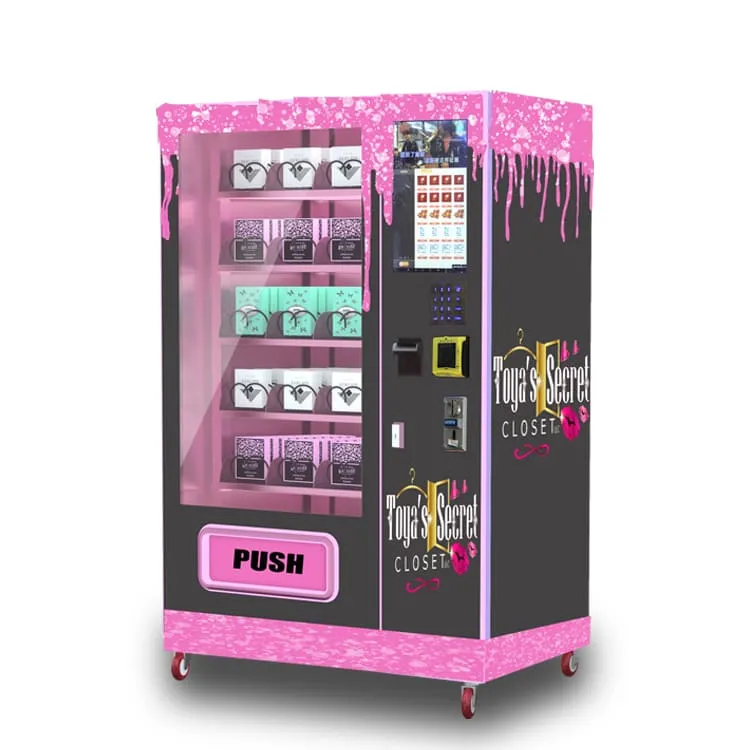
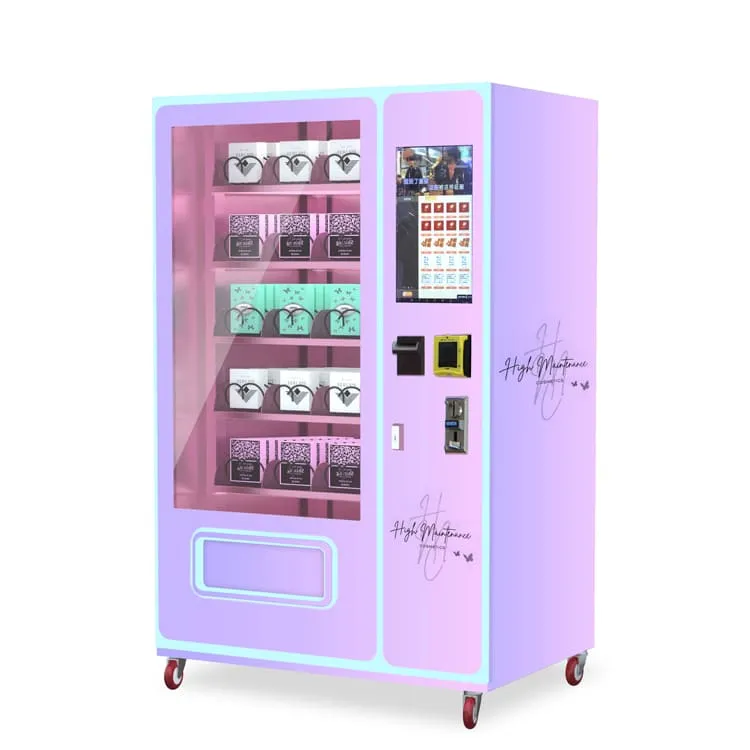
A pink or rose-gold exterior attracts more female customers than standard white
Machines with ring LED lighting and mirror-style design see noticeably longer customer dwell time
Screens playing “before and after” videos noticeably improve conversion
A few hundred dollars invested in exterior customization is the single highest-ROI expense.
Lever Four: Payment — Must Be Cashless
In US and European markets, the vast majority of beauty vending machine transactions go through Apple Pay or credit cards. Not supporting contactless payment means losing half your customers. This isn’t a suggestion — it’s a requirement.
Lever Five: Operations — 30 Minutes a Week
Check inventory data and sales reports remotely each week (5 minutes)
Restock on-site once a week, and check cleanliness while you’re there (20 minutes)
Analyze slow-moving SKUs monthly and swap in new products (5 minutes)
Example: one customer, through three months of continuous SKU optimization — swapping the two lowest-selling products each week based on data — grew monthly revenue from $3,200 to $6,800. The only change was the product mix.
5. Why Choosing the Wrong Location Is the Biggest “Profit Killer” for Beauty Vending Machines
A Real Failure Case
A customer in Florida placed their machine at the entrance of a 24-hour gym. In theory, it made sense — people working out need skincare. In reality:
Gym-goers don’t carry bags into the workout area and don’t linger at the entrance
Nobody wants to sample skincare products while drenched in sweat
Monthly revenue was under $1,200
Three months later, the same machine was moved to a shopping mall in the same city, right next to a Sephora. Monthly revenue increased 5x, reaching $6,000+.
Location Self-Check List
Before signing a site agreement, you need to be able to answer these 5 questions:
1. Of the people passing by each day, how many are women aged 18–35?
2. Are they passing through in a rush, or browsing leisurely?
3. Are there complementary consumption scenarios nearby (clothing stores, nail salons, bubble tea shops)?
4. Is the lighting adequate? Is the machine in a corner, or on the main foot-traffic path?
5. How long an exclusivity agreement is the site owner willing to sign?
If you can’t answer 3 or more of these — don’t sign yet.
6. How Full of Fun Helps You Maximize ROI
After years in the vending machine industry, shipping 1,000+ units to the US and Europe every year, we keep seeing the same pattern: for most first-time beauty vending machine buyers, the biggest cost isn’t the machine itself — it’s the cost of trial and error. Pick the wrong model, and you can’t change it. Pick the wrong payment system, and you can’t swap it. Pick the wrong products, and you lose months of profit.
So beyond the machine, here’s what we do:
Before you buy: based on your target market and location type, we help with product selection recommendations and appearance options — so you can bring mockups to site negotiations before you even sign.
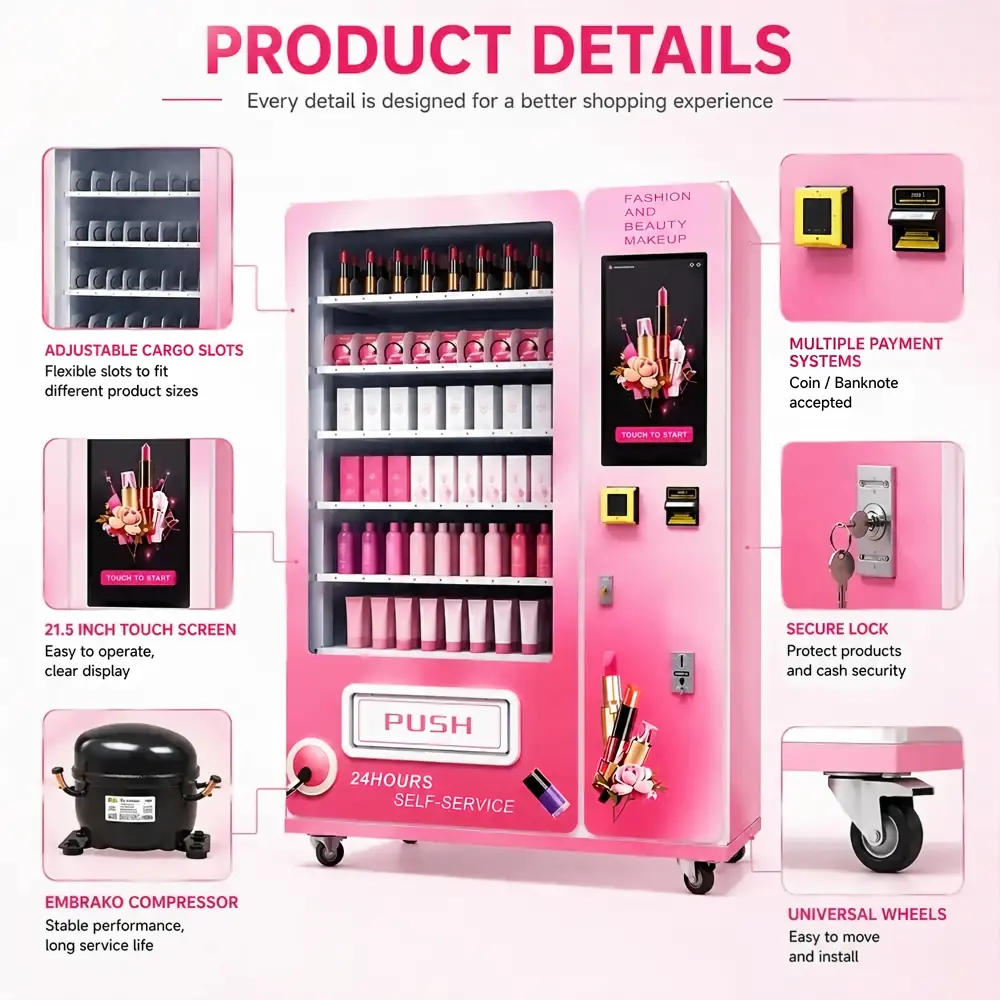
When you buy: pre-installed Nayax/credit card payment modules — plug in and go the moment it arrives. No need to figure out payment system integration yourself.
After you buy: lifetime technical support. Any issue with the machine gets a 15-minute video call response.
Ongoing operations: reach out anytime to discuss product strategy. We simultaneously serve 50+ beauty vending machine operators, so we know what’s selling and what’s not in the US market this week.
7. Frequently Asked Questions
Is a beauty vending machine really more profitable than opening a beauty store?
Direct answer: the profit logic is completely different. A beauty store has monthly fixed costs starting at $3,000 (staff + build-out + inventory), while a beauty vending machine has monthly fixed costs of $300–800. One employee’s monthly salary is enough to support 5 machines. If you have access to good locations but no retail experience, the vending machine model has a much lower cost of trial and error.
Can I do this without beauty industry experience?
Direct answer: yes. Most of our customers had no beauty background beforehand. We provide an initial product list recommendation — just purchase according to the list. Follow the data early on, and within three months you’ll understand what sells better than most beauty influencers do.
How much foot traffic does a machine need to be profitable?
Direct answer: more than 2,000 people passing by per day on average. Below 1,000, you’ll need a higher price point or a higher-converting product category to compensate. University dining halls, mall cosmetics areas, and movie theater lobbies are proven good locations.
What if the machine breaks down? How does after-sales support work?
Direct answer: lifetime remote technical support, with a 15-minute video call response for 90% of issues.
Is a beauty vending machine suitable for outdoor placement?
Direct answer: not recommended. Lipstick softens above 30°C (86°F), and sheet masks freeze below 0°C (32°F). The machine operates in a 5–35°C (41–95°F) environment — we strongly recommend indoor placement or an enclosed, air-conditioned space. Semi-outdoor placement requires an added temperature-control module.
Your Next Step
If you’ve read this far, it means you’re seriously considering this business. The worst thing you could do right now is “go think about it some more.” Here are the three things you should do instead:
1. Open a map on your phone and mark 3–5 possible locations in your city
2. Go visit one in person, stand there, and count how many women pass by in 30 minutes
3. If the numbers satisfy you, contact us
We’ll put together a customized product plan and ROI estimate based on your location. No obligation, no pressure. Whether the business works out or not — your location data will give you the answer.