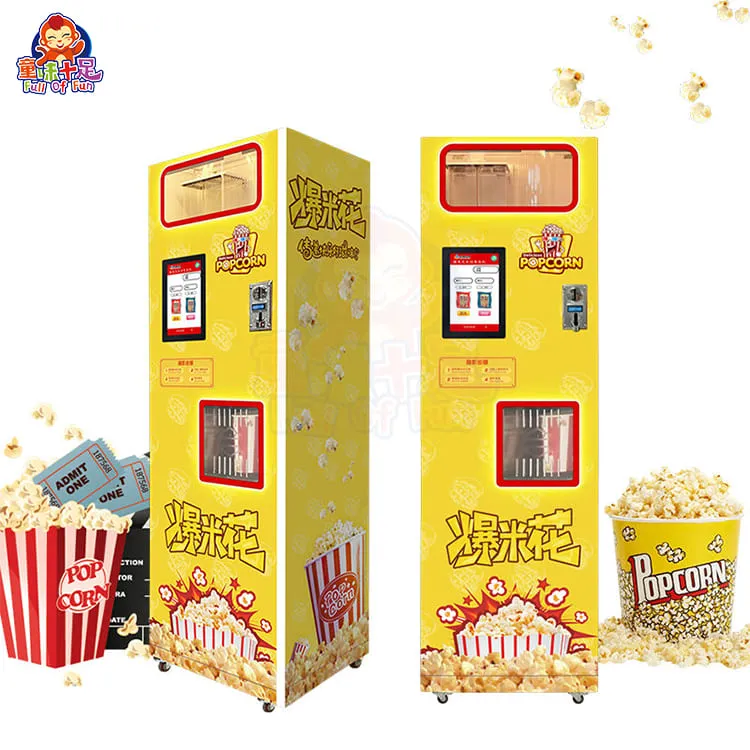

In the vending machine industry, site costs (point-of-placement fees) are one of the most significant components of operating costs. Regarding the question of “whether rent needs to be paid,” the answer is not absolute. Depending on the type of venue, foot traffic, and the purpose of cooperation, there are generally three core models.
Fixed Rent Model: Traditional “Space Leasing”
This is the most common commercial cooperation model. Similar to renting a counter, the operator pays a fixed monthly or annual site usage fee to the property owner.
Applicable Scenarios: Prime locations with high foot traffic, such as large shopping malls, pedestrian streets, subway stations, or railway hubs.
Pros and Cons: For the Operator: Higher risk. If sales are poor, the fixed rent becomes a heavy burden; however, if business is booming, all profits beyond the rent belong to the operator.
For the Property Owner: Stable income; they receive a guaranteed revenue regardless of how much you sell.
Supplementary Points: Under this model, operators usually need to cover electricity costs independently and must sign a formal housing/space lease contract.
Sales Commission Model: Risk-Sharing “Partnership”
Instead of paying a fixed monthly rent, a negotiated percentage of the vending machine’s actual monthly sales (e.g., 10%–25%) is paid to the venue owner as a commission.
Applicable Scenarios: Entrances of chain convenience stores, office building lobbies, gyms, or medium-sized factories.
Pros and Cons:
For the Operator: Reduces the risk of initial losses; it follows the principle of “sharing profits when successful and paying less when sales are low.”
For the Property Owner: Revenue is uncertain, but if the location is well-chosen, the final commission earned may be significantly higher than a fixed rent.
Supplementary Points: This model requires a “trust mechanism” between both parties. Usually, the operator must provide real-time access to the backend data to ensure the transparency of sales figures.
Other Related Costs
In addition to the three basic models above, several details influence “rent” in actual operations:
- Electricity Responsibility:Even in “rent-free” or “sales commission” sites, electricity costs usually need to be calculated separately. During negotiations, it must be clarified whether the property owner covers the cost or if an independent meter will be installed for the operator to pay.
- Resource Exchange Model:Sometimes, a vending machine is not just a retail unit but also an advertising medium. Some media companies install machines for free—without paying rent or commissions—with the goal of using the machine’s large screen to broadcast advertisements. In this case, the machine itself becomes a “billboard.”
- Management Fees and Deposits:Some high-end office buildings may not charge “rent” but will charge “management fees” or “cleaning fees.” Alternatively, they may require a significant “entry deposit” to ensure the operator does not damage floors or walls when removing the machine.
Selecting the Right Placement Location
The success of a vending machine depends on choosing the right location. Here are some suggestions to help businesses select the most suitable spots:
High-Traffic Areas: Places like shopping malls, airports, and railway hubs typically bring in more customers.
Locations Matching Customer Needs: Choose venues that align with the needs of the target audience, such as schools, office areas, and gyms.
Competitive Analysis: Research whether similar vending machines already exist in the area to understand market competition and avoid saturation.
Customer Convenience: Convenience is the key to success. Ensure the machine is placed in an easily accessible location, avoiding spots that are too hidden or inconvenient.
Summary and Recommendations
If you are an operator preparing to enter a site:
For new locations, the “Commission Model” is recommended to test traffic for the first three months.
For mature locations, the “Rent Model” is recommended to lock in long-term profits.
For high-quality public service locations, a “Service-Oriented” approach is recommended to achieve long-term rent exemption through maintaining a good reputation.
Finally, we would like to recommend our factory as your premier vending machine supplier from China. We specialize in providing high-quality, reliable, and technologically advanced vending solutions tailored to the diverse needs of the global market. Whether you are looking for smart retail systems or traditional beverage and snack machines, we offer competitive manufacturing capabilities to support your business growth.